Published: June 10, 2025
Shell-side boiling is where many shell-and-tube exchangers quietly lose their efficiency. A plain tube forces the designer into a trade-off: more surface area, a larger pressure drop, or a wider temperature gap between the hot and cold streams. A T shaped finned tube removes that trade-off, because the boiling surface is not added on top of the wall — it is rolled out of the wall itself.
What a T shaped finned tube Is
A T shaped finned tube is a metal tube whose outer wall has been rolled into a continuous spiral of narrow T-section tunnels. Cut one open and you see two features: a tight slit at the surface, and a wider cavity sitting directly underneath it. That cavity is the working part. It traps vapour, forces bubbles to grow in a confined space, and then releases them at speed.
The geometry is what separates this tube from a conventional finned product. On a low finned tube, metal stands proud of the surface as a fin. On a T shaped finned tube, the metal stays within the original wall envelope, so the outside diameter barely grows while the wetted area multiplies. There is no brazed joint, no sprayed coating and no bonded layer, which means no contact resistance between the fin and the wall and nothing that can flake away in service.
How the T profile differs from a low fin
A low fin is a heat-transfer area that sits in the flowing fluid. A T tunnel is a heat-transfer area that sits in the fluid too, but it also acts as a nucleation chamber. That second function is why the two products are not interchangeable. If the shell-side duty is single-phase — heating or cooling a liquid that never boils — a low fin is usually the cheaper answer. If the duty involves boiling, the tunnel geometry delivers results a simple area increase cannot match.
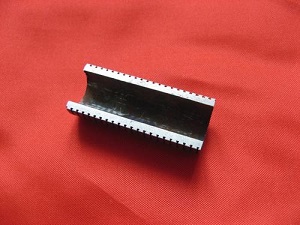
Figure 1: spiral T-shaped tunnels rolled into the outer wall of the tube
How a T shaped finned tube Is Rolled from a Plain Tube
Production begins with a plain light-wall tube. A rolling head carrying hardened forming discs presses into the rotating tube from outside, while a mandrel supports the bore from inside so the wall does not collapse. The discs displace metal rather than cut it. Material is pushed sideways and outward to build the roof of the tunnel, leaving a narrow opening along the top of each channel.
Because nothing is removed, wall thickness under the tunnels stays close to the original figure, and the pressure-carrying capability of the tube is largely preserved. The spiral runs the full length of the tube, so the tunnels are continuous and every point on the circumference takes part in the boiling process. After rolling, the tubes are cleaned and checked for tunnel depth, slit width and fin pitch before they go to the tubesheet.
Which base metals take the T profile well
Copper and copper-nickel roll most easily, which is why they dominate refrigeration and marine work. Carbon steel and stainless steel are also rolled successfully for petrochemical and power duties. The deciding factor is ductility: a metal that cracks rather than flows will not form a clean tunnel roof. Corrosion resistance decides the rest, since the tube has to survive both the shell-side fluid and whatever flows through the bore.
Why a T shaped finned tube Boils at a Much Lower Temperature Difference
When the tube wall is heated, a sequence of bubble nuclei forms inside the tunnels. The confined cavity prevents those nuclei from growing gently — they expand quickly and fill the space. Continued heating drives the pressure up, and the bubbles eject forcefully through the surface slits.
That ejection does two jobs at once. It scours the slit edges with real force, and it creates a local negative pressure that pulls surrounding cooler liquid back into the tunnel. Fresh liquid keeps arriving, so nucleation sites never dry out and boiling stays dense and continuous instead of stuttering. The practical result is that a T shaped finned tube carries far more heat away from each square metre of surface than a smooth tube of the same size.
| Behaviour | Smooth tube | T shaped finned tube |
|---|
| Temperature difference needed to start boiling | 12–15 °C | 2–4 °C |
| Boiling heat transfer coefficient in R113 | 1.0 (reference) | 1.6–3.3 times the reference |
| Bubble release pattern | irregular, larger bubbles | dense, continuous, small bubbles |
| Wetted surface per unit length | plain circumference | enlarged by the spiral tunnels |
| Scale build-up on the boiling side | steady growth between cleanings | slowed by the jets leaving the slits |
Which Working Media Have Been Tested in a T shaped finned tube
Laboratory and field testing has covered a broad spread of refrigerants and process fluids. Across all of them the pattern repeats: the T profile raises the boiling coefficient above what a smooth tube achieves in the same test loop, and the gap widens as the heat flux increases. In one set of industrial trials, T-type finned tubes outperformed smooth tubes by up to 99 percent under the same conditions.
| Medium | Boiling result reported | Where it turns up |
|---|
| R113 | coefficient 1.6–3.3 times higher than a smooth tube | test loops, organic Rankine cycles |
| Freon 11 | consistently higher coefficient than a smooth tube | chiller and refrigeration evaporators |
| Liquid ammonia | higher coefficient than a smooth tube | industrial refrigeration, food processing |
| Clean water and dilute aqueous streams | improved nucleation while the slits stay open | evaporators, waste heat recovery |
How a T shaped finned tube Compares with Other Enhanced Surfaces
Several enhanced surfaces are sold for the same boiling duties, and the choice usually comes down to cost against fouling risk. A T shaped finned tube sits in the middle of the price range and at the favourable end of the fouling range, because its surface is the parent metal rather than an applied layer.
| Surface | How it is produced | Relative cost | Fouling behaviour |
|---|
| T shaped finned tube | rolled from the tube wall | moderate | resists scaling, jets help clear the slits |
| Aluminium porous surface tube | coating applied and bonded to the wall | high | coating can spall or plug |
| Low finned tube | fins rolled above the wall | low | deposits collect between the fins |
| Smooth tube | as drawn or welded | lowest | baseline build-up |
Where a T shaped finned tube Fits in Industrial Systems
The tube belongs wherever the shell-side medium must boil and is clean enough to pass through a narrow slit. It is a standard answer for shell-side boiling enhancement in shell-and-tube equipment, and it is also used to upgrade existing exchangers when a plant needs more duty from the same shell.
- Petrochemical reboilers and process heat exchangers
- Power plant condensers and evaporators
- Refrigeration and air conditioning evaporators
- Chemical processing equipment with clean shell-side fluids
- Waste heat recovery and organic Rankine cycle units
- Marine and offshore heat exchange duty
- Pharmaceutical and food processing evaporators
Which services to avoid
The narrow slit is the weak point in a dirty duty. Slurries with solid particles, streams that crystallise salts on a hot wall, and liquids that polymerise under heat will all close the tunnels and cancel the advantage. For those services, either pre-treat the stream or select a surface that tolerates solids. Matching the surface to the fluid is the single decision that determines whether the tube keeps working after two years.
Which Details Matter When a T shaped finned tube Is Ordered
Performance is fixed by the profile, but the fit into an exchanger is fixed by the dimensions. These are the points worth settling before a purchase order is raised, because a small mismatch on any of them means the tube cannot be installed.
| Item to settle | Why it matters |
|---|
| Base metal | must resist both the shell-side fluid and the tube-side fluid |
| Outside diameter | has to suit the tubesheet holes and the baffle spacing |
| Wall thickness | must survive the rolling operation and the design pressure |
| Tunnel pitch and slit width | sets the wetted area and how easily bubbles escape |
| Tube length and end finish | plain unrolled ends are needed for expansion into the tubesheet |
How a T shaped finned tube Behaves Over Time
The intense gas and liquid agitation inside the tunnels, combined with the high-speed jets that travel along the T seam, keeps scale from settling on both the slot and the outer surface. That self-cleaning tendency is why the boiling coefficient holds up over long runs instead of dropping away after the first maintenance cycle.
Cleaning practice still matters. Chemical cleaning is the safer route because the tunnel roof is thin and a mechanical drill or aggressive scraper can deform the profile. Where the shell-side stream is only lightly contaminated, a normal shutdown wash is usually enough to keep the tunnels open and the exchanger at its design duty.
Questions Engineers Ask About a T shaped finned tube
What is a T shaped finned tube used for?
It is used on the shell side of shell-and-tube exchangers where the shell-side fluid has to boil or evaporate — reboilers, evaporators, chillers, refrigeration condensers, waste heat recovery units and desalination trains. It raises the boiling heat transfer coefficient without enlarging the shell.
How much more heat does a T shaped finned tube carry than a smooth tube?
In R113 the boiling heat transfer coefficient runs 1.6 to 3.3 times that of a smooth tube. In field duties with other media, measured performance has reached 99 percent above a smooth tube of the same envelope. The exact figure depends on the medium, the heat flux and the cleanliness of the shell-side stream.
Does a T shaped finned tube foul less than a plain tube?
The disturbance inside the tunnels and the high-velocity jets leaving the slits keep the slot and outer surface cleaner than a plain tube in the same duty. Scale still forms over long runs, so a planned cleaning interval remains part of the operating routine.
Can the tunnels of a T shaped finned tube clog?
Yes, if the shell-side fluid carries solid particles, crystallising salts or polymer-forming compounds, the narrow slits can block and the boiling advantage disappears. Upstream filtration or a different enhanced surface is the safer choice for dirty streams.
Which materials are available for a T shaped finned tube?
Carbon steel, stainless steel, copper and copper-nickel are all rolled into the T profile. The base metal is chosen for corrosion resistance against both fluids, while the rolling process works on any metal ductile enough to be displaced without cracking.
When the shell-side duty is boiling and the stream is clean, a rolled T tunnel gives more heat per square metre at a smaller temperature difference than almost anything else in the same price bracket. When the stream is dirty, the same slit that drives the boiling becomes the first thing to block — and that is the decision worth getting right at the specification stage.