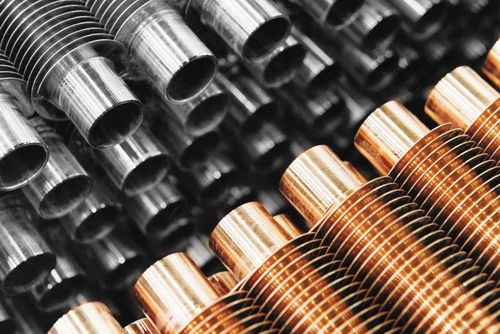
Which is better use aluminum fin tube or copper fin tube in heat exchanger?
Both aluminum fin tubes and copper fin tubes have their advantages and disadvantages in heat exchanger applications. The choice of which to use depends on various factors such as the specific requirements of the application, cost, and availability of the materials.
Copper fin tubes are generally preferred for their superior heat transfer properties, which allow for more efficient heat exchange. They also have excellent corrosion resistance, making them ideal for use in harsh environments. However, copper is more expensive than aluminum, and copper fin tube may require more maintenance and cleaning to prevent corrosion.
On the other hand, aluminum fin tubes are lighter, less expensive, and easier to manufacture than copper fin tubes. They are also more resistant to damage and corrosion in certain environments, such as those with high humidity or salt content. However, aluminum has lower thermal conductivity than copper, which can result in slightly lower efficiency in heat transfer.
The choice of which fin tube material to use in a heat exchanger ultimately depends on the specific application requirements, and a careful evaluation of the pros and cons of each material should be done before making a decision.
Aluminum fin tube versus copper fin tube in heat exchanger
When selecting between aluminum fin tube and copper fin tube for heat exchanger systems, engineers and procurement specialists weigh multiple performance metrics. Aluminum fin tube offers a compelling combination of lightweight construction and cost efficiency, while copper fin tube delivers unmatched thermal conductivity and long-term durability. What makes this decision particularly challenging is that each material excels in different operating conditions.
Why does thermal conductivity matter so much in heat exchanger design? Higher thermal conductivity means faster and more efficient heat transfer, which directly impacts the overall performance of the system. Copper fin tube, with its thermal conductivity of approximately 401 W/(m·K), transfers heat nearly twice as fast as aluminum fin tube at about 237 W/(m·K). This difference becomes critical in applications where space is limited and maximum heat dissipation is required.
How do environmental factors influence the choice between these two materials? In coastal or marine environments where salt spray is prevalent, aluminum fin tube often outperforms copper due to its natural oxide layer that resists corrosion. Conversely, in industrial settings with high temperatures or where the fluid being processed is corrosive, copper fin tubes superior resistance to chemical attack makes it the preferred option.
Which industries typically favor aluminum fin tube over copper fin tube? HVAC systems, automotive radiators, air-cooled heat exchangers, and refrigeration units frequently utilize aluminum fin tube because of its lightweight nature and cost advantages. On the other hand, power generation plants, chemical processing facilities, and high-temperature industrial ovens tend to specify copper fin tube for its robustness and thermal efficiency.
What determines the choice between aluminum and copper fin tubes?
The selection process involves evaluating operating temperature, pressure requirements, fluid properties, ambient conditions, and budget constraints. Aluminum fin tube performs well at moderate temperatures up to about 400°F (204°C), while copper fin tube can withstand temperatures exceeding 500°F (260°C) without significant degradation. This temperature tolerance often dictates which material is suitable for a given application.
How does maintenance differ between the two? Copper fin tube requires periodic inspection for signs of dezincification or stress corrosion cracking, especially in ammonia or sulfur-containing environments. Aluminum fin tube, while generally more resistant to atmospheric corrosion, can suffer from pitting in alkaline conditions. Understanding these failure mechanisms helps facility managers develop appropriate maintenance schedules.
Aluminum fin tube in air cooling and HVAC systems
An aluminum fin heat exchanger is a type of heat exchanger that uses aluminum fins to increase the surface area for heat transfer. The basic design of an aluminum fin heat exchanger consists of a set of aluminum fins that are attached to a series of tubes through which the hot or cold fluid flows.
The aluminum fins are designed to maximize the surface area available for heat transfer between the fluids. This increased surface area allows for more efficient heat transfer and can result in a more compact design than traditional heat exchangers.
Aluminum is a popular choice of material for the fins in heat exchangers due to its high thermal conductivity, lightweight, and corrosion resistance. The use of aluminum fins also allows for a more cost-effective solution compared to other materials, such as copper or stainless steel.
Aluminum fin heat exchangers are commonly used in a variety of industrial applications, including HVAC systems, refrigeration, power generation, and automotive cooling systems. They are particularly useful in applications where high heat transfer rates are required and where weight and cost considerations are important.
Overall, aluminum fin heat exchangers are an efficient and reliable solution for heat transfer applications, offering a cost-effective and lightweight option that can be tailored to meet specific design requirements.
Why aluminum fin tube is widely used in HVAC applications?
Aluminum fin tubes popularity in HVAC systems stems from its excellent balance of performance and economy. The materials lightweight nature reduces structural support requirements, while its corrosion resistance ensures long service life in air-handling environments. How does aluminum fin tube contribute to energy efficiency? The enhanced surface area provided by the fins allows for effective heat exchange even at lower temperature differentials, which can reduce compressor work and lower overall energy consumption.
Which specific HVAC components benefit most from aluminum fin tube? Evaporator coils, condenser coils, and air-cooled chillers frequently employ aluminum fin tube because the materials thermal properties align well with the moderate operating conditions typical of these systems. Additionally, aluminums formability allows for complex fin geometries that further optimize heat transfer performance.
Copper fin tube in industrial heating and power generation
A copper fin heat exchanger is a type of heat exchanger that uses copper fins to increase the surface area for heat transfer. Copper is a popular material for the fins in heat exchangers due to its high thermal conductivity, corrosion resistance, and durability.
The basic design of a copper fin heat exchanger is similar to that of an aluminum fin heat exchanger, consisting of a series of tubes through which the hot or cold fluid flows, with copper fins attached to the tubes to increase the surface area available for heat transfer.
Copper fin heat exchangers are commonly used in a variety of applications, including HVAC systems, refrigeration, power generation, and industrial process heating and cooling. They are particularly useful in applications where high heat transfer rates are required, and where corrosion resistance is important.
One advantage of copper fin heat exchangers over aluminum fin heat exchangers is their higher strength and durability. Copper is a more robust material than aluminum and can withstand higher pressures and temperatures without deforming or deteriorating.
However, copper fin heat exchangers can be more expensive than aluminum fin heat exchangers due to the higher cost of copper. In addition, copper fin heat exchangers are generally heavier than aluminum fin heat exchangers, which can be a consideration in some applications.
Overall, copper fin heat exchangers are an efficient and reliable solution for heat transfer applications, offering high thermal conductivity, corrosion resistance, and durability.
Why copper fin tube is preferred for high-temperature applications?
Copper fin tubes ability to maintain structural integrity at elevated temperatures makes it indispensable in power generation and industrial processing. How does coppers thermal conductivity impact system design? With a thermal conductivity roughly 70% higher than aluminum, copper fin tube enables smaller heat exchanger footprints while achieving the same heat transfer duty. This space efficiency is particularly valuable in retrofitting existing facilities where installation space is constrained.
Which industrial sectors rely most heavily on copper fin tube? Fossil fuel power plants, nuclear facilities, chemical reactors, and waste heat recovery systems all specify copper fin tube for its proven track record in demanding environments. The materials resistance to thermal fatigue and creep ensures that copper fin tube heat exchangers maintain performance over decades of service.
Aluminum fin tube and copper fin tube: which material fits your needs?
Selecting between aluminum fin tube and copper fin tube requires a systematic evaluation of technical and economic factors. The following comparison table summarizes key attributes to help engineers and procurement professionals make informed decisions.
| Property |
Aluminum Fin Tube |
Copper Fin Tube |
| Thermal Conductivity |
~237 W/(m·K) |
~401 W/(m·K) |
| Density |
~2.7 g/cm³ |
~8.96 g/cm³ |
| Corrosion Resistance |
Excellent in humid/salty environments |
Excellent in chemical/high-temp environments |
| Max Operating Temperature |
~204°C (400°F) |
~260°C (500°F+) |
| Relative Cost |
Lower |
Higher |
| Weight |
Lightweight |
Heavy |
| Fabrication Ease |
Easier to form and join |
Requires specialized techniques |
| Typical Applications |
HVAC, automotive, air-cooled exchangers |
Power generation, chemical processing, high-temp systems |
What are the key differences between aluminum fin tube and copper fin tube?
Beyond the numerical data in the table, several qualitative differences influence the selection process. Aluminum fin tubes lower density translates to reduced shipping costs and simpler installation, particularly in rooftop HVAC units where structural loading is a concern. Copper fin tubes higher thermal conductivity allows for more compact heat exchanger designs, which can be advantageous in space-constrained applications.
How does the total cost of ownership compare between the two materials? While copper fin tube has a higher initial purchase price, its longer service life in demanding applications can offset the upfront investment. Conversely, aluminum fin tubes lower cost and adequate performance in moderate conditions often result in the lowest lifecycle cost for HVAC and refrigeration applications.
Which fin tube material offers better value for heat exchanger projects?
Value is context-dependent. For projects with tight budgets and moderate thermal requirements, aluminum fin tube provides excellent value. For applications requiring maximum heat transfer efficiency, high-temperature tolerance, or resistance to aggressive chemicals, copper fin tube delivers superior performance that justifies its higher cost. What factors should buyers prioritize when evaluating value? Consider the expected service life, maintenance frequency, energy costs, and the criticality of heat exchanger performance to the overall process.
Questions about aluminum fin tube and copper fin tube
What is the primary difference between aluminum fin tube and copper fin tube in heat exchanger applications?
The primary difference lies in the material properties. Aluminum fin tube offers lightweight construction and lower cost, while copper fin tube provides superior thermal conductivity and higher durability. Aluminum is more corrosion-resistant in certain environments like high humidity, whereas copper excels in high-temperature and high-pressure applications.
How does thermal conductivity compare between aluminum fin tube and copper fin tube?
Copper fin tube has a thermal conductivity of approximately 401 W/(m·K), which is significantly higher than aluminum fin tube at about 237 W/(m·K). This means copper transfers heat more efficiently, making it suitable for applications where maximum heat transfer is critical.
Which fin tube material is more cost-effective for large-scale industrial projects?
Aluminum fin tube is generally more cost-effective for large-scale projects because aluminum is less expensive than copper. Additionally, aluminum is lighter, which reduces transportation and installation costs. However, the total cost should be evaluated against the specific performance requirements of the application.
Why would someone choose aluminum fin tube over copper fin tube in corrosive environments?
Aluminum fin tube offers excellent corrosion resistance in environments with high humidity or salt content, such as marine or coastal applications. Aluminum forms a protective oxide layer that prevents further corrosion, making it a durable choice for such conditions.
How does the weight of aluminum fin tube compare to copper fin tube?
Aluminum fin tube is significantly lighter than copper fin tube, with a density of about 2.7 g/cm³ compared to coppers 8.96 g/cm³. This weight difference makes aluminum fin tube easier to handle, transport, and install, especially in applications where weight is a critical factor.
Aluminum fin tube | copper fin tube