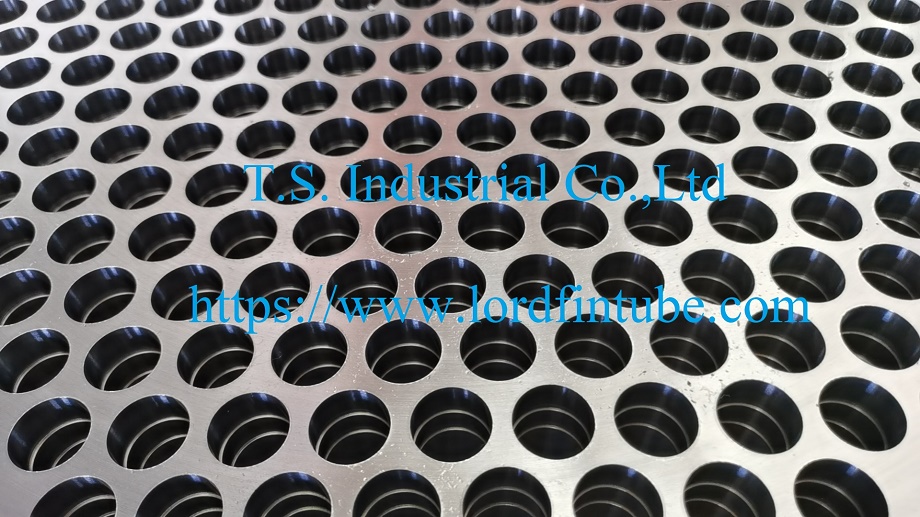
Tubesheets are critical components in shell-and-tube heat exchangers, pressure vessels, and other thermal equipment. They serve as the structural interface between the tube bundle and the shell, supporting the tubes while allowing fluid to flow across or through them. The shape of a tubesheet directly influences the overall equipment footprint, thermal performance, mechanical integrity, and manufacturing cost. Engineers select a specific tubesheet geometry based on process requirements, spatial limitations, pressure ratings, and fabrication capabilities. Below is a detailed examination of the most common tubesheet shapes, their characteristics, and how each type addresses different operational demands.
Tubesheet Types and Their Characteristics
Circular Tubesheets
Circular tubesheets are the most widely used configuration in industrial heat exchangers. They feature a round profile that mates seamlessly with cylindrical shells, which are inherently strong and efficient at containing internal pressure. In a circular tubesheet, tube holes are typically arranged in concentric rings or a triangular pitch pattern to maximize the number of tubes within a given diameter while maintaining adequate ligament thickness between holes. This arrangement promotes uniform fluid distribution across the shell side and minimizes dead zones that could reduce heat transfer efficiency.
What makes circular tubesheets the preferred choice for many applications? Their axisymmetric geometry simplifies stress analysis and allows for more predictable thermal expansion behavior. Manufacturers can produce circular tubesheets using standard turning and drilling equipment, which keeps production costs lower compared to non-circular geometries. Circular tubesheets are commonly found in refineries, chemical plants, power generation facilities, and HVAC systems where cylindrical shells are the norm.
However, circular tubesheets do have limitations. The circular footprint can be inefficient when equipment must be installed in tight spaces or when multiple heat exchangers need to be arranged in a compact layout. Additionally, the circular shape may result in unused volume at the corners of a rectangular enclosure, reducing overall space utilization.
Rectangular Tube Sheets
Rectangular tube sheets are designed for use with rectangular or square shell cross-sections. This geometry is particularly advantageous when the heat exchanger must fit within a confined rectangular envelope, such as in shipboard installations, modular process skids, or compact machinery compartments. In a rectangular tubesheet, tube holes are arranged in straight rows and columns, creating a regular grid pattern that simplifies tube layout and supports straight-through tube cleaning.
Which industries benefit most from rectangular tube sheets? The marine sector, HVAC equipment manufacturers, and air-cooled heat exchanger producers frequently specify rectangular geometries to optimize space utilization. The straight rows of tubes allow for easier access during maintenance and tube replacement, as the grid pattern provides clear pathways for tube pulling and insertion. Rectangular tube sheets also lend themselves to fabrication using laser-cut or waterjet-cut plates, which can produce precise hole patterns with minimal distortion.
One key consideration with rectangular tube sheets is the stress concentration at the corners of the plate. Sharp corners can act as stress risers, particularly under thermal cycling or pressure fluctuations. Designers often incorporate radiused corners or additional thickness at the corners to mitigate this issue. The rectangular shape also requires more robust shell stiffening to prevent bulging or deformation under internal pressure.
Triangular Tube Sheets
Triangular tube sheets are a specialized geometry used in heat exchangers where the shell cross-section is triangular or where a triangular tube layout offers specific thermal-hydraulic advantages. The triangular tube arrangement—where each tube is positioned at the vertex of an equilateral triangle—allows for a higher tube density per unit area compared to square or rectangular layouts. This can significantly increase the heat transfer surface area within a given shell volume.
How does a triangular tubesheet improve heat transfer performance? The staggered tube arrangement promotes turbulence in the shell-side fluid, which enhances convective heat transfer coefficients. The increased turbulence also helps reduce fouling by keeping solids suspended in the fluid stream. Triangular tube sheets are often specified in applications involving viscous fluids, high-fouling services, or where compactness is paramount, such as in offshore platforms and mobile equipment.
Manufacturing triangular tube sheets presents unique challenges. The angled hole pattern requires precise indexing during drilling or machining, and the triangular shape of the plate itself must be carefully profiled to match the shell geometry. Despite these complexities, the performance benefits often outweigh the additional fabrication costs for demanding applications.
Oval Tube Sheets
Oval tube sheets represent a compromise between circular and rectangular geometries. With an elliptical or oval profile, these plates can fit within enclosures that are neither fully circular nor fully rectangular. The oval shape allows for a more efficient use of space in certain equipment configurations, such as when a heat exchanger must be mounted alongside other components with limited clearance.
Which applications call for oval tube sheets? They are commonly found in custom-engineered heat exchangers for the food and beverage industry, pharmaceutical manufacturing, and specialty chemical processing where equipment footprints must conform to existing facility layouts. The oval geometry provides a larger fluid flow area than a circular plate of equivalent width, while maintaining better pressure containment characteristics than a rectangular plate.
From a mechanical standpoint, oval tube sheets require careful analysis of stress distribution around the curved ends. The transition regions between the straight sides and the curved ends experience complex stress states that must be addressed through appropriate thickness selection and reinforcement. Advances in finite element analysis have made it more feasible to design oval tube sheets that meet rigorous pressure vessel codes while optimizing material usage.
Custom-Shaped Tube Sheets
In certain specialized applications, standard circular, rectangular, triangular, or oval geometries do not adequately meet the design requirements. Custom-shaped tube sheets are engineered to match the specific constraints and objectives of a particular piece of equipment. These can include hexagonal, polygonal, or even irregular profiles that align with the internal structure of a vessel or the external envelope of a system.
What drives the need for custom-shaped tube sheets? Often, the equipment geometry itself is dictated by other process considerations, such as the shape of a reactor vessel, the arrangement of multiple heat exchangers in a single housing, or the need to integrate a heat exchanger into an existing structural framework. Custom shapes allow engineers to maximize heat transfer area while working within these predetermined boundaries.
Designing a custom-shaped tubesheet requires close collaboration between the process engineer, mechanical designer, and fabricator. The irregular geometry demands advanced modeling techniques to ensure that the plate can withstand the specified pressure and temperature conditions without excessive deflection or stress. While custom shapes offer the highest degree of design freedom, they also entail higher engineering and manufacturing costs, making them suitable only for applications where the benefits justify the investment.
Tubesheet Shape Comparison
Selecting the optimal tubesheet shape involves balancing multiple factors. The table below provides a comparative overview of the key characteristics associated with each tubesheet geometry.
| Tubesheet Shape |
Shell Compatibility |
Tube Arrangement |
Space Efficiency |
Manufacturing Complexity |
Typical Applications |
| Circular |
Cylindrical shells |
Concentric rings or triangular pitch |
Moderate |
Low |
Refineries, power plants, HVAC |
| Rectangular |
Rectangular/square shells |
Rows and columns (grid pattern) |
High (within rectangular envelope) |
Moderate |
Marine, HVAC, modular skids |
| Triangular |
Triangular shells |
Staggered triangular pitch |
Very high |
High |
Offshore, mobile equipment, viscous fluids |
| Oval |
Elliptical/oval shells |
Custom pitch pattern |
High |
Moderate to high |
Food processing, pharmaceuticals, custom equipment |
| Custom-Shaped |
Irregular shells |
Customized layout |
Maximized for specific envelope |
Very high |
Specialty reactors, integrated systems |
What Determines Tubesheet Shape Selection
Several interrelated factors influence the choice of tubesheet shape for a given project. Understanding these factors helps engineers make informed decisions that balance performance, cost, and reliability.
Pressure rating is one of the primary determinants. Circular plates inherently handle internal pressure more efficiently than non-circular shapes due to the absence of corners where stress concentrations can develop. For high-pressure applications, circular tubesheets are often the only viable option unless the shell design incorporates substantial reinforcement.
Space constraints frequently drive the selection toward rectangular or oval geometries. In retrofit projects or when equipment must be placed in tight enclosures, the ability to fit within a specific footprint becomes paramount. Rectangular tube sheets offer the best space utilization for rectangular enclosures, while oval shapes provide a balance between circular efficiency and rectangular compactness.
Thermal performance requirements also play a role. The tube arrangement dictated by the tubesheet shape affects the shell-side fluid flow pattern and heat transfer coefficients. Triangular tube layouts, for example, promote higher turbulence and better heat transfer than square layouts, making them attractive for applications where thermal duty is the dominant concern.
Manufacturing capabilities and cost constraints cannot be overlooked. Standard circular tubesheets can be produced using conventional machining methods, while custom shapes require more advanced fabrication techniques such as waterjet cutting, wire EDM, or specialized fixturing for drilling. The availability of equipment and expertise at the chosen fabrication facility may limit the feasible shape options.
Maintenance and cleaning considerations also influence shape selection. Rectangular tube sheets with straight rows of tubes allow for easier mechanical cleaning and tube replacement, as the tubes can be accessed and removed without obstruction. In contrast, circular tubesheets with concentric tube arrangements may present challenges for tube pulling in the innermost rows.
How Tubesheet Material Affects Shape Feasibility
The material selected for a tubesheet interacts with its shape in several important ways. Different materials exhibit varying levels of machinability, weldability, corrosion resistance, and thermal expansion characteristics, all of which can influence the practicality of a given geometry.
Carbon steel tubesheets are commonly used in general-purpose heat exchangers where corrosion is not a major concern. The material machines well and is readily available in large plate sizes, making it suitable for all shapes including custom geometries. However, carbon steel requires protective coatings or corrosion allowance for aggressive process fluids.
Stainless steel and nickel-alloy tubesheets offer superior corrosion resistance and are often specified for chemical, pharmaceutical, and food processing applications. These materials are more challenging to machine, particularly for intricate hole patterns or complex shapes, which can increase fabrication costs and lead times.
Copper alloys, such as naval brass and aluminum bronze, are frequently used in marine and seawater-cooled heat exchangers. These materials provide excellent thermal conductivity and corrosion resistance in saline environments. Their machinability varies widely—naval brass machines relatively well, while aluminum bronze can be more difficult to drill and tap.
For high-temperature applications, engineers may specify titanium or Inconel tubesheets. These materials maintain strength and oxidation resistance at elevated temperatures but require specialized tooling and cutting techniques. The added material cost and fabrication complexity often make these alloys practical only for circular or relatively simple geometries.
Regardless of the material, the tubesheet must be thick enough to withstand the differential pressure between the shell and tube sides, as well as the mechanical loads imposed by the tube bundle and thermal expansion. The required thickness increases with the unsupported span of the plate, which is directly related to its shape and dimensions.
Which Tubesheet Type Fits Your Application
Determining the most appropriate tubesheet shape for a specific application requires a systematic evaluation of the operating conditions, equipment constraints, and project objectives. The following questions can help guide the decision-making process.
What is the shell geometry? The tubesheet shape must match the shell cross-section. If the shell is cylindrical, a circular tubesheet is the natural choice. If the shell is rectangular or square, a rectangular tubesheet is indicated. For non-standard shell profiles, custom or oval shapes may be necessary.
What is the operating pressure? For high-pressure services, circular tubesheets offer the best combination of strength and simplicity. If the pressure is moderate, rectangular or oval shapes can be considered, provided the design incorporates adequate reinforcement.
What is the available space? Evaluate the physical envelope where the heat exchanger will be installed. If space is limited in one dimension, a rectangular or oval tubesheet may allow the equipment to fit where a circular design would be too large.
What are the cleaning and maintenance requirements? If the heat exchanger is subject to fouling and requires frequent mechanical cleaning, a rectangular tubesheet with straight tube rows may be preferable. For applications where cleaning is infrequent or chemical cleaning methods are used, a circular tubesheet may be perfectly adequate.
What is the budget and timeline? Standard circular tubesheets offer the shortest lead times and lowest costs. Custom shapes and exotic materials increase both cost and delivery time. Balancing performance needs with budget constraints is an essential part of the selection process.
Tubesheet Manufacturing and Quality Considerations
The manufacturing process for tubesheets involves several critical steps that affect the final quality and performance of the component. Understanding these processes provides insight into why certain shapes are more expensive or time-consuming to produce than others.
Plate preparation begins with selecting the appropriate material grade and thickness. The plate is cut to the required overall dimensions, with allowance for machining and finishing. For circular tubesheets, this typically involves flame cutting or plasma cutting a round blank from a larger plate. Rectangular and oval shapes require more careful cutting to achieve the precise profile.
Drilling or hole making is the most critical operation in tubesheet fabrication. The hole pattern must be accurately positioned to ensure proper tube alignment and spacing. For circular tubesheets, this is accomplished using a CNC drilling machine with rotary indexing. Rectangular tubesheets can be drilled using gantry-type drilling machines with X-Y positioning. Custom shapes may require specialized fixturing or coordinate measuring to verify hole locations.
Hole finishing involves deburring, chamfering, and sometimes reaming the tube holes to achieve the required surface finish and dimensional tolerances. The quality of the hole finish directly affects the tube-to-tubesheet joint integrity, particularly in welded or expanded joints.
Heat treatment may be necessary for certain materials or thicknesses to relieve residual stresses introduced during cutting and drilling. Stress relief is particularly important for large tubesheets or those with complex hole patterns, as residual stresses can cause distortion during subsequent welding or service.
Surface finishing and coating protect the tubesheet from corrosion and erosion. Options include painting, galvanizing, or applying specialized coatings such as epoxy or fluoropolymer. The choice of coating depends on the process fluid composition, temperature, and velocity.