
Fin Tube Machine / Fin Tube Equipment
Fin Tube Machine · Fin Tube Equipment · Finned Tube Machine · Finned Tube Equipment
These terms refer to industrial machinery used to manufacture finned tubes – heat exchanger components with extended surfaces (fins) that significantly enhance heat transfer efficiency. Such equipment is widely employed in power generation, petrochemical, HVAC, automotive, and boiler industries. Below is a systematic classification and description of all major types.
1. Classification by Working Principle
1.1 Extruded Fin Machines (Extrusion Finning Machines)
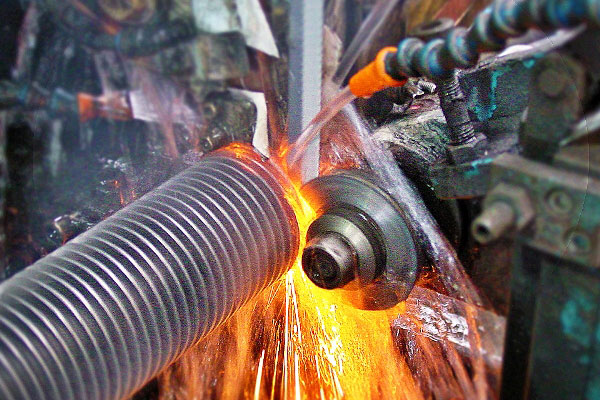
These machines form fins by extrusion – using rollers to squeeze and shape fins directly from the tube material or from a bimetallic tube assembly. The resulting fins are tightly bonded to the base tube, providing high heat transfer efficiency.
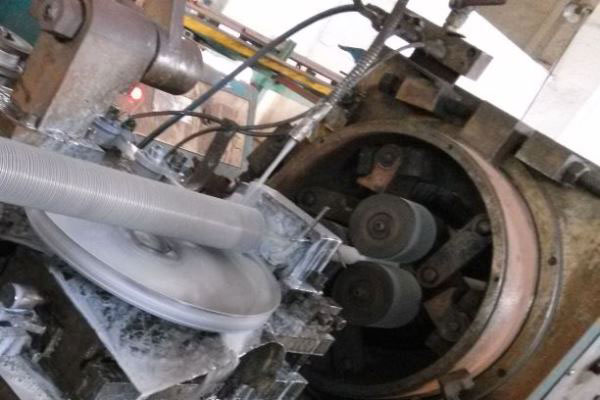
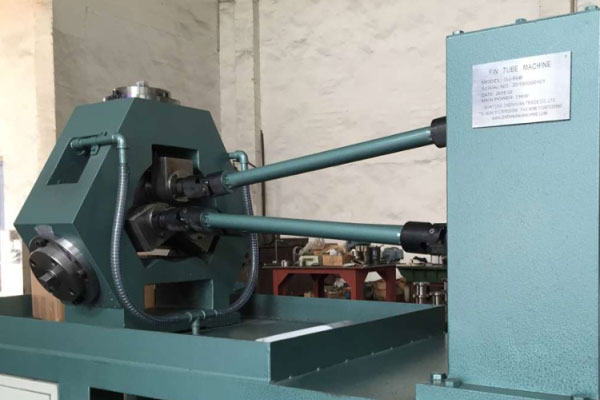
- Extruded Fin Tube Machine (Rolling Mill): Extrudes fins from aluminum tubes (lined with copper or steel) by rolling and laminating through internal cutting tools. It consists of a transmission, rolling mechanism, and three sets of screw‑down devices.
- Models: Available in three size ranges for base tube diameters of Φ8‑Φ15, Φ12‑Φ25, and Φ25‑Φ45.
- Capabilities: Processes monometallic and bimetallic finned tubes, corrugated tubes, and bellows tubes; fin pitch ranges from 1 mm to 8 mm.
- Materials: Handles steel, aluminum, copper, and their combinations (e.g., copper‑aluminum, steel‑aluminum bimetallic composites).
- Low Fin Tube Machine: Produces low‑fin tubes from single metals such as iron, copper, or aluminum. Production speed is relatively slower due to the specific characteristics of low‑fin formation.
1.2 Wound Fin Machines (Fin Winding Machines)
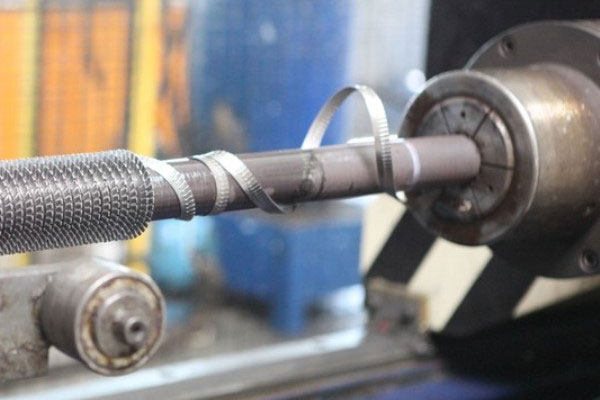
These machines wrap a thin metal strip (typically aluminum foil) around the base tube in a spiral pattern to form fins. The process is simple, cost‑effective, and does not require welding.
- Fin Winding Machine: Spirals aluminum foil around a pipe; theoretically capable of producing infinite‑length tubes. Minimum tube diameter is 12 mm. Features a compact design and can produce multiple sizes with simple adjustments.
- Spiral Tube Machine: Squeezes seamless pipes into a spiral shape, creating internal vortices for improved fluid flow. Replaces traditional lathe‑based production with higher efficiency and lower costs.
2. Classification by Automation Level
| Type | Description |
|---|---|
| Manual Fin Machines | Require more manual operation; lower production efficiency but lower investment; suitable for small‑batch production. |
| Semi‑Automatic Fin Machines | Partially automated; improves production efficiency and reduces labor costs. |
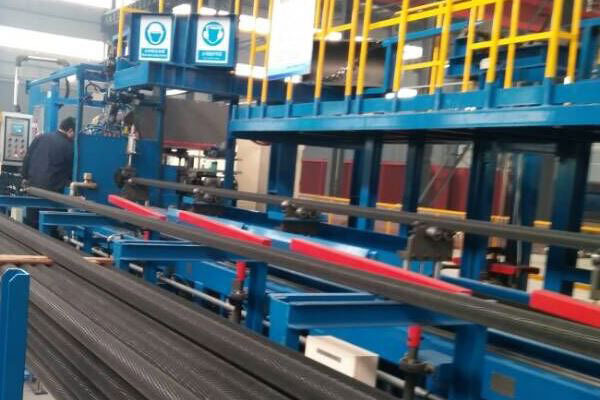
| Fully Automatic Fin Machines | Automate the entire process from raw material loading to finished product packaging; high efficiency and stable quality; ideal for large‑scale mass production. |
3. Classification by Specific Process / Machine Type
3.1 Fin Tube Welding Machines
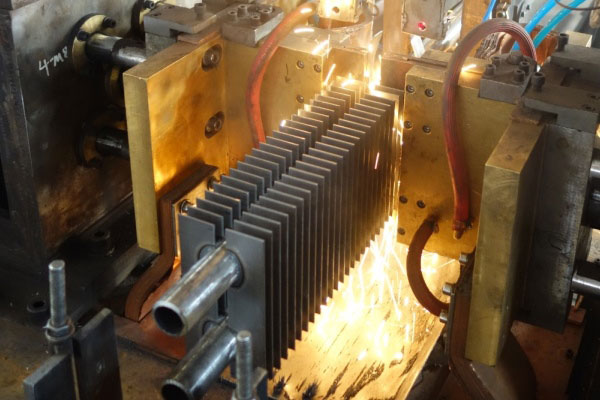
These machines automatically weld a helical fin to a tube or pipe. The fin is formed by cold rolling a flat sheet into a tube shape, then spirally wound and welded onto the base tube. Commonly used in heat exchangers and boilers.
- High‑Frequency Induction Welding Machine: Uses electromagnetic induction to heat and rapidly weld the fin to the tube without direct contact. Ideal for high‑speed applications requiring precise heat control.
- Laser Welded Fin Tube Machine: Uses laser technology for precise, high‑quality fin‑to‑tube welds.
3.2 Stud Fin Machines
In this configuration, a series of studs are resistance‑welded to the base tube at regular intervals. Frequently used in applications requiring high mechanical strength, such as high‑pressure heat exchangers.
3.3 Finned Tube Hydroforming Machines
Uses hydraulic pressure to shape a metal tube into a finned tube, which is then cut to the required length. Allows for intricate shapes and high production rates, suitable for unique or high‑volume applications.
3.4 Fin Coil Heat Exchanger Machines
Tailored for manufacturing fin coils, commonly used in the HVAC sector. Can accommodate various fin patterns and thicknesses to optimize heat transfer efficiency.
3.5 L‑Type Fin Tube Machines
Specifically designed for accurate forming and efficient production of L‑fin heat exchanger tubes – where an L‑shaped aluminum or copper foot is wound into a groove on the base tube.
3.6 H‑Type Fin Tube Machines
Designed for precise fin forming and high‑efficiency production of H‑fin tubes (also known as H‑economizer fins) – rectangular fins resembling a square shape that expand the heating surface.
3.7 Two‑Metal Fin Tube Equipment
Produces bimetallic fin tubes: an inner tube made of iron or stainless steel with an outer fin made of aluminum or copper. Features multiple tubes that can be freely combined.
4. Classification by Fin Configuration Produced
| Fin Type | Description |
|---|---|
| Wrap‑on Fin | Fin strip wrapped around the tube surface. |
| Knurled Wrap‑on Fin | Wrap‑on fin with knurled surface for improved bonding. |
| Overlapped Footed Fin | Fin with overlapping feet for enhanced mechanical strength. |
| Overlapped Footed Fin Knurled | Overlapped footed fin with knurling. |
| Imbedded (G‑type) Fin | Fins mechanically wound and embedded into an undercut groove on the base tube; very strong bond. |
| L‑Foot / LL‑Foot Fin | L‑shaped fin foot wound into a groove; low cost. |
| Longitudinal (L‑type) Fin | Straight fins welded longitudinally along the tube axis; used in tank heaters, duct heaters, and process gas heaters. |
5. Classification by Structural Design
- Integral Fin Machines: Compact structure with highly integrated components; relatively simple installation and maintenance; suitable for production scenarios with space constraints.
- Split Fin Machines: Composed of multiple independent components; more flexible for repairing and replacing parts; better adapts to different production process requirements.
Comprehensive Summary Table
| Classification Basis | Types Included |
|---|---|
| Working Principle | Extruded Fin Machines, Wound Fin Machines |
| Automation Level | Manual, Semi‑Automatic, Fully Automatic |
| Process / Machine Type | Welding Machines, Stud Fin Machines, Hydroforming Machines, Fin Coil Machines, L‑Type, H‑Type, Two‑Metal Equipment |
| Fin Configuration | Wrap‑on, Knurled Wrap‑on, Overlapped Footed, Imbedded (G‑type), L‑Foot/LL‑Foot, Longitudinal |
| Structural Design | Integral, Split |