


16mo3 Finned Tube vs 15mo3 Finned Tube
16Mo3 Finned Tube vs 15Mo3 Finned Tube – A Technical Comparison
If youve been around heat exchanger procurement for a while, you know the drill: the drawing calls for 15Mo3, but the supplier keeps pushing 16Mo3 as a "direct equivalent." Are they really the same? Not exactly—and the differences often show up in places you wouldnt expect, like weld repair procedures or long-term creep data at 540°C. Lets walk through the real-world distinctions without the marketing fluff.
Seamless Alloy Steel 16Mo3 Finned Tube refers to a type of heat exchanger tube made from seamless alloy steel with the composition of 16Mo3.
16Mo3 Finned Tube vs 15Mo3 Finned Tube: Chemical Composition
Both grades sit in the molybdenum-steel family, and their main alloying ranges (Mo 0.25–0.35%, Cr 0.25–0.35%) are nearly identical. But the devil lives in the residuals. 16Mo3, governed by EN 10216-2, imposes strict upper limits on Al, Ti, B, and N—elements that older DIN 17175 (the old home for 15Mo3) didnt even bother to list. Why does that matter? During high-frequency fin welding, these trace elements pin grain boundaries and prevent excessive growth in the heat-affected zone. In practice, that means fewer micro-cracks when youre laser-welding helical fins onto the tube OD.
Heres a side-by-side look at the actual specified ranges:
| Element (mass %) | 16Mo3 (EN 10216-2) | 15Mo3 (DIN 17175) |
|---|---|---|
| Carbon (C) | 0.12 – 0.20 | 0.12 – 0.20 |
| Silicon (Si) | ≤ 0.35 | 0.10 – 0.35 |
| Manganese (Mn) | 0.40 – 0.90 | 0.40 – 0.80 |
| Phosphorus (P) | ≤ 0.030 | ≤ 0.025 |
| Sulfur (S) | ≤ 0.025 | ≤ 0.020 |
| Chromium (Cr) | 0.25 – 0.35 | ≤ 0.30 |
| Molybdenum (Mo) | 0.25 – 0.35 | 0.25 – 0.35 |
| Nickel (Ni) | ≤ 0.30 | ≤ 0.30 |
| Copper (Cu) | ≤ 0.30 | ≤ 0.30 |
| Vanadium (V) | 0.02 – 0.08 | 0.02 – 0.08 |
| Aluminum (Al) | ≤ 0.020 | — |
| Titanium (Ti) | ≤ 0.030 | — |
| Boron (B) | ≤ 0.0008 | — |
| Nitrogen (N) | ≤ 0.012 | — |
Notice the blanks in the 15Mo3 column? Those arent typos. The older spec simply didnt control those elements. For routine boiler tubes, that might not raise a red flag. But for finned tubes that undergo repeated thermal cycling, the finer grain structure in 16Mo3—thanks to those controlled residuals—directly translates to higher rupture strength over 100,000 hours. Some of our clients have switched entirely to 16Mo3 just to get that extra margin, even when their original design mentioned 15Mo3.
16Mo3 Finned Tube vs 15Mo3 Finned Tube: Production Standards
15Mo3 doesnt have a current EN standard of its own. Most mills today produce "15Mo3" tubes using 16Mo3s chemical limits and then stamp them with a dual certificate. This is common practice, but it does create a small risk: if your project strictly requires the old DIN chemistry with no restrictions on Al or Ti, you might end up with material that technically exceeds the original spec. Thats usually fine—tighter limits rarely hurt—but its something to flag if youre matching an existing bundle of legacy tubes in a repair job.
On the testing side, EN 10216-2 demands stricter non-destructive exams and impact testing at 0°C or even -20°C, depending on the wall thickness. 15Mo3 tubes produced to the old DIN standard didnt always require these checks. So when you order 16Mo3 finned tube, youre effectively buying a higher-inspection-level product, which explains the slight cost premium.
16Mo3 Finned Tube vs 15Mo3 Finned Tube: Finned Tube Types
Due to the excellent high-temperature and high-pressure characteristics of 16Mo3 alloy steel, it is suitable for manufacturing finned tubes used in heat exchangers and boilers. Common types of fins include:
Which fin type pairs best with these alloys? That depends more on your process fluid than the tube grade itself. Helical fins give you the best heat transfer per meter, but they also create more pressure drop on the air side. Longitudinal fins are easier to clean and tolerate sooty environments, which is why theyre still popular in waste-heat recovery units. The base metal—whether 16Mo3 or 15Mo3—doesnt restrict fin geometry. However, if youre opting for laser-welded helical fins, the slightly better weldability of 16Mo3 becomes a practical advantage. Weve seen fewer porosity issues in the fin-to-tube weld zone with the newer grade.
16Mo3 Finned Tube vs 15Mo3 Finned Tube: Key Characteristics
Lets be honest: on paper, 15Mo3 and 16Mo3 share nearly identical tensile and yield values. The real difference appears when you push them to the upper end of their temperature range—say, 540°C to 570°C. Independent creep tests show that 16Mo3 consistently outlasts 15Mo3 by roughly 12–18% under identical stress loads. That extra time might not matter for a boiler that runs continuously for five years and gets a full retube. But for HRSG units that cycle daily (start-stop, start-stop), the improved ductility and resistance to temper embrittlement in 16Mo3 become significant. It simply handles the thermal fatigue better.
Oxidation scaling is another area where the newer grade sneaks ahead. The silicon and chromium levels are better balanced in 16Mo3, promoting a thinner, more tenacious oxide layer. In high-velocity flue gas streams, that means less exfoliation and fewer blocked fin passages.
16Mo3 Finned Tube vs 15Mo3 Finned Tube: Application Scenarios
If youre specifying for a brand-new plant in Europe or a region that follows PED (Pressure Equipment Directive), 16Mo3 is the safe bet—it has clear traceability to EN 10216-2 and the associated material data sheets. 15Mo3, on the other hand, is still heavily used in retrofit projects, especially in older refineries where the original tube bundles were installed decades ago. In those cases, replacing like-for-like with 15Mo3 avoids any potential re-rating or stress recalculation. But many plant engineers now opt for 16Mo3 even for retrofits, because the dimensional differences are nil, and the improved high-temperature performance provides a hidden safety buffer.
One often-overlooked aspect is the availability of mill test certificates (MTCs). 16Mo3 MTCs are readily available with full EN 10204 3.1 or 3.2 signatures, while 15Mo3 certificates often come with notes like "produced to 16Mo3 specification, identified as 15Mo3 for compatibility." Thats not a dealbreaker, but it does require careful checking during quality control—especially if your clients inspector is strict about matching the exact ordered grade.
Cost-wise, 16Mo3 might run 5–8% higher per tonne, but the difference is shrinking as mills standardize their production around the newer EN spec. When you factor in the extended service life and fewer weld repairs during finning, the total cost of ownership often tips the scale in favor of 16Mo3—particularly for critical services involving high-pressure steam.
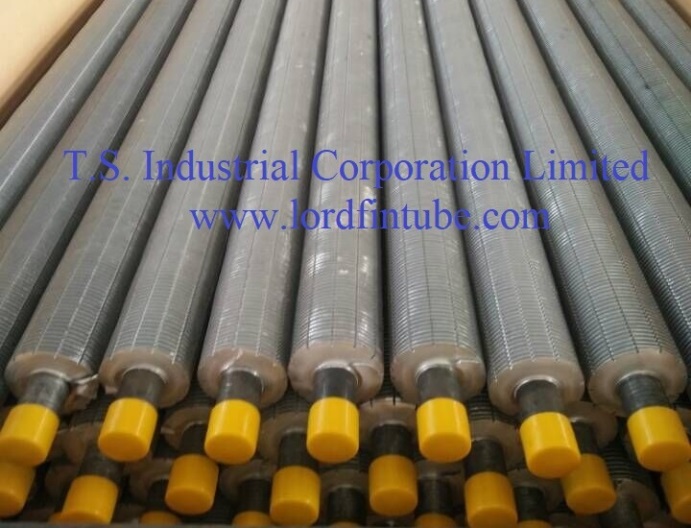
Extruded 16mo3 Finned Tube
The practical takeaway for buyers and engineers: if your project drawings reference 15Mo3, dont panic. 16Mo3 is a fully interchangeable upgrade that brings tighter chemistry, better weldability, and improved creep performance to the table. For new builds, wed strongly recommend standardizing on 16Mo3 finned tube straight from the design phase. It eliminates sourcing headaches later and aligns with the global shift toward EN standards. For legacy replacements, confirm the required impact test temperature and wall thickness—if they match, 16Mo3 will drop right in without a hitch.
At the end of the day, the choice between these two grades isnt about one being "good" and the other "bad." Its about understanding the subtle shifts in composition and standardisation that affect long-term reliability. And in the world of high-pressure heat exchange, those subtleties are exactly what separate a smooth operation from an unplanned shutdown.