


ASTM A213 TP316L stainless finned tube
What is ASTM A213 TP316L stainless finned tube
ASTM A213 TP316L stainless finned tube is a high-performance heat exchanger component manufactured from premium-grade 316L stainless steel. These tubes feature integral fins on their outer surface that significantly increase the heat transfer area, enhancing thermal efficiency in demanding industrial applications.
Technical Specification: The ASTM A213 standard covers seamless ferritic and austenitic steel boiler, superheater, and heat-exchanger tubes. The TP316L designation refers to a low-carbon variant of 316 stainless steel, containing 16-18% chromium, 10-14% nickel, and 2-3% molybdenum, offering superior corrosion resistance and weldability.
The finned tubes are available with either helical or straight fin configurations, selected based on specific application requirements and desired heat transfer characteristics. Helical fins provide maximum surface area in compact spaces, while straight fins offer lower pressure drop in high-flow applications.
The stainless finned tube design enables compact heat exchanger construction, reducing equipment footprint while maintaining or improving thermal performance. This makes ASTM A213 TP316L finned tubes particularly valuable in retrofit applications where space is constrained but higher heat transfer capacity is required.
Why choose ASTM A213 TP316L stainless finned tube
Exceptional Corrosion Resistance
- Low-carbon (0.03% max) composition prevents sensitization
- 2-3% molybdenum enhances pitting and crevice corrosion resistance
- Excellent performance in acidic and chloride environments
- Resists oxidation at temperatures up to 870°C (1600°F)
- Ideal for seawater, chemical, and pharmaceutical applications
High-Temperature Capabilities
- Maintains strength at temperatures up to 925°C (1700°F)
- Excellent creep resistance under continuous operation
- Resistant to scaling and oxidation in steam environments
- Performs well in thermal cycling conditions
- Suitable for superheater and boiler applications
Strength and Durability
- High tensile strength: ≥485 MPa (70,000 psi)
- Excellent impact toughness at cryogenic temperatures
- Resistant to stress corrosion cracking
- Long service life with minimal maintenance
- Withstands mechanical and thermal shocks
Thermal Conductivity
16.3 W/m·K at 100°C, providing efficient heat transfer for energy-saving applications
Cost Efficiency
Optimal balance of performance and cost compared to specialty alloys
Fabrication
Excellent weldability and formability for complex installations
Hygienic Properties
Non-porous surface meets sanitary requirements for food and pharmaceutical industries
Material science perspective: The addition of molybdenum (2-3%) in TP316L significantly enhances resistance to pitting and crevice corrosion, particularly in chloride-containing environments. The low carbon content (≤0.03%) minimizes carbide precipitation during welding, maintaining corrosion resistance in heat-affected zones. This combination makes ASTM A213 TP316L stainless finned tubes exceptionally durable in aggressive service conditions.
ASTM A213 TP316L stainless finned tube specifications
| Base Tube Material | ||||
| Fin Material | Tube Length (mm) | Fin length (mm) | Fin Tube Quantity (Pc) | Fin Material |
| ASTM A213 TP316L | SS316L | 9144 | 9040 | 740 |
| Base Tube O.D (mm) | Base Tube Thickness (mm) | Fin Height (mm) | Fin Thickness (mm) | Fin Pitch (mm) |
| 25.4 | 3.04 | 12.7 | 0.8 | 2.54 |
|
ASTM A213 Standard: Specification for Seamless Ferritic and Austenitic Alloy-Steel Boiler, Superheater, and Heat-Exchanger Tubes. TP316L composition: Cr 16-18%, Ni 10-14%, Mo 2-3%, C ≤0.03%, Mn ≤2.0%, Si ≤1.0%, P ≤0.045%, S ≤0.030%. Customization: Tubes can be manufactured in various diameters (15-50mm), wall thicknesses (1.5-5mm), fin heights (8-20mm), and fin pitches (2-8mm) to meet specific application requirements. |
||||
Helical Fin Configuration
- Maximum surface area in compact envelope
- Heat transfer enhancement: 3-5× vs. bare tube
- Ideal for air-cooled heat exchangers
- Higher pressure drop, offset by superior thermal performance
- Preferred for gas-to-liquid applications
Straight Fin Configuration
- Lower pressure drop across the tube bank
- Easier cleaning and maintenance access
- Heat transfer enhancement: 2-3× vs. bare tube
- Suitable for high-flow gas streams
- Preferred for liquid-to-gas applications
ASTM A213 TP316L stainless finned tube corrosion resistance
Chemical Compatibility
Excellent resistance to a wide range of chemicals including organic acids, alkaline solutions, and chloride-containing environments. Performs exceptionally well in acetic acid, phosphoric acid, and dilute sulfuric acid applications.
Pitting Resistance
With a Pitting Resistance Equivalent Number (PREN) of 25-30, TP316L offers superior resistance to pitting corrosion in chloride environments, making it ideal for marine and coastal applications.
High-Temperature Corrosion
Maintains excellent oxidation resistance at temperatures up to 870°C (1600°F). The chromium content forms a protective oxide layer that prevents scaling in steam and combustion environments.
Corrosion mechanism insight: The molybdenum content in TP316L enhances the stability of the passive film in reducing and oxidizing environments. In chloride-bearing media, the PREN value directly correlates with resistance to localized corrosion. For applications involving seawater or brackish water, ASTM A213 TP316L stainless finned tubes provide reliable long-term performance where lower-grade materials would fail.
ASTM A213 TP316L stainless finned tube applications
ASTM A213 TP316L stainless finned tubes are engineered for demanding heat transfer applications where corrosion resistance and reliability are paramount. They are designed to withstand harsh operating conditions and maintain peak performance over extended service periods.
Chemical Processing
Heat exchangers, reactors, and condensers handling corrosive media
Oil & Gas Refineries
Coolers, heaters, and condensers in offshore platforms
Pharmaceutical
Sterilizers, clean steam systems, and process heat exchangers
Food & Beverage
Pasteurizers, evaporators, and hygienic heat exchangers
Desalination Plants
Multi-stage flash and multi-effect distillation heat exchangers
Power Generation
Condensers, feedwater heaters, and boiler components
Energy Efficiency: The finned design increases heat transfer efficiency by up to 5 times compared to bare tubes, significantly reducing energy consumption. The excellent thermal conductivity of 316L stainless steel (16.3 W/m·K at 100°C) further enhances energy efficiency in heat recovery systems.
How to select ASTM A213 TP316L stainless finned tube
Selecting the right finned tube for your application involves evaluating several interdependent parameters. What factors should drive your decision? How do operating conditions influence tube and fin geometry choices?
Operating Temperature
Continuous service up to 870°C (1600°F). For cyclic or intermittent duty, consider peak temperature excursions and thermal fatigue resistance.
Corrosive Environment
Assess chloride content, pH range, and presence of aggressive species. TP316L excels in chloride-rich and acidic media where PREN values above 25 are required.
Heat Transfer Duty
Calculate required U-value and surface area. Helical fins for compact high-duty applications; straight fins for lower pressure drop and easier cleaning.
Installation Constraints
Available space, tube bundle orientation, and maintenance access influence fin density, tube diameter, and overall bundle geometry.
Selection workflow: Define process conditions (temperature, pressure, fluid properties) → identify corrosion risks → calculate heat transfer requirements → select fin configuration → verify mechanical integrity → confirm compliance with ASTM A213 and relevant codes (ASME Section VIII, PED 2014/68/EU).
ASTM A213 TP316L stainless finned tube manufacturing process
How are ASTM A213 TP316L stainless finned tubes manufactured? The production process ensures dimensional accuracy, metallurgical integrity, and consistent fin geometry.
Manufacturing excellence: The combination of seamless tube construction and high-frequency welded fins produces a metallurgically bonded fin-tube interface with minimal thermal resistance. This ensures that the enhanced surface area translates directly into improved heat transfer performance without compromising mechanical strength.
ASTM A213 TP316L stainless finned tube quality standards
What quality standards govern ASTM A213 TP316L stainless finned tubes? Compliance with international codes and rigorous testing protocols ensures reliable performance in critical applications.
ASTM A213
Seamless ferritic and austenitic alloy-steel boiler, superheater, and heat-exchanger tubes
ASME Section VIII
Pressure vessel design and fabrication requirements for finned tube bundles
PED 2014/68/EU
European pressure equipment directive compliance for CE marking
ISO 9001
Quality management system certification for manufacturing processes
EN 10204 3.1
Material certification with inspection certificate, traceable to mill test reports
NACE MR0175
Suited for sour service environments with H₂S resistance (where applicable)
Testing protocols: Each tube undergoes hydrostatic testing at 1.5× design pressure, eddy current examination for surface defects, dimensional verification of fin geometry, and material certification per EN 10204 3.1. Our quality system maintains full traceability from raw material to finished product.
What are the common questions about ASTM A213 TP316L stainless finned tube
ASTM A213 TP316L stainless finned tubes maintain structural integrity and oxidation resistance at temperatures up to 870°C (1600°F) in continuous service. For intermittent operation, they can withstand brief exposures up to 925°C (1700°F) without significant loss of mechanical properties.
Fin geometry directly impacts heat transfer efficiency through surface area enhancement and fluid dynamics. Helical fins provide maximum surface area in compact spaces, increasing heat transfer by 3-5 times compared to bare tubes. Straight fins offer lower pressure drop, making them suitable for high-flow applications where minimizing resistance is critical.
ASTM A213 TP316L stainless finned tubes are widely used in chemical processing, oil and gas refineries, pharmaceutical manufacturing, food and beverage production, desalination plants, and power generation facilities. Their exceptional corrosion resistance and high-temperature performance make them ideal for these demanding industrial environments.
The primary difference lies in the molybdenum content. TP316L contains 2-3% molybdenum, which significantly enhances resistance to pitting and crevice corrosion in chloride environments compared to TP304. TP316L also has a lower carbon content (0.03% max) which improves weldability and reduces sensitization risk. For applications involving seawater, acidic media, or chloride-rich environments, TP316L is the preferred choice.
Regular maintenance includes visual inspection for fouling, scale buildup, or mechanical damage. Non-destructive testing methods such as eddy current examination, ultrasonic testing, and dye penetrant inspection are recommended for condition monitoring. Periodic cleaning using chemical or mechanical methods helps maintain heat transfer efficiency. The low-carbon composition of TP316L resists sensitization, reducing the risk of intergranular corrosion during service.
Optimal fin geometry depends on the specific application. Typical fin pitches range from 2-8 mm, with fin heights from 8-20 mm. Dense fin patterns (small pitch, tall fins) maximize surface area but increase pressure drop and fouling risk. Sparse fin patterns (larger pitch, shorter fins) reduce pressure drop and facilitate cleaning. Performance modeling and empirical data guide the selection for each unique operating condition.
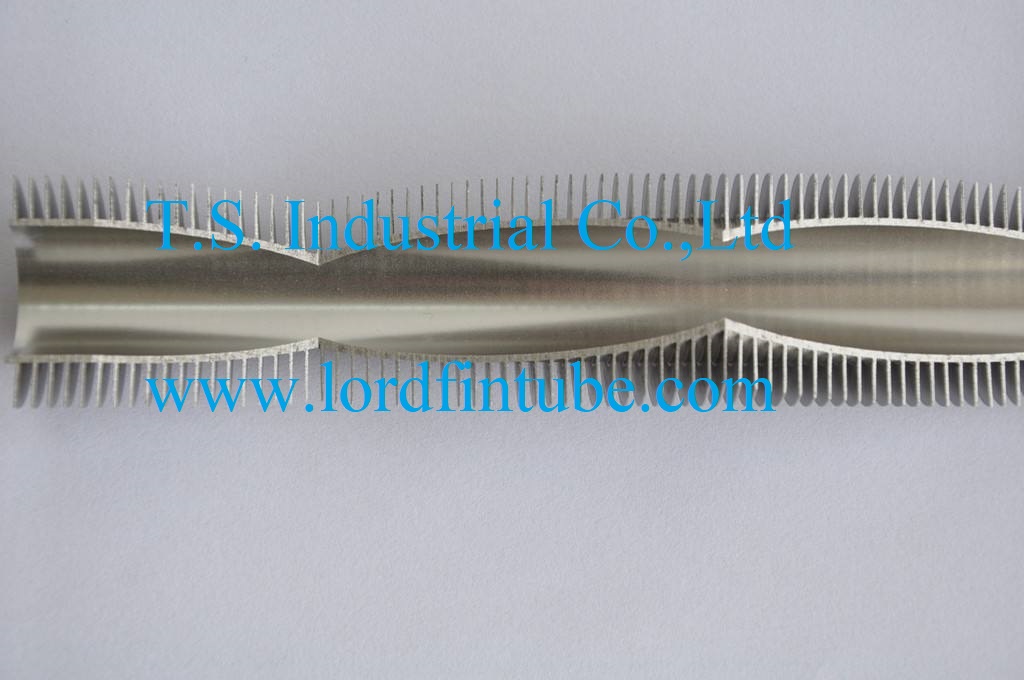
Quality Assurance: All TP316L finned tubes undergo rigorous testing including hydrostatic testing, eddy current examination, dimensional verification, and material certification. Our manufacturing process complies with ASME Section VIII and PED 2014/68/EU standards for pressure equipment.