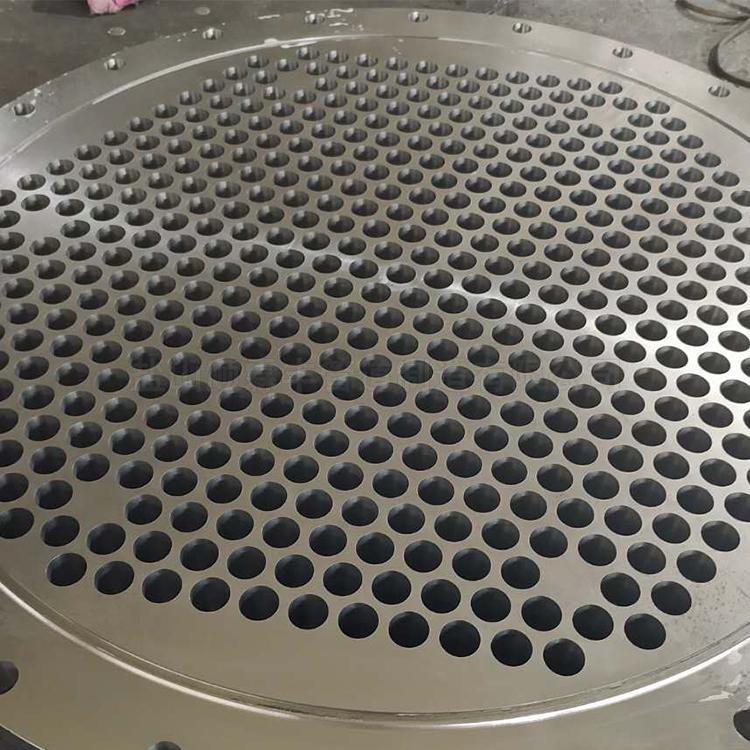

Lord Fin Tube-Baffle in spiral heat exchanger
Heat Exchanger Baffle Design
For procurement specialists and design engineers, selecting the right heat exchanger baffle is a critical decision impacting efficiency, maintenance costs, and system longevity. Baffles are not mere supports; they direct shell-side fluid flow, manage pressure drop, and prevent tube vibration.
Which factors actually determine baffle performance? What separates a well-designed baffle from one that causes premature failure? This article breaks down the engineering principles, material trade-offs, and practical selection criteria that directly affect heat exchanger reliability and operating costs.
What Does a Heat Exchanger Baffle Do?
Baffles are plates installed inside the shell of a shell-and-tube heat exchanger. Their primary role is threefold: to direct the shell-side fluid across the tube bundle in a specific pattern for optimal heat transfer, to support the tubes preventing sag and vibration-induced damage, and to increase turbulence. This turbulence disrupts the boundary layer on the tube surface, significantly enhancing the rate of heat exchange between the two fluids. Without properly designed baffles, fluid can short-circuit, leading to poor thermal performance and potential mechanical failure.
How does baffle geometry influence these functions? The cut shape, spacing, and orientation determine how effectively the fluid sweeps across the tube bundle. A well-optimised baffle arrangement can improve heat transfer coefficients by 20–40% compared to a poorly designed configuration, while simultaneously reducing the risk of tube fretting and fatigue.
How Does a Heat Exchanger Baffle Create Spiral Flow?
The baffle design in a spiral plate heat exchanger stems from an innovative concept: by altering the shell-side baffle arrangement, the fluid can follow a near-continuous spiral path. This spiral flow creates a more uniform velocity distribution and reduces dead zones compared to traditional segmental baffles, often leading to lower fouling and pressure drop.
While an ideal continuous spiral surface is difficult to manufacture, the practical solution uses a series of overlapping fan-shaped plates—spiral baffles. These plates are arranged to approximate a helical flow path. Common designs use 2 to 4 baffles per spiral pitch, with configurations including continuous lapping or staggered lapping. Based on the flow channel arrangement, the structures are categorized into single-helix and double-helix types, each offering distinct flow characteristics and performance trade-offs.
Which industries benefit most from spiral baffle designs? Applications handling viscous fluids, slurries, or services prone to fouling often see extended run lengths and reduced cleaning frequency. The lower pressure drop also translates to energy savings on pumping, which can be substantial in large-scale operations.
Procurement Considerations for Baffles
- Baffle Type & Flow Pattern: Determines heat transfer efficiency and pressure drop.
- Baffle Cut & Spacing: Impacts fluid velocity, turbulence, and vibration risk.
- Material Compatibility: Must resist corrosion from the shell-side fluid.
- Mechanical Strength: Must withstand operational pressure and thermal stresses.
- Fouling Tendency: Design should minimize areas where deposits can accumulate.
- Manufacturing & Installation Cost: Balances performance gains with budget constraints.
Which Baffle Type Fits Your Heat Exchanger?
Understanding the common baffle types is essential for specification. The choice directly influences thermal-hydraulic performance and maintenance schedules. Each design offers a distinct balance between heat transfer enhancement, pressure drop, and mechanical reliability.
| Baffle Type | Flow Pattern | Primary Advantages | Common Applications |
|---|---|---|---|
| Segmental (Single/Double) | Zig-zag, window-to-window | High heat transfer, simple design, low cost | Most common; general chemical, HVAC, power |
| Helical/Spiral | Continuous spiral | Lower pressure drop, reduced fouling, less vibration | Services prone to fouling, viscous fluids |
| Rod Baffle | Longitudinal, supported by rods | Excellent vibration elimination, very low pressure drop | High-pressure gas services, critical vibration zones |
| Orifice Baffle | Flow through perimeter holes | Good for condensing or vaporizing services | Condensers, reboilers |
| EMBaffle® (Eggcrate) | Longitudinal, grid-like | Extremely low pressure drop, high thermal performance | Gas coolers/heaters, compact designs |
How do you choose between these options? Start by evaluating the allowable pressure drop in your system. If the pumping budget is tight, helical or rod baffles become attractive. If maximum heat transfer per unit area is the priority, segmental baffles with tight spacing often deliver the best results, provided vibration risks are managed.
How to Select Heat Exchanger Baffle Materials?
Material choice is dictated by the shell-side fluids corrosiveness, operating temperature, and pressure. Cost and longevity are key trade-offs. For highly corrosive environments like offshore seawater cooling, expensive alloys like titanium or duplex stainless steel may be necessary for the heat exchanger baffle. In less aggressive services, carbon steel is the standard for its strength and economy.
Which material properties matter most beyond corrosion resistance? Thermal expansion compatibility with tube materials, erosion resistance in high-velocity services, and weldability all influence the final selection. The table below provides a practical reference for common baffle materials and their typical service envelopes.
| Material | Corrosion Resistance | Max Service Temperature | Typical Applications |
|---|---|---|---|
| Carbon Steel | Moderate (non-corrosive fluids) | 450°C | Water, steam, light hydrocarbons |
| Stainless Steel (304/316) | Good (chlorides, acids) | 650°C | Chemical processing, food, pharmaceuticals |
| Duplex Stainless | Excellent (seawater, chlorides) | 350°C | Offshore, marine, desalination |
| Titanium | Superior (aggressive chlorides) | 350°C | Seawater cooling, brine, acidic services |
| Copper-Nickel (CuNi) | Excellent (seawater, biofouling) | 300°C | Marine condensers, coastal power plants |
Why Baffle Spacing and Cut Matter for Heat Exchangers?
Baffle spacing (the distance between baffles) and baffle cut (the height of the segment removed) are crucial design variables. Closer spacing increases velocity and heat transfer coefficient but also raises pressure drop and pumping cost. A typical baffle cut ranges from 20% to 45% of the shells inner diameter. A larger cut reduces pressure drop but may decrease heat transfer and allow more tube vibration. The optimal design finds a balance, often using TEMA standards as a starting point and refined through simulation.
What happens when spacing or cut is poorly optimized? Excessive spacing leads to low cross-flow velocity, which reduces turbulence and allows fouling to accumulate more rapidly. Too small a cut restricts flow through the window area, increasing pressure drop disproportionately and creating erosion hotspots. The table below illustrates how these two parameters interact.
| Parameter | Effect of Decreasing Spacing | Effect of Increasing Cut |
|---|---|---|
| Heat Transfer Coefficient | Increases (higher velocity) | Decreases (lower cross-flow) |
| Pressure Drop | Increases sharply | Decreases |
| Tube Vibration Risk | Decreases (more supports) | Increases (longer unsupported spans) |
| Fouling Tendency | Decreases (higher shear) | Increases (lower velocity, stagnant zones) |
How to Maintain Heat Exchanger Baffles?
During installation, ensure baffles are aligned correctly with the tube bundle and the shell. Misalignment can cause flow bypass, reducing efficiency. For maintenance, inspect baffles during tube bundle pull-outs for corrosion, erosion, or fouling buildup. Spiral and rod baffle designs often allow easier cleaning than segmental types. Regular inspection helps prevent unexpected failures and maintains design performance.
Which inspection points should maintenance teams prioritise? The baffle-to-tube clearance, the condition of baffle edges, and the integrity of tie-rod connections are frequent failure locations. A structured maintenance checklist can streamline this process and ensure no critical aspect is overlooked.
| Inspection Area | What to Look For | Recommended Action |
|---|---|---|
| Baffle Edges & Cut Surfaces | Erosion notches, thinning, burrs | Grind smooth; replace if thickness reduction > 15% |
| Tube-to-Baffle Clearance | Enlarged holes, fretting wear | Measure clearance; re-bush or replace if excessive |
| Tie Rods & Spacers | Corrosion, loose connections, missing parts | Tighten or replace as needed |
| Fouling Deposits | Scale, sludge, polymerization | Chemical cleaning or hydroblasting |
| Baffle Alignment | Skewed or shifted plates | Realign during re-tubing |
What Drives Heat Exchanger Baffle Selection?
There is no universal "best" baffle. The optimal heat exchanger baffle depends on your specific service conditions: fluid properties, thermal duty, allowable pressure drop, and fouling potential. For new projects, involve experienced thermal engineers early. For replacements or retrofits, analyze performance history—high pressure drop might suggest a shift to a helical design, while tube vibration issues might point to rod baffles. Always request detailed material certifications and consider the total cost of ownership, not just the initial price.
How does operating philosophy influence baffle selection? Plants that prioritise continuous, uninterrupted operation may favour spiral or rod baffles for their fouling resistance and vibration damping. Facilities with frequent start-stop cycles might opt for segmental designs that offer robust mechanical performance under thermal cycling. Understanding your operational profile is just as important as the thermal calculations.
By focusing on these practical aspects of baffle design and selection, you can make informed decisions that enhance heat exchanger reliability and efficiency, ultimately contributing to more sustainable and cost-effective operations.