


Comparison of Cold Bending and Hot Bending for U bend tubes
U bend tubes are indispensable components in heat exchangers, boilers, chemical pipelines, and HVAC systems, serving critical functions in fluid transmission and heat exchange. The bending process directly determines the geometric accuracy, mechanical performance, surface quality, and service life of U bend tubes. Cold bending and hot bending are the two dominant manufacturing techniques for U bend tube forming. Though both methods can produce qualified U-shaped tubular structures, they differ fundamentally in processing principles, material adaptability, technical characteristics, and application scenarios. This article comprehensively compares cold bending and hot bending for U bend tubes, analyzing their respective advantages, limitations, and optimal application conditions to provide reliable technical guidance for industrial production and engineering selection.
1. Basic Processing Principles
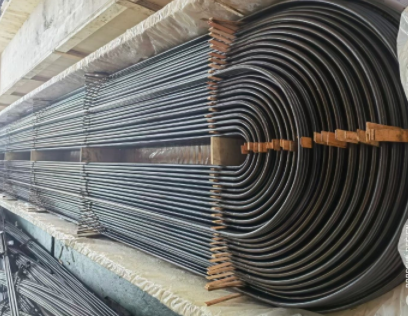
1.1 Cold Bending for U Bend Tubes
Cold bending is a plastic forming process conducted completely at ambient temperature without external heating treatment. The technique relies on precise mechanical force generated by professional tube bending equipment, such as rotary draw bending machines and roll bending machines, to force the tube to undergo elastic-plastic deformation and form a standard U-shaped structure. During the entire cold bending process, the metallurgical structure of the tube material remains unchanged, and the forming effect is achieved purely through physical extrusion and stretching. For U bend tubes, cold bending usually adopts one-time integral forming or segmented continuous bending, with strict control over bending speed and mechanical pressure to avoid local deformation defects.
1.2 Hot Bending for U Bend Tubes
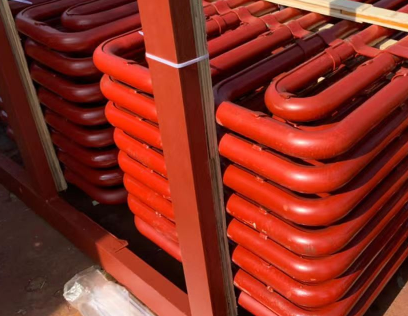
Hot bending is a thermal processing technology that improves material plasticity by local or overall heating before tube bending. In industrial production, the tube is heated to a specific high-temperature range (800–1050℃ for most steel and stainless steel tubes) through induction heating or flame heating. High temperature refines the metal grain structure, reduces material hardness and yield strength, and greatly enhances ductility and malleability. After the tube reaches the optimal plastic state, mechanical bending is performed at a controlled speed (generally no more than 3 degrees per second). The formed U bend tube requires slow cooling or targeted heat treatment to eliminate internal stress and stabilize mechanical properties, and anti-oxidation measures such as argon protection are usually adopted during heating to prevent surface oxidation and decarburization.
2. Core Differences in Process Characteristics
Material Structure & Mechanics
Cold Bending: Retains original metallurgical properties, work hardening at bent area, tiny residual stress. Suitable for conventional strength scenarios.
Hot Bending: Refined grains, eliminates work hardening, uniform stress distribution, better impact toughness & fatigue resistance.
Dimensional Accuracy & Surface
Cold Bending: High precision, excellent surface finish, no oxidation scale, stable consistency.
Hot Bending: Slight thermal expansion errors, minor oxidation traces, but enables ultra-small bending radii.
Efficiency & Cost
Cold Bending: Low cost, high efficiency, ideal for mass production, energy-saving.
Hot Bending: High energy consumption, longer cycles, higher cost, suitable for specialty applications.
Comprehensive Advantage & Disadvantage Summary
| Evaluation Dimension | Cold Bending | Hot Bending |
|---|---|---|
| Material Performance | Retains original properties, work hardening, micro stress | Uniform grain, good toughness, no hardening, excellent high-temp resistance |
| Forming Accuracy | High dimensional precision, uniform wall thickness | Slight thermal deformation, stable but slightly lower tolerance |
| Surface Quality | No oxide scale, smooth, high finish | Minor oxidation, slightly rough surface |
| Production Cost & Efficiency | Low cost, high efficiency, mass production | High energy, high cost, lower efficiency, custom-made |
| Processing Limitation | Not for thick-wall, large diameter, ultra-small radii | Wide adaptability, processes all specifications |
| Service Reliability | Conventional conditions, stress relief may needed | Excellent pressure/fatigue resistance, harsh conditions |
3. Application Scope Adaptability
Cold Bending Preferred Scenarios
Standard small/medium caliber, thin-walled, ductile materials (carbon steel, copper, regular stainless steel). Ideal for civil heat exchangers, HVAC pipelines, high-volume standardized production. Bending radius typically 3–5 times pipe diameter.
Advantages: High precision, low cost, excellent surface for mass manufacturing.
Hot Bending Optimal Scenarios
Large diameter, thick-walled, high-hardness alloy steel, ultra-small bending radius. Industrial boilers, petrochemical, power stations. Superior stress distribution & toughness against high pressure and thermal fatigue.
Flexible custom U-bends and multi-angle composite bending.
Selection Principles for Industrial Production
For standard small & medium caliber, thin-walled U bend tubes made of common ductile materials, with conventional working conditions and high-volume production demands, cold bending is prioritized due to its high efficiency, low cost and high precision. For thick-walled, large-diameter, high-alloy U bend tubes, or products requiring ultra-small bending radii serving in high-temperature, high-pressure harsh environments, hot bending must be adopted to avoid forming defects and ensure long-term operational safety.
In addition, for U bend tubes with strict fatigue resistance and corrosion resistance requirements, even if the specifications meet cold bending standards, hot bending can be selectively used to optimize internal stress distribution. For customized non-standard U-shaped structures, hot bending’s flexible forming advantages meet personalized needs.
4. Technology Comparison Summary Table (Quick Reference)
| Parameter | Cold Bending | Hot Bending |
|---|---|---|
| Temperature | Ambient (no heating) | 800–1050°C (typical steel) |
| Metallurgical Change | Work hardening, residual stress | Grain refinement, stress relief |
| Surface Oxidation | None, high finish | Slight scale, possible decarburization if unprotected |
| Min Bending Radius | 3–5 × D | Smaller possible (1.5×D or less) |
| Typical Applications | General heat exchangers, HVAC, civil pipelines | Power stations, chemical reactors, high-alloy systems |
5. Conclusion
Cold bending and hot bending are two complementary forming technologies for U bend tubes, each with unique technical advantages and applicable scenarios. Cold bending dominates standardized, high-precision, low-cost mass production with its ambient-temperature forming, high dimensional accuracy, and excellent surface quality. Hot bending relies on high-temperature plastic forming to break through the processing limitations of cold bending, becoming the core process for high-specification, difficult-to-form U bend tubes under harsh working conditions. In industrial applications, scientific and reasonable process selection based on actual demand can not only ensure the product quality and service performance of U bend tube, but also effectively control production costs and improve production efficiency, providing a solid guarantee for safe and stable operation of pipeline systems.