


Corrugated steel pipes serve critical functions across multiple industrial sectors, particularly where durability and thermal efficiency are paramount. In heat transfer systems, these specialized pipes offer distinct advantages that enhance performance and longevity.
Corrugated Steel Pipe Fundamentals
Corrugated steel pipes are characterized by their alternating ridges and grooves, creating a pattern that significantly enhances structural integrity while maintaining needed flexibility. This construction method allows the pipe to withstand external pressures and internal stresses more effectively than smooth-walled alternatives.
Structural Benefits
The corrugated design increases the moment of inertia without adding substantial weight, creating pipes that resist deformation under load. This geometric advantage makes them particularly suitable for applications involving ground movement, thermal cycling, or variable pressure conditions.
Corrugated Steel Pipe Fabrication
Material Specifications
Selection begins with steel alloys appropriate for the operating environment. For thermal applications, choices often include stainless steel grades (304, 316) or carbon steel with protective coatings. Material thickness typically ranges from 0.8mm to 4mm, depending on diameter and pressure requirements.
Forming Process
The manufacturing sequence involves several precise operations:
- Coil Preparation: Steel coils are leveled and trimmed to exact width specifications.
- Forming: Sheets pass through progressive rollers that create the corrugation pattern while forming the cylindrical shape.
- Seam Joining: Longitudinal seams are welded using automated processes ensuring consistent penetration and minimal heat distortion.
- Corrugation Calibration: Final adjustment of ridge depth and spacing to meet precise specifications.
- Surface Treatment: Application of protective coatings, which may include galvanizing, polymer layers, or specialized thermal sprays.
Corrugated Steel Pipe Performance Characteristics
| Property | Corrugated Steel Pipe | Smooth Steel Pipe | Practical Implication |
|---|---|---|---|
| Flexural Strength | High (ridge reinforcement) | Moderate | Better resistance to ground movement |
| Thermal Expansion Accommodation | Excellent (design flexibility) | Limited | Reduced stress in temperature-variable systems |
| Surface Area per Linear Meter | Increased 15-40% | Standard | Enhanced heat transfer efficiency |
| Installation Weight | Reduced (thinner walls possible) | Higher for equivalent strength | Lower transportation and handling costs |
| Flow Characteristics | Turbulent at lower velocities | Laminar preferred | Improved mixing in thermal applications |
Corrugated Steel Pipe Selection Criteria
When specifying corrugated steel pipes for thermal applications, engineers consider several technical parameters:
- Corrugation Profile: Pitch (distance between ridges) and depth ratios affect both strength and fluid dynamics.
- Diameter Range: Available from 50mm to over 3000mm, with larger diameters often requiring custom fabrication.
- Pressure Rating: Determined by material thickness, corrugation pattern, and seam integrity.
- Temperature Tolerance: Varies by steel grade, with specialized alloys accommodating extremes from -40°C to 800°C.
- Connection Systems: Options include flanged, welded, or mechanical couplings suitable for thermal movement.
Corrugated Steel Pipe in Heat Transfer Systems
Within thermal engineering applications, Corrugated steel pipe components address specific challenges that smooth pipes cannot. The increased surface area directly improves heat exchange rates in condensers, economizers, and waste heat recovery units. The inherent flexibility accommodates differential expansion between components operating at varying temperatures.
Thermal Performance Advantages
The ridge pattern creates micro-turbulence in flowing media, breaking up boundary layers that insulate smooth pipe walls. This turbulence effect enhances heat transfer coefficients by 20-60% depending on fluid viscosity and velocity. For phase-change applications (evaporators, condensers), this characteristic significantly improves efficiency.
Installation and Maintenance Considerations
Proper installation maximizes the longevity of corrugated steel piping systems. Key practices include:
- Providing adequate support spacing that accounts for the pipes increased stiffness in the radial direction but maintained axial flexibility
- Aligning connections to prevent induced stress during thermal cycling
- Implementing inspection protocols focusing on external corrosion protection integrity
- Monitoring for debris accumulation in corrugation troughs in certain applications
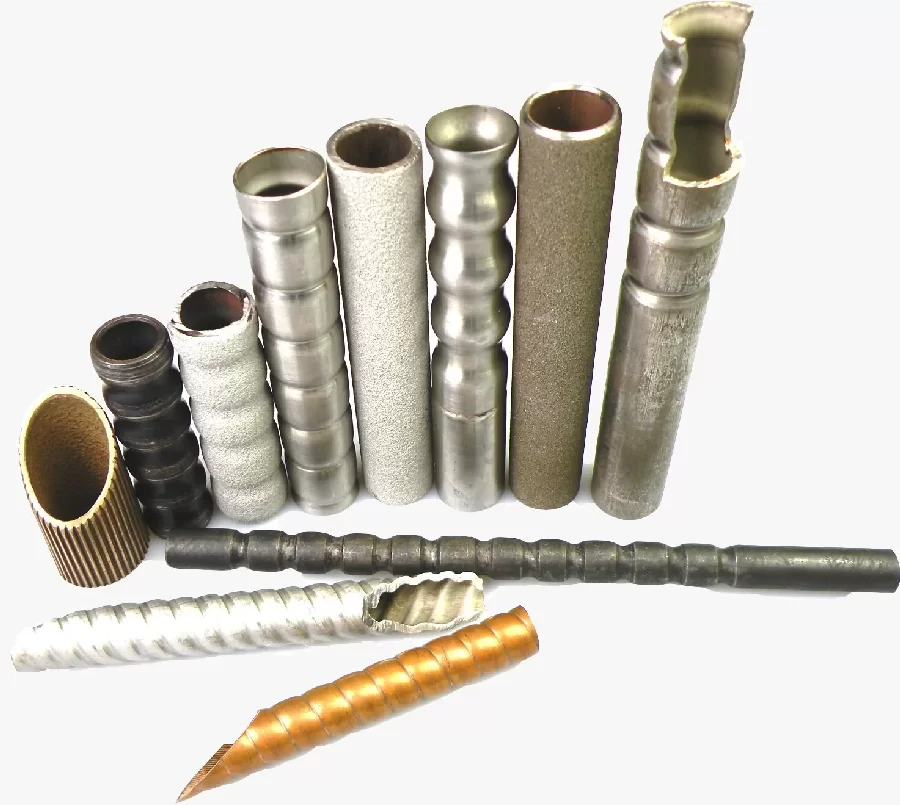
Corrugated steel pipes integrated into a large-scale heat recovery system
Industry Applications Beyond Heat Transfer
While thermal applications represent significant usage, corrugated steel pipes serve multiple sectors:
- Infrastructure: Culverts, stormwater management, and underground utility conduits
- Mining: Ventilation ducts, tailings transport, and dewatering systems
- Energy: Geothermal loop fields, solar thermal collector arrays, and biomass boiler systems
- Industrial Processing: Material conveyance with thermal requirements, exhaust gas systems
The adaptability of corrugated steel pipe systems continues to expand as fabrication techniques advance. Modern production methods allow customized corrugation patterns optimized for specific flow regimes or thermal performance requirements. This versatility ensures their ongoing relevance in industrial applications where efficiency, durability, and thermal performance intersect.