

Customized economizer for Heat recovery
Customized economizer for heat recovery
In industrial operations, a significant portion of energy input escapes as waste heat through flue gases and exhaust streams. An economizer for heat recovery directly addresses this loss by capturing thermal energy that would otherwise be discharged into the atmosphere and redirecting it for productive use within the facility. This approach not only lowers fuel consumption but also reduces operational expenses and environmental footprint.
What makes an economizer for heat recovery particularly effective is its ability to transfer captured heat to a working fluid such as feedwater, combustion air, or process streams. The recovered energy can preheat boiler feedwater, warm up raw materials, or generate additional steam, depending on the specific configuration and process requirements. Which design suits a given application depends on factors like exhaust gas temperature, flow rate, and the desired heat transfer medium.
Economizer for heat recovery working principles
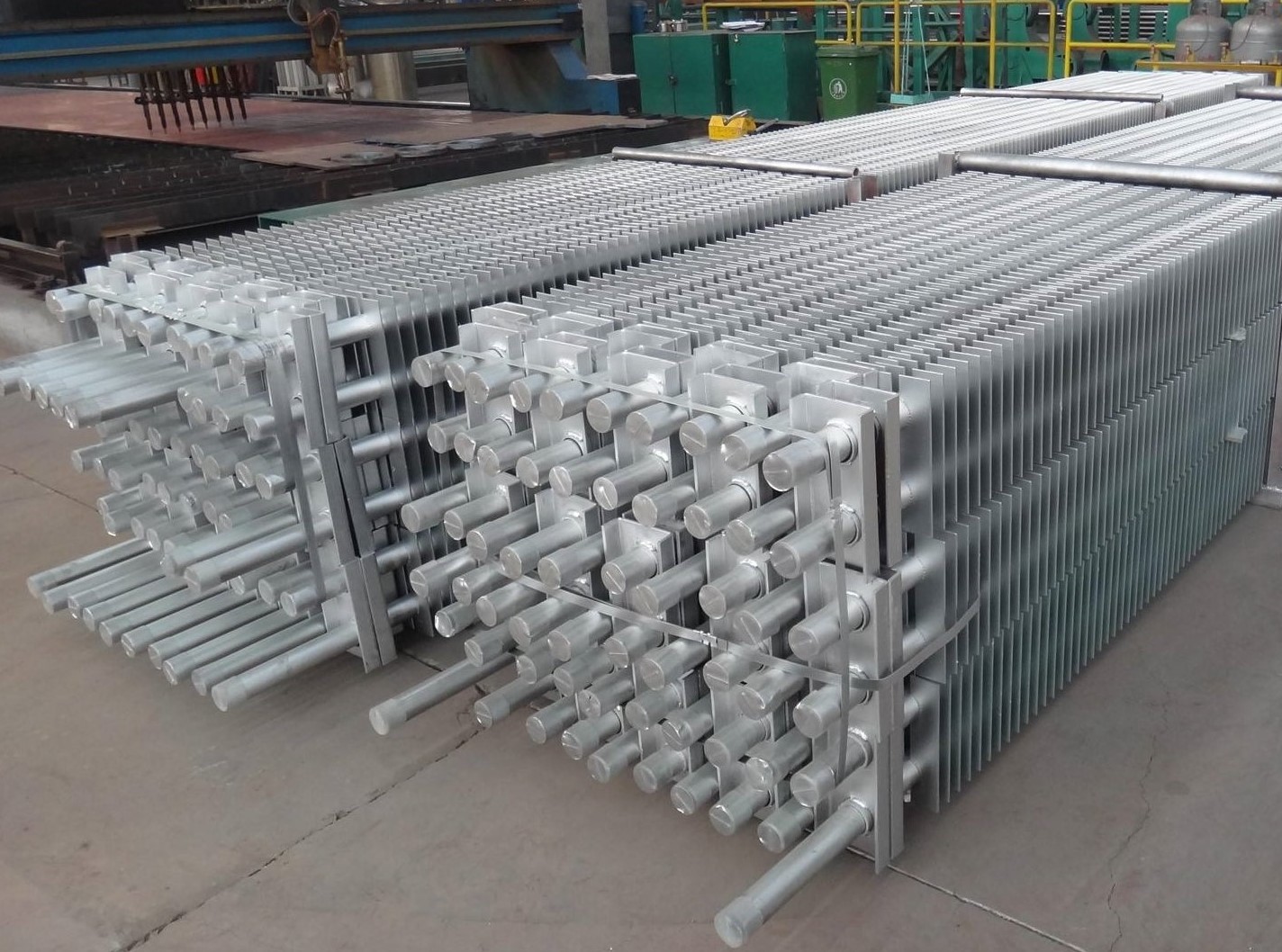
A customized economizer for heat recovery operates on a straightforward yet powerful thermal exchange mechanism. Hot flue gases or exhaust streams pass through a series of heat exchanger tubes, while a cooler fluid flows on the other side of the tube walls. Heat naturally moves from the high-temperature gas side to the lower-temperature fluid side, raising the fluids temperature without mixing the two streams.
How does this process deliver tangible benefits? By preheating the fluid that enters a boiler or furnace, the system requires less primary fuel to reach the desired operating temperature. For example, preheating combustion air from ambient temperature to 300°C can reduce fuel consumption by 5–8%. In feedwater heating applications, every 6°C increase in feedwater temperature typically improves boiler efficiency by approximately 1%.
What distinguishes a customized economizer from standard units is its ability to match the specific thermal profile of a given process. Engineers can adjust tube spacing, fin density, flow arrangement (counter-flow or cross-flow), and material selection to optimize heat transfer while managing pressure drop and fouling risks.
Economizer for heat recovery material options
Material selection directly influences the durability, thermal performance, and cost-effectiveness of a customized economizer for heat recovery. Different operating environments demand different material properties—high-temperature resistance, corrosion tolerance, thermal conductivity, and mechanical strength all play critical roles.
The following table compares common materials used in economizer construction, highlighting their key characteristics and typical applications.
| Material | Max Operating Temperature | Corrosion Resistance | Thermal Conductivity | Typical Applications |
|---|---|---|---|---|
| Carbon Steel | Up to 450°C | Moderate (requires coating for acidic conditions) | High | Low-to-medium temperature flue gas, non-corrosive streams |
| Stainless Steel (304/316) | Up to 650°C | Good (excellent for acidic or moist environments) | Moderate | Corrosive exhaust, food processing, chemical plants |
| Alloy Steel (e.g., T11, T22) | Up to 750°C | Good (high-temperature oxidation resistance) | Moderate | High-temperature boilers, refinery heaters |
| Aluminum (fins) | Up to 200°C | Fair (not suitable for acidic or alkaline conditions) | Excellent | Low-temperature air preheaters, HVAC applications |
| Copper (fins) | Up to 300°C | Fair (susceptible to sulfur attack) | Excellent | Clean gas streams, compact heat exchangers |
Which material ultimately gets selected depends on the exhaust gas composition, operating temperature range, and the presence of corrosive agents such as sulfur oxides or chlorides. Finned tubes made of aluminum or copper are often used in lower-temperature sections where high thermal conductivity is paramount, while stainless steel or alloy steel tubes are preferred for high-temperature zones where oxidation and creep resistance become critical.
Insulation materials such as mineral wool or ceramic fiber are applied to the shell or housing to minimize heat loss to the surroundings and protect personnel from hot surfaces. The insulation layer also helps maintain consistent thermal performance across varying ambient conditions.
Economizer for heat recovery application scenarios
Customized economizers for heat recovery are deployed across a broad spectrum of industries, each with unique thermal characteristics and recovery objectives. What works well in a power generation facility may not be suitable for a cement kiln, which is why tailored engineering is essential.
The table below illustrates how different sectors utilize economizers and the typical benefits realized.
| Industry | Waste Heat Source | Recovery Application | Typical Efficiency Gain |
|---|---|---|---|
| Power Generation | Boiler flue gas (150–400°C) | Preheat feedwater to boiler | 3–6% fuel savings |
| Industrial Boilers | Exhaust from natural gas or oil firing | Preheat combustion air or process water | 5–10% reduction in fuel use |
| Refineries & Petrochemical | Furnace flue gas, reactor off-gas | Preheat crude oil or feedstock | 4–8% energy cost reduction |
| Cement Production | Kiln exhaust (300–600°C) | Preheat raw meal or fuel | 5–12% thermal efficiency improvement |
| Chemical Plants | Reaction exhaust, distillation column vents | Heat process fluids or generate low-pressure steam | 6–15% overall energy savings |
Beyond these major sectors, customized economizers are also found in pulp and paper mills, glass manufacturing, food processing, and even large commercial buildings with cogeneration systems. How the recovered heat is utilized—whether for preheating, steam generation, or space heating—depends on the specific energy balance and operational priorities of each facility.
Economizer for heat recovery performance benefits
Installing a customized economizer for heat recovery delivers measurable advantages that extend beyond simple fuel savings. Which benefits matter most to a particular operation often depends on the facilitys energy costs, environmental targets, and production stability requirements.
Energy efficiency improvement
By recovering waste heat that would otherwise be lost, the economizer reduces the amount of primary energy needed to maintain process temperatures. This directly translates to lower fuel consumption per unit of output, which is especially valuable in energy-intensive industries where fuel costs represent a major operating expense.
Cost savings and operational resilience
Reduced fuel consumption leads to lower utility bills, and in many cases, the payback period for a customized economizer is relatively short—often within 1 to 3 years, depending on operating hours and energy prices. Additionally, by improving thermal efficiency, the facility becomes less vulnerable to fuel price volatility.
Environmental compliance and sustainability
Lower fuel consumption means reduced carbon dioxide, nitrogen oxide, and sulfur oxide emissions. For organizations committed to sustainability goals or operating under strict emissions regulations, an economizer for heat recovery provides a practical pathway to lower the environmental impact without sacrificing production capacity.
Customizability and process integration
Each industrial process has unique thermal characteristics, which is why off-the-shelf solutions often fall short. A customized economizer can be engineered to fit within existing spatial constraints, handle specific exhaust gas compositions, and deliver the exact thermal output required by downstream operations. This flexibility ensures that the heat recovery system works in harmony with other process equipment.
Versatility across operating conditions
Whether the application involves high-temperature flue gas from a furnace or moderate-temperature exhaust from a drying oven, the economizer can be configured with appropriate tube materials, fin geometries, and flow arrangements to maintain optimal performance across a wide range of thermal loads.
Economizer for heat recovery selection factors
Choosing the right economizer for heat recovery involves evaluating several technical and economic parameters. What should engineers and plant managers consider during the selection process?
Exhaust gas characteristics
The temperature, flow rate, and chemical composition of the exhaust stream are primary determinants of economizer design. High-temperature gases may require alloy steel tubes, while acidic or moist streams demand stainless steel or protective coatings. Particulate loading also influences tube spacing and fin design to minimize fouling and facilitate cleaning.
Desired heat recovery duty
How much thermal energy needs to be recovered, and at what temperature? The duty requirement dictates the size of the heat exchange surface, the number of tube rows, and the flow arrangement. Engineers calculate the required heat transfer area based on the log mean temperature difference (LMTD) and overall heat transfer coefficient.
Space and layout constraints
Existing plant layouts often have limited space for retrofitting heat recovery equipment. A customized economizer can be designed with compact footprints, vertical or horizontal orientations, and modular sections to facilitate installation without major structural modifications.
Maintenance and accessibility
How easy is it to inspect, clean, and repair the economizer? Design features such as removable tube bundles, hinged access doors, and soot blower ports can significantly reduce downtime and maintenance costs. Which cleaning method (steam blowing, compressed air, or mechanical brushing) is most suitable depends on the fouling tendency of the exhaust gas.
Economic analysis and payback
A thorough cost-benefit analysis should compare the capital investment, installation costs, and ongoing maintenance against the projected fuel savings and emissions credits. Factors such as operating hours per year, energy prices, and discount rates all influence the payback period and return on investment.
Selecting a customized economizer for heat recovery is not a one-size-fits-all decision. Engaging with an experienced engineering team early in the project ensures that the final design aligns with operational requirements, delivers expected performance, and provides a sound economic return over the equipments service life.
Industries that invest in well-engineered heat recovery systems consistently report improved energy metrics, lower operating costs, and enhanced environmental performance. Whether the goal is to reduce fuel bills, meet regulatory targets, or improve overall plant efficiency, a customized economizer for heat recovery offers a proven and adaptable solution.