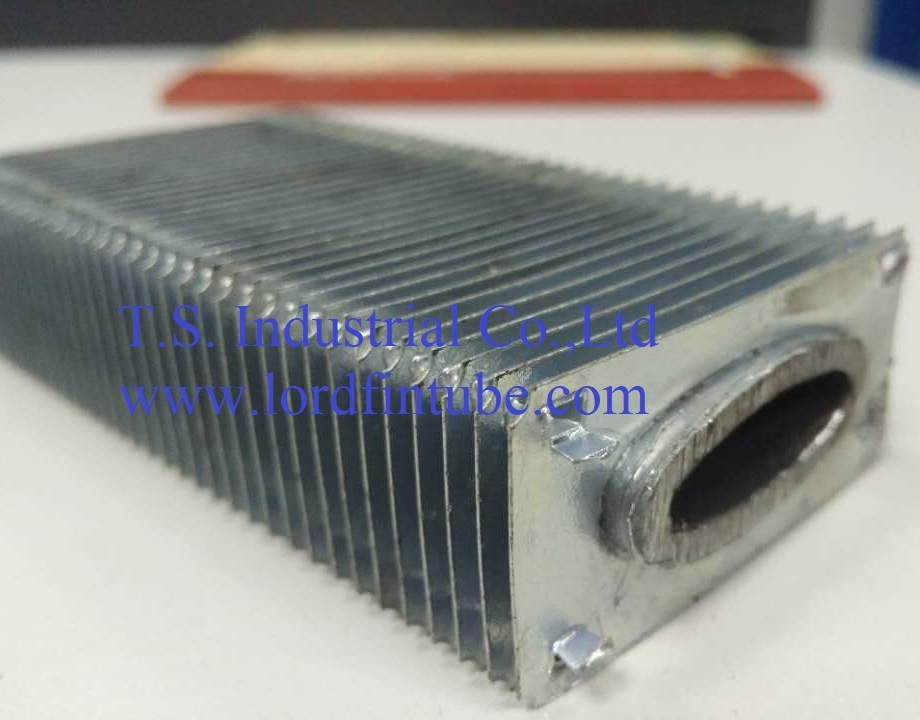

Lord Fin Tube-Elliptical finned tube|Oval finned tubes
Elliptical and Oval Finned Tubes in Industrial Heat Exchange Systems
Elliptical finned tubes represent a significant advancement in thermal engineering, offering distinct advantages over traditional circular designs in specific applications. These components function as high-efficiency heat exchange elements within various industrial systems, with configurations including elliptical rectangular, spiral elliptical flat, and elliptical H-shaped finned tubes.
The adoption of oval finned tubes continues to expand across sectors such as ethylene production and oil refining, where their performance characteristics align with demanding operational requirements. This examination explores their technical attributes and practical considerations.
Elliptical Finned Tube Performance Characteristics
The aerodynamic profile of elliptical finned tubes creates lower external resistance to fluid flow compared to round tubes. This streamlined shape reduces pressure drop across the heat exchanger, directly impacting system energy consumption. The enhanced surface contact between the fin and tube base in oval designs promotes more efficient thermal transfer, contributing to equipment that is often more compact and lightweight.
Reduced Airside Pressure Drop
The elliptical shape presents less frontal resistance to airflow, allowing for lower fan power requirements and operational costs in forced-draft applications.
Enhanced Structural Rigidity
The geometry provides increased resistance to bending moments and vibration, extending service life in demanding environments.
Optimized Space Utilization
The flat profile allows for tighter bundle arrangements within spatial constraints, increasing heat transfer area per unit volume.
Heat Transfer Calculations for Oval Finned Tubes
Accurately determining fin efficiency remains crucial for thermal design involving elliptical fin tubes. While equivalent diameter methods provide initial approximations, these approaches contain inherent deviations requiring correction factors for project-specific accuracy. Recent computational fluid dynamics studies have refined these calculations, accounting for variable fin thickness and contact resistance at the fin-tube interface.
For precise thermal modeling, engineers should consider boundary layer development along the elongated tube surface and its effect on local heat transfer coefficients, which differ from circular tube behavior.
Comparative Analysis: Elliptical vs Circular Finned Tubes
| Performance Parameter | Elliptical/Oval Finned Tubes | Circular Finned Tubes |
|---|---|---|
| Airside Resistance | Typically 15-30% lower under equivalent conditions | Higher frontal resistance due to shape |
| Bundle Compactness | Higher surface density per unit volume | Standard arrangement with gaps |
| Fouling Tendency | Reduced particle deposition on leading edges | Uniform deposition around circumference |
| Manufacturing Complexity | Higher tooling requirements for some types | Standardized production processes |
| Typical Applications | Air-cooled condensers, process gas coolers | Boilers, general purpose heat exchangers |
Industrial Applications of Oval Finned Tubes
- Ethylene Plant Charge Gas Coolers: Where low pressure drop maintains compressor efficiency
- Refinery Hydrotreater Effluent Air Coolers: Handling process streams with variable composition
- Power Plant Air-Cooled Condensers (ACC): Particularly in water-scarce regions
- Compressed Air Aftercoolers: Where moisture removal efficiency is critical
- Natural Gas Processing: In glycol contactor overhead coolers
- Waste Heat Recovery Units: With challenging flue gas compositions
- Marine Engine Cooling Systems: Where space and weight are constrained
- HVAC Industrial Dehumidifiers: For enhanced latent heat transfer
Technical Considerations for Specification
While elliptical finned tubes demonstrate clear advantages in airside performance, internal flow characteristics require careful evaluation. The non-circular internal passage affects pressure drop calculations for the tube-side fluid. For single-phase flows, correlations differ from those used for circular tubes, while for two-phase flows, flow pattern distribution varies significantly.
Material selection also presents unique considerations. The bending process for creating oval tubes from round stock affects material properties in the deformed regions. Finite element analysis during design can identify areas requiring additional thickness or alternative materials to maintain pressure containment.