


Extruded Finned Tube Base Tube Materials
The Role of Base Tube Selection in Extruded Finned Tube
Optimizing Industrial Heat Transfer Through Material Engineering
In the realm of industrial heat transfer, the extruded finned tube stands out for its exceptional durability and thermal performance. Unlike embedded or wrapped fins, the extruded fin is formed by cold-rolling an outer aluminum muff over a base tube. This process creates a mechanical bond that eliminates air gaps and prevents galvanic corrosion.
However, the success of this high-efficiency component depends heavily on the selection of the base tube material. The base tube acts as the primary pressure boundary, determining the heat exchangers resistance to internal pressure, temperature fluctuations, and corrosive media.
At Lord Fin Tube, we understand that selecting the appropriate metallurgy is not merely a technicality but a strategic decision that affects the lifecycle of the entire thermal system. Whether for air-cooled heat exchangers (ACHE), steam air heaters, or oil coolers, the base tube must be chosen based on the specific chemistry of the process fluid and the mechanical stresses involved.
Core Focus Extruded Finned Tube Base Tube Materials directly influence heat transfer efficiency, pressure containment, and long-term reliability. What makes this selection so critical? Which material properties matter most? How do operating conditions dictate the optimal alloy? Why does material compatibility with the process fluid determine service life? These are the questions that drive informed engineering decisions.
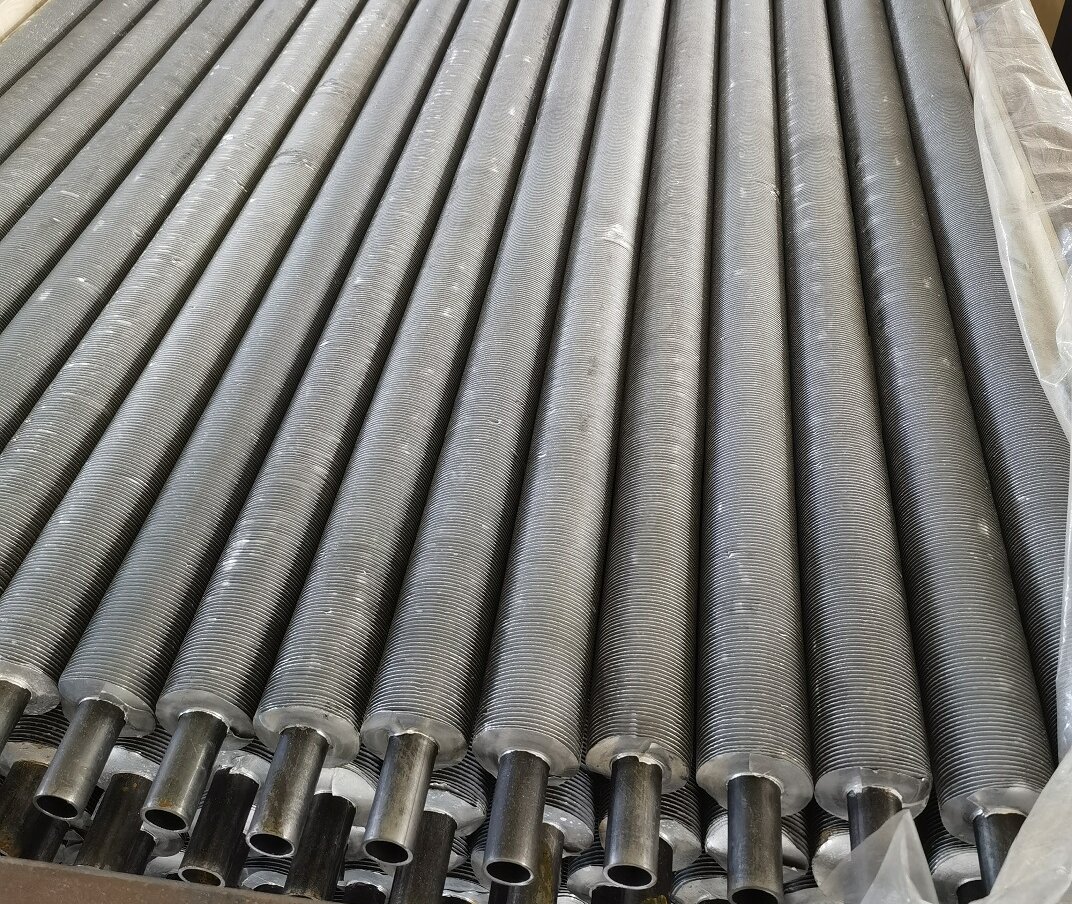
Extruded Finned Tube Base Tube Materials: Common Alloys and Applications
The versatility of the extrusion process allows for a wide range of core tube materials to be utilized, addressing diverse industry requirements. Each alloy family brings distinct strengths to specific operating environments.
(ASTM A179, A192, A106 Gr. B)
Ideal for non-corrosive environments or systems with chemical inhibitors.
(ASTM A213/A269, Duplex)
(ASTM B111 C70600, C44300)
Which base tube material fits your operating conditions? Below is a comparative snapshot of key performance indicators.
| Material | Corrosion Resistance | Max. Service Temp. (°C) | Thermal Conductivity (W/m·K) | Typical Applications |
|---|---|---|---|---|
| Carbon Steel (A179) | Moderate | 450 | ~45 | Air coolers, condensers, non-corrosive fluids |
| Stainless 304/316 | High | 650 | ~16 | Chemical processing, aggressive media |
| Duplex Steel | Very High | 350 | ~18 | Offshore, chloride-rich environments |
| Copper-Nickel 90/10 | Very High | 260 | ~45 | Marine, desalination, seawater cooling |
| Admiralty Brass | High | 230 | ~110 | Condensers, heat exchangers with fresh water |
* Values are representative; actual performance depends on specific grade, operating conditions, and fluid chemistry.
Extruded Finned Tube Base Tube Materials: Technical Advantages
The "bimetallic" nature offers unique advantages. Aluminum 1060/6063 fins provide massive surface area for air-side transfer, while the base tube ensures fluid-side structural integrity.
The extrusion process creates a "tight fit" resistant to vibration. Since the outer sleeve completely covers the base tube, it is protected from atmospheric corrosion, extending operational life significantly.
Why does this matter? Because the mechanical bond between fin and tube eliminates interfacial resistance, maximizing heat flux. Which industries benefit most? Power generation, petrochemical, HVAC, and food processing all rely on this technology for reliable thermal management.
- Cold-rolled formation for bond integrity
- Zero air-gap performance
- Full core tube atmospheric protection
- Superior thermal cycling stability
- No galvanic corrosion between fin and tube
Extruded Finned Tube Base Tube Materials: Manufacturing and Customization
We provide customized solutions meeting ASTM, ASME, or DIN standards. Our lines handle diameters from 12.7mm to 50.8mm, with optimized fin parameters for pressure drop management.
Our quality protocol includes hydro-testing before/after finning to ensure zero micro-fractures. We offer plain ends, land areas for tube sheets, and anti-oxidation coatings for transit protection.
Available Fin Configurations
- Integral low-finned (for condensation)
- High-density finning (max surface area)
- Custom fin pitch and height
- Special end preparations
Quality Assurance Steps
- Raw material certification (MTR)
- Dimensional inspection during finning
- Hydrostatic pressure test (before & after)
- Non-destructive examination (NDE) as required
How does Lord Fin Tube ensure consistency? Through rigorous process controls and traceability from melt to finished tube. What standards do we follow? ASTM B359, ASME Section VIII, and customer-specific specifications.
Extruded Finned Tube Base Tube Materials: Performance Optimization
Matching thermal expansion coefficients is critical. In high-temperature use, the mechanical bond must remain intact to prevent "fin loosening," which causes drastic efficiency loss.
Which factors should engineers evaluate when selecting Extruded Finned Tube Base Tube Materials? Consider these key variables:
- Operating temperature range – determines creep resistance and thermal fatigue life
- Fluid corrosivity – pH, chloride content, and presence of aggressive species
- Pressure cycles – affects wall thickness and material toughness requirements
- Fouling tendency – influences surface finish and cleanability
- Cost vs. lifecycle value – initial material cost versus maintenance and replacement frequency
"Our engineering team assists in calculating variables to ensure reliable performance under the most demanding thermal cycles."
Why is material matching so important? Because mismatched coefficients of expansion can lead to bond failure, reducing heat transfer by up to 40%. How do we mitigate this? Through precise alloy selection and controlled extrusion parameters that accommodate thermal movement without compromising the mechanical lock.
Extruded Finned Tube Base Tube Materials: Selection Factors
Choosing the right base tube material requires a systematic evaluation of operational demands and economic constraints. Below are the primary decision drivers that influence material selection for extruded finned tubes.
What defines the maximum allowable working pressure?
The base tubes yield strength and creep resistance at elevated temperatures set the pressure boundary. Carbon steel offers cost-effective strength up to 450°C, while stainless grades maintain integrity beyond 600°C.
Which corrosion mechanisms are most threatening?
Pitting, stress corrosion cracking (SCC), and intergranular attack are common failure modes. Duplex stainless steel resists SCC in chloride service, while copper-nickel alloys excel in seawater due to their protective oxide film.
How does thermal conductivity affect overall performance?
Higher conductivity materials (like copper alloys) transfer heat more efficiently but may not withstand high pressures or aggressive chemicals. The trade-off between conductivity and corrosion resistance must be balanced for each application.
Why consider lifecycle cost over initial price?
A lower-cost material may require frequent replacement due to corrosion or erosion, while a premium alloy can deliver decades of trouble-free service. Our team helps quantify total cost of ownership for informed procurement.
For a detailed material recommendation, share your operating conditions with our engineering group. We analyze fluid composition, temperature profile, pressure cycles, and fouling potential to specify the optimal Extruded Finned Tube Base Tube Materials for your project.