


Fintube Cooling Systems
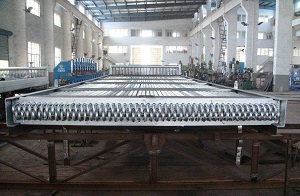
Fintube Cooling Systems
What makes Fintube Cooling Systems essential across industries like power generation, oil and gas, and chemical processing? The answer lies in their ability to solve a fundamental thermal challenge: how to efficiently transfer heat between a liquid and a gas, particularly air, without requiring massive, impractical equipment.
What Exactly Are Fintube Cooling Systems?
At their core, these are heat exchangers that use specialized tubes with extended outer surfaces, known as fins. These fins are mechanically attached, embedded, or extruded onto the base tube. The principle is simple yet powerful: by dramatically increasing the surface area available for heat exchange, the system can transfer thermal energy much more effectively, especially when one of the fluids is a gas like air, which has poor thermal conductivity. In some designs, the effective surface area can be expanded by a factor of 4 to 10 times that of a plain tube.
How Do These Systems Work?
Imagine a hot process fluid flowing through a plain metal tube. Heat transfers through the tube wall to the surrounding air, but the airs poor conductivity makes this process slow. Fintube Cooling Systems solve this by adding fins to the tubes exterior. These fins act like radiators, capturing heat from the tube wall and distributing it over a much larger area. This greatly accelerates the heat transfer from the tube to the air, whether the air is moved naturally or with the help of fans.
Which Fin Types and Materials Are Used?
The choice of fin and material directly impacts performance, durability, and cost. Heres a look at common configurations:
- Extruded Fins: Offer excellent thermal efficiency (85-92%) and corrosion resistance, ideal for high-pressure steam and chemical processing up to 400°C.
- Wrapped (L-Footed) Fins: A cost-effective solution (75-85% efficiency) for HVAC, refrigeration, and standard process cooling, suitable from -200°C to 350°C.
- Studded Fins: Built for extreme conditions (up to 600°C) like high-temperature gas cooling and furnace applications, with superior fouling resistance.
- Embedded (G-Type) Fins: Offer the highest efficiency (88-95%) for critical applications, mechanically locked into a groove for excellent thermal contact up to 550°C.
Base tubes are manufactured from a variety of materials including carbon steel, stainless steel (304/316/310), copper alloys, titanium, and nickel alloys, depending on the application requirements.
Why Choose a Fintube Cooling System?
The advantages are compelling for any operation seeking efficient thermal management:
- Enhanced Heat Transfer Efficiency: Optimized fin density can increase heat transfer efficiency by 30-45% compared to conventional designs. Some advanced fin designs have demonstrated a 95% increase in Nusselt number and a 127% improvement in effectiveness over smooth tubes.
- Compact Equipment Design: By boosting performance without adding bulk, these systems allow for smaller, lighter, and easier-to-install equipment.
- Cost Effectiveness: Higher efficiency reduces energy consumption. Additionally, achieving the same heat transfer with fewer tubes reduces the need for expensive materials like copper or high-grade stainless steel.
- Superior Air-Side Performance: For applications where air is the cooling medium, finned tubes are indispensable. Without them, heat exchangers would need impractically large surface areas or extreme airflow.
Where Are They Used?
Fintube Cooling Systems are a cornerstone of thermal management in many sectors:
- Power Generation: Used in condensers for turbine exhaust, auxiliary cooling in nuclear facilities, and steam condensation in regions where water is scarce.
- Petrochemical and Oil & Gas: Essential for cooling refined oil products, condensing gases in distillation columns, and cooling compressed natural gas.
- HVAC Systems: Found in heating and cooling coils to regulate indoor climate in commercial and residential buildings.
- Process Gas Cooling: Critical for managing temperatures in chemical reactors and compressor intercoolers.
- Steel Industry: Used in blast furnace and converter systems.
Forced Draft vs. Induced Draft: Which Configuration Is Better?
Air-cooled finned tube heat exchangers are typically configured in one of two ways, each with its own set of trade-offs.
Forced Draft Design
Here, the fan is located below the tube bundle, pushing air upward through the tubes. This is the most common type.
- Advantages: Lower fan shaft power consumption, easier maintenance access (fan at ground level), and the fan components are not exposed to hot exhaust air, increasing their lifespan.
- Disadvantages: Can have less uniform airflow across the bundle, and there is a potential for hot air recirculation if not designed properly.
Induced Draft Design
In this configuration, the fan is placed above the tube bundles, pulling air through them.
- Advantages: Provides more uniform and stable airflow distribution across the tube bundle, which often leads to higher heat transfer efficiency. It also handles hot air more effectively, which can reduce required fan horsepower.
- Disadvantages: Typically requires higher fan power for the same heat rejection duty. Maintenance is more challenging as the fan and motor are located at height, posing greater safety risks.
What Performance Factors Matter Most?
Several key parameters determine how well a fintube cooling system performs in real-world conditions:
- Fin Density: The number of fins per unit length affects both heat transfer and pressure drop – higher density gives more surface area but also more flow resistance.
- Tube Layout: Staggered or in-line arrangements influence airflow patterns and overall heat transfer coefficients.
- Air Velocity: Higher velocities increase heat transfer but require more fan power – a balance must be struck for optimal efficiency.
- Fouling Resistance: Dust, dirt, or process deposits can degrade performance over time, so fin geometry and cleaning access are important design considerations.
Ultimately, Fintube Cooling Systems remain one of the most versatile and reliable solutions for air-cooled heat exchange, offering engineers a proven path to efficient thermal management across countless industrial processes. As energy costs rise and water conservation becomes more critical, the role of these systems is only expected to expand.