


Introduce Forged Carbon Steel Tube Sheet
Forged Carbon Steel Tube Sheet
Forged carbon steel tube sheets are critical components in heat exchangers, boilers, and pressure vessels, providing structural integrity and efficient heat transfer capabilities. These specialized components are engineered to withstand extreme temperatures, high pressures, and corrosive environments while maintaining dimensional stability and mechanical strength.
Industry Insight: The global forged components market is projected to reach $115.2 billion by 2027, with tube sheets accounting for approximately 12% of industrial forgings used in energy and chemical processing sectors.
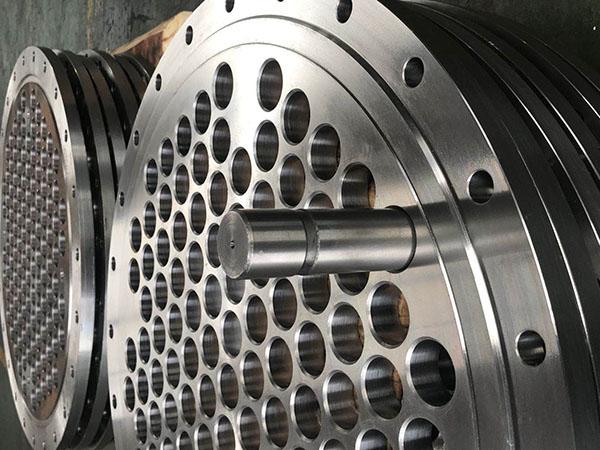
Forged Carbon Steel Tube Sheet with precision-drilled holes for optimal heat transfer efficiency
Forged Carbon Steel Tube Sheet Material Specifications
Forged carbon steel tube sheets are manufactured from high-quality carbon steel materials that meet stringent industry standards for mechanical properties and chemical composition. The selection of the appropriate material grade directly influences the components performance in service, particularly in terms of temperature resistance, pressure containment, and corrosion management.
| Material Grade | ASTM Standard | Tensile Strength (MPa) | Yield Strength (MPa) | Elongation (%) | Impact Test Temperature |
|---|---|---|---|---|---|
| A105 | ASTM A105/A105M | 485-655 | 250 min | 22 | Room Temperature |
| LF2 | ASTM A350/A350M | 485-655 | 250 min | 22 | -46°C (-50°F) |
| A516 Gr. 70 | ASTM A516/A516M | 485-620 | 260 min | 21 | -29°C (-20°F) |
Chemical Composition
C: 0.35% max, Mn: 0.60-1.05%, P: 0.035% max, S: 0.040% max, Si: 0.15-0.35%
Heat Treatment
Normalized or Quenched & Tempered for enhanced mechanical properties
Hardness Range
137-187 HB (Brinell Hardness) for optimal machinability
Each material grade offers distinct advantages for specific operating conditions. ASTM A105 is the most widely used grade for general-purpose applications at ambient and moderate temperatures. ASTM A350 LF2 provides enhanced low-temperature toughness, making it suitable for cryogenic services and cold-climate installations. ASTM A516 Grade 70 is preferred for pressure vessel applications where weldability and notch toughness are primary concerns.
Forged Carbon Steel Tube Sheet Production Standards
The manufacturing of forged carbon steel tube sheets follows rigorous international standards to ensure product reliability and performance consistency. Compliance with these standards guarantees that each component meets the required safety margins and operational criteria for its intended service.
ASME Standards
Compliance with ASME Section VIII Division 1 for pressure vessel applications, ensuring safety margins of 3.5:1 to 4:1 for design pressure.
ISO Certification
ISO 9001:2015 certified manufacturing processes with full traceability from raw material to finished product.
Non-Destructive Testing
100% ultrasonic testing (UT) and magnetic particle inspection (MPI) to detect internal and surface defects.
| Quality Control Process | Standard | Frequency | Acceptance Criteria |
|---|---|---|---|
| Chemical Analysis | ASTM A751 | Per Heat | Within Specified Range |
| Tensile Testing | ASTM A370 | Per Heat Treatment Lot | Meet Minimum Requirements |
| Impact Testing | ASTM A370 | Per Heat Treatment Lot | Minimum 20J at Specified Temp |
| Hardness Testing | ASTM E10 | Each Piece | Within Specified Range |
| Dimensional Inspection | ASME B16.5 | Each Piece | ±0.5mm Tolerance |
Beyond the standard quality checks, many manufacturers also perform additional tests such as corrosion testing, fatigue analysis, and fracture toughness evaluation for critical applications. These supplementary assessments provide deeper insights into the materials long-term performance under cyclic loading and aggressive media exposure.
Forged Carbon Steel Tube Sheet Dimensions
Forged carbon steel tube sheets are available in a wide range of sizes and configurations to meet specific application requirements. The dimensional flexibility of the forging process allows for custom designs that accommodate unique tube layouts, pressure ratings, and thermal duty cycles.
| Parameter | Standard Range | Custom Capabilities | Tolerance |
|---|---|---|---|
| Diameter | 300mm - 2500mm | Up to 4000mm | ±1.5mm |
| Thickness | 25mm - 150mm | Up to 300mm | ±0.5mm |
| Tube Hole Diameter | 15mm - 50mm | 10mm - 100mm | ±0.1mm |
| Tube Hole Pattern | Triangular/Square | Custom Layouts | ±0.3mm |
| Ligament Efficiency | 30% - 60% | Optimized Design | Per TEMA Standards |
Design Note: Tube sheet thickness is calculated based on TEMA (Tubular Exchanger Manufacturers Association) standards, considering design pressure, temperature, tube pitch, and ligament efficiency to ensure structural integrity under operating conditions.
When determining the optimal dimensions, engineers must balance thermal performance with mechanical reliability. Thicker tube sheets provide greater pressure containment but reduce overall heat transfer efficiency, while thinner designs enhance thermal conductivity but may compromise structural stability. Modern computational tools enable precise optimization of these competing requirements.
Forged Carbon Steel Tube Sheet Applications
Forged carbon steel tube sheets serve critical functions across multiple industries where reliable heat transfer and pressure containment are essential. Their versatility and robust performance make them the preferred choice for a broad spectrum of demanding applications.
Heat Exchangers
Used in shell and tube heat exchangers for efficient thermal energy transfer between fluids in chemical plants, refineries, and power generation facilities.
Boilers
Critical components in fire-tube and water-tube boilers, supporting heat exchange surfaces that generate steam for industrial processes and power generation.
Chemical Processing
Employed in reactors, condensers, and evaporators handling corrosive media at elevated temperatures and pressures.
Oil & Gas
Utilized in upstream and downstream processing equipment including separators, coolers, and heaters in refineries and petrochemical plants.
| Industry | Application | Operating Temperature | Design Pressure | Common Materials |
|---|---|---|---|---|
| Power Generation | Feedwater Heaters | Up to 300°C | Up to 100 bar | A105, A350 LF2 |
| Chemical Processing | Reactor Cooling | -50°C to 400°C | Up to 150 bar | A350 LF2, A516 Gr.70 |
| Oil Refining | Crude Preheaters | Up to 450°C | Up to 80 bar | A105, A350 LF2 |
| HVAC | Chiller Condensers | -10°C to 100°C | Up to 25 bar | A105 |
In each of these industries, the forged carbon steel tube sheet serves as the interface between the tube bundle and the shell, managing differential pressures, thermal expansion, and fluid sealing. Proper material selection and design ensure that the tube sheet performs reliably throughout its intended service life, often exceeding 20 years in well-maintained equipment.
Forged Carbon Steel Tube Sheet Advantages
Forged carbon steel tube sheets offer distinct benefits over cast or fabricated alternatives in demanding applications. The forging process imparts unique material characteristics that translate into superior performance and extended service life.
| Property | Forged Carbon Steel | Cast Carbon Steel | Fabricated Plate |
|---|---|---|---|
| Grain Structure | Refined, directional | Coarse, random | Variable, weld-affected |
| Mechanical Strength | Superior | Good | Variable |
| Impact Toughness | Excellent | Fair to Good | Weld-dependent |
| Fatigue Resistance | High | Moderate | Weld-limited |
| Defect Probability | Low | Moderate | Weld-related |
| Service Life | Longest | Good | Variable |
Enhanced Strength
The forging process aligns the grain structure, resulting in superior mechanical properties with 15-20% higher tensile strength compared to cast equivalents.
Improved Machinability
Consistent material properties allow for precise drilling and machining of tube holes with tight tolerances and excellent surface finish.
Temperature Resistance
Maintains structural integrity at temperatures up to 450°C, with specialized grades suitable for cryogenic applications down to -50°C.
Corrosion Management
While susceptible to corrosion, protective coatings and cathodic protection systems extend service life in aggressive environments.
Additionally, forged components exhibit superior resistance to thermal fatigue and creep deformation, making them ideal for cyclic duty services where temperature fluctuations are frequent. The absence of porosity and inclusions eliminates potential failure initiation sites, providing an extra margin of safety in critical applications.
Forged Carbon Steel Tube Sheet Manufacturing Process
The production of forged carbon steel tube sheets involves multiple precision-controlled steps to ensure dimensional accuracy and material integrity. Each stage is carefully monitored to meet the stringent quality requirements of the end-use application.
Material Selection
Certified carbon steel billets with documented chemical composition and mechanical properties
Heating & Forging
Controlled heating to 1150-1250°C followed by hydraulic pressing to refine grain structure
Heat Treatment
Normalizing or quenching & tempering to achieve desired mechanical properties
Rough Machining
Turning, facing, and drilling to establish basic dimensions and prepare for precision work
Precision Drilling
CNC drilling of tube holes with positional accuracy within ±0.1mm
Quality Verification
Comprehensive NDT, dimensional inspection, and material certification
| Process Stage | Key Parameters | Quality Checkpoints | Documentation |
|---|---|---|---|
| Forging | Temperature: 1150-1250°C Reduction Ratio: 3:1 min |
Grain flow inspection Surface defects |
Forging certificate |
| Heat Treatment | Normalizing: 900°C Tempering: 600-650°C |
Hardness tests Microstructure |
Heat treatment chart |
| Machining | Hole tolerance: ±0.1mm Surface finish: 3.2μm Ra |
CMM inspection Surface quality |
Dimensional report |
| NDT | UT: Full volume MPI: 100% surface |
Defect evaluation Acceptance criteria |
NDT reports |
Modern manufacturing facilities employ advanced automation and real-time process monitoring to ensure consistent quality across large production runs. Digital twin technologies and predictive analytics are increasingly used to optimize forging parameters and reduce material waste while maintaining the highest quality standards.
Forged Carbon Steel Tube Sheet Selection Criteria
Selecting the appropriate forged carbon steel tube sheet requires a systematic evaluation of operating conditions, design requirements, and lifecycle considerations. The following criteria guide engineers and procurement professionals in making informed decisions.
| Selection Factor | Key Considerations | Impact on Performance |
|---|---|---|
| Operating Temperature | Maximum and minimum temperatures, thermal cycling frequency | Determines material grade, heat treatment, and creep resistance requirements |
| Design Pressure | Maximum allowable working pressure, pressure fluctuations | Influences thickness, ligament efficiency, and safety margin calculations |
| Fluid Corrosivity | Chemical composition of process fluids, presence of contaminants | Dictates need for corrosion allowances, coatings, or upgraded materials |
| Tube Layout | Tube diameter, pitch, pattern (triangular or square) | Affects ligament efficiency, drilling complexity, and thermal performance |
| Service Life | Expected operating hours, maintenance intervals | Determines required fatigue resistance and inspection frequency |
| Regulatory Compliance | ASME, TEMA, EN, or other applicable codes | Ensures legal and insurance compliance for pressure equipment |
Beyond these technical factors, procurement professionals should also consider supplier qualifications, manufacturing lead times, and the availability of material certifications. A well-documented selection process reduces project risks and ensures that the tube sheet delivers reliable service throughout its intended lifecycle.
Forged Carbon Steel Tube Sheet Performance
Forged carbon steel tube sheets represent a robust solution for critical heat transfer applications where reliability, strength, and longevity are paramount. The forging process enhances material properties, providing superior mechanical strength and fatigue resistance compared to alternative manufacturing methods. With comprehensive quality assurance protocols and adherence to international standards, these components deliver consistent performance in the most demanding industrial environments.
When selecting forged carbon steel tube sheets, careful evaluation of material grade, design parameters, and application-specific requirements ensures optimal performance and service life. The technical data and comparative analyses presented in this document provide a foundation for informed decision-making in equipment design and specification. Engineers are encouraged to consult with experienced suppliers and to perform detailed thermal-mechanical calculations to validate their design choices for each unique operating scenario.
Performance Note: Field data from operating plants indicates that properly designed and maintained forged carbon steel tube sheets typically achieve service lives exceeding 25 years in non-corrosive services, with periodic inspections recommended every 3-5 years to monitor wall thickness and detect any potential degradation mechanisms.
Forged Carbon Steel Tube Sheet Frequently Asked Questions
What is a forged carbon steel tube sheet?
A forged carbon steel tube sheet is a thick, disc-shaped component used in heat exchangers, boilers, and pressure vessels to support and secure tubes while providing a barrier between fluid streams. The forging process refines the grain structure, delivering superior mechanical strength and fatigue resistance compared to cast or fabricated alternatives.
Which material grades are commonly used for forged carbon steel tube sheets?
Common material grades include ASTM A105 (standard carbon steel), ASTM A350 LF2 (low-temperature service), and ASTM A516 Grade 70 (pressure vessel quality). Each grade offers specific mechanical properties and temperature ranges to suit different operating conditions.
How does the forging process improve tube sheet performance?
Forging aligns the grain structure along the components contours, eliminating porosity and inclusions common in castings. This results in 15-20% higher tensile strength, improved impact toughness, and superior fatigue resistance, making forged tube sheets more reliable in cyclic loading and high-pressure applications.
What industries rely on forged carbon steel tube sheets?
Key industries include power generation (feedwater heaters, condensers), chemical processing (reactors, evaporators), oil and gas (separators, coolers, preheaters), and HVAC (chiller condensers). These sectors require reliable heat transfer components that withstand extreme temperatures and pressures.
What quality tests are performed on forged carbon steel tube sheets?
Standard quality tests include chemical analysis per ASTM A751, tensile and impact testing per ASTM A370, hardness testing per ASTM E10, 100% ultrasonic testing (UT) for internal defects, magnetic particle inspection (MPI) for surface flaws, and dimensional inspection using CMM to verify hole positions and tolerances.
How to select the right forged carbon steel tube sheet for a specific application?
Selection involves evaluating design pressure, operating temperature, fluid corrosivity, tube pattern and pitch, ligament efficiency, and material compatibility with adjoining components. Consulting TEMA standards and working with experienced suppliers ensures optimal material grade, thickness, and manufacturing route for each unique service condition.