


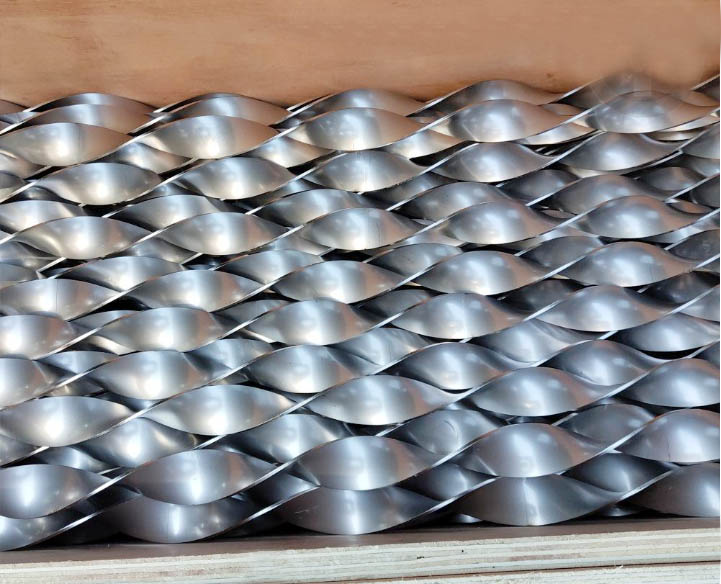
Products Description
What is a Heat Exchanger Turbolator?
A Turbolator, also known as tube inserts or boiler tube turbulators, are precisely engineered spiral blades strategically placed inside the tubes of boilers and heat exchangers. These sophisticated components serve as the core element of spoiler-enhanced heat exchange systems and are applied across various industrial applications to dramatically improve thermal performance.
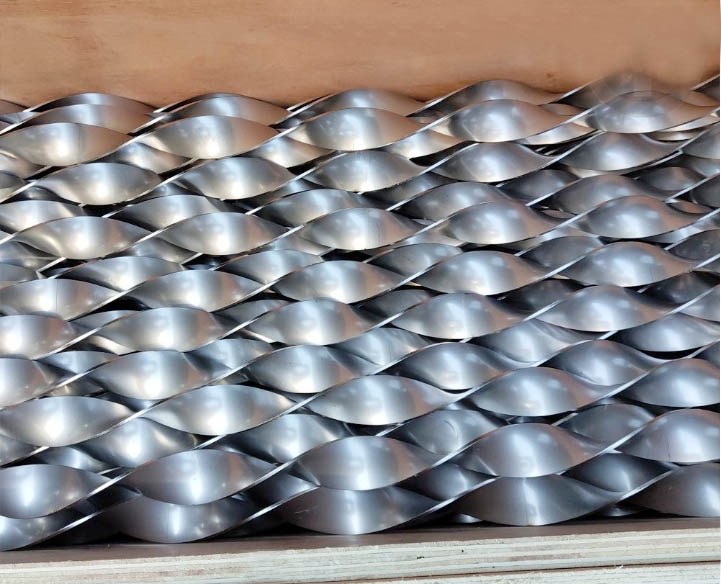
Extensive engineering studies have demonstrated that Heat Exchanger Turbolators induce significant helical movement in fluid flow within heat transfer tubes. The strategic placement of these spoiler additives creates a porous medium with exceptional porosity (ε≥95%) inside the heat exchange tubes. As fluid passes through these advanced turbulators, a pronounced diffuse flow effect occurs within the flow channel.
At remarkably low Reynolds numbers (Re≥300), the promoted diffuse flow transforms the liquid behavior within the heat exchanger tubes from laminar to turbulent flow. This transition is critical because flowing liquid in turbulent state exhibits the minimum total thermal resistance among all fluid flow regimes. With significantly reduced thermal resistance in the heat exchanger tubes, the overall heat transfer coefficient (K-value) experiences substantial enhancement, leading to dramatically improved heat exchange efficiency.
Performance of Enhanced Heat Transfer with Turbulators
Enhanced Heat Transfer Coefficient
The most significant advantage of incorporating turbulator spoilers is the substantial increase in the internal heat transfer coefficient within heat exchange tubes, typically achieving improvements of 30-60% depending on application parameters.
Fouling Resistance
Turbulators effectively inhibit scale formation and fouling through continuous flow disturbance, maintaining optimal heat transfer efficiency over extended operational periods and reducing maintenance requirements.
Maintenance Efficiency
Cleaning turbulators is remarkably straightforward, allowing for quick maintenance cycles and minimal downtime during scheduled servicing operations.
Stainless steel spoilers are primarily engineered to increase both the effective heat exchange area and thermal efficiency within heat exchange tubes. These components are particularly valuable for large-scale heat exchange platforms in industrial settings. Specifications and lengths can be precisely customized according to specific customer requirements and application parameters.
Turbulator Performance Comparison
| Performance Parameter | Standard Tubes (No Turbulator) | Tubes with Basic Turbulator | Tubes with Advanced Stainless Steel Turbulator |
|---|---|---|---|
| Heat Transfer Coefficient (W/m²K) | 800-1,200 | 1,300-1,800 | 1,900-2,600 |
| Pressure Drop Increase | Baseline (0%) | 15-25% | 18-30% |
| Fouling Reduction | 0% | 40-60% | 60-80% |
| Energy Efficiency Improvement | Baseline | 12-18% | 20-35% |
| Service Life (Years) | 5-8 | 8-12 | 12-20 |
Turbulator Material Specifications and Application
Standard Turbulator Specifications
| Turbulator Type | Tube ID Range (mm) | Recommended Pitch Ratio | Typical Applications | Heat Transfer Enhancement |
|---|---|---|---|---|
| Standard Single Twist | 15 - 50 | 2.0 - 3.5 | Boilers, Economizers | 25-40% |
| Double Helix Design | 25 - 80 | 1.5 - 2.5 | Process Heaters, Superheaters | 35-55% |
| Variable Pitch Turbulator | 30 - 100 | 1.8 - 3.2 | Waste Heat Recovery | 40-60% |
| High-Performance Tape | 10 - 40 | 2.5 - 4.0 | Compact Heat Exchangers | 30-45% |
Turbolator or Turbulator Industrial Applications
Tube Turbulators find extensive application across multiple industrial sectors where thermal efficiency is paramount. In boiler systems, they significantly improve heat absorption rates, reducing fuel consumption and emissions. Chemical processing industries utilize turbulators to enhance reaction kinetics through precise temperature control. Power generation facilities employ these components in economizers and superheaters to maximize energy recovery.
When selecting appropriate Boiler tube turbulators for specific applications, engineers must consider several critical factors: fluid properties, operating temperature and pressure ranges, fouling tendencies, and maintenance accessibility. The optimal turbulator design balances enhanced heat transfer against increased pressure drop to achieve the most efficient system performance.
Turbulator tape installations require precise engineering to ensure proper fitment and performance. Professional installation following manufacturer guidelines is essential to maximize benefits and ensure long-term reliability. Regular inspection and maintenance schedules should be established based on operational conditions and fluid characteristics.
-
Twisted Tapes
Twisted Tapes: CS_CRC IS 513 CR4, Size:13.5mm wide x 1.0mm thk. x Twist Pitch length 4.5 for 360 deg.x 20 feet long and Fastening Lug (Anchor). REQUIRED PITCH LENGTH OF INSERT FOR 360 DEG TWIST : 4.5 INCHES, Quantity : 1300 Pieces (For Tube Length 20’) NOTE : 1. FASTENING LUG TO BE PROVIDED IN THE INSERT, 2. VENDOR TO PROVIDE INSTALLATION PROCEDURE, VENDOR SHALL PROVIDE MATERIAL TEST CERTIFICATE.
2024 -
Tubulator
Hello I would like to have a price for a turbulator from stainless 316 or 2205/2507 material for tubes that are 19,6mm and 20,0mm Ti Gr.2 tubes. These are internal diameter. There are 1350 tubes with 19,6mm and 1320 with 20,0mm
2024