

Lord Fin Tube-High-frequency welding finned tube factory
Finned Tube Solutions for the Petroleum and Chemical Industries
At T.S. Industrial Co., Ltd, we are dedicated to revolutionizing the heat exchange industry, specializing in the design and manufacturing of various types of finned tubes and steam heaters for the petroleum and chemical sectors. Our commitment to excellence and innovation ensures that our products not only meet but exceed the stringent demands of these industries.
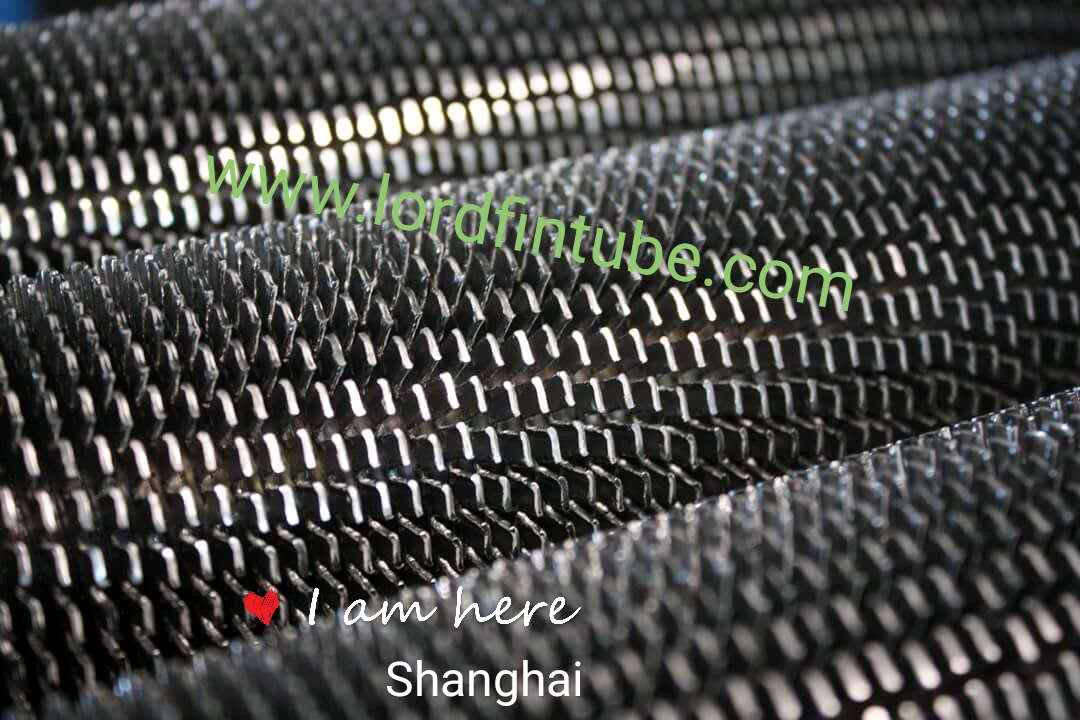
High-frequency welding process for finned tube production at our advanced manufacturing facility
High-Frequency Welding Technology in Finned Tube Manufacturing
High-frequency welding represents a significant advancement in finned tube manufacturing technology. This process involves using high-frequency electrical currents to create a metallurgical bond between the fin and the base tube, resulting in superior thermal conductivity and mechanical strength compared to traditional methods.
Our finned tube factory utilizes state-of-the-art high-frequency welding equipment that ensures precise control over the welding parameters, resulting in consistent, high-quality finned tubes with optimal heat transfer characteristics.
| Welding Method | Bond Strength | Thermal Efficiency | Production Speed | Application Range |
|---|---|---|---|---|
| High-Frequency Welding | Excellent | 95-98% | High | High-pressure, high-temperature applications |
| L-Fin / Wrap-on | Good | 85-90% | Medium | Low to medium pressure applications |
| Embedded Fin | Very Good | 90-95% | Low | Corrosive environments |
| Extruded Fin | Excellent | 92-96% | Medium | Extreme temperature applications |
International Excellence in Design and Manufacturing
Our company is at the forefront of the industry, employing advanced international technical standards in the design and fabrication of finned tubes and steam heaters. Our products are characterized by their exceptional heat exchanger efficiency, well-thought-out structural design, and extended service life.
Superior Heat Transfer
Our high-frequency welded finned tubes achieve up to 45% better heat transfer efficiency compared to conventional finned tubes, reducing energy consumption and operational costs.
Enhanced Durability
The metallurgical bond created through high-frequency welding provides exceptional resistance to thermal cycling and mechanical stress, extending service life by up to 30%.
Customized Solutions
We offer tailored fin configurations, materials, and dimensions to meet specific application requirements across various industries.
Applications of High-Frequency Welded Finned Tubes
High-frequency welded finned tubes find applications across numerous industries where efficient heat transfer is critical. Our products are specifically engineered to meet the demanding requirements of these applications:
| Industry | Application | Key Benefits | Recommended Fin Type |
|---|---|---|---|
| Petroleum Refining | Crude Oil Heaters, Reboilers | High temperature resistance, corrosion protection | Spiral Finned Tubes |
| Chemical Processing | Reactor Feed Effluent Exchangers | Chemical resistance, fouling mitigation | Longitudinal Finned Tubes |
| Power Generation | Heat Recovery Steam Generators | High pressure capability, thermal efficiency | Serrated Finned Tubes |
| HVAC & Refrigeration | Air Coolers, Chillers | Optimized airflow, compact design | Plate Finned Tubes |
Collaborative Approach
T.S. Industrial Co., Ltd collaborates closely with research institutes and industry partners to jointly design innovative solutions and provide services such as product replacement and upgrades.
Enhancing Heat Transfer Efficiency of Fin Tubes
One of our key focuses is on enhancing heat transfer efficiency, and we employ various methods to achieve this:
1. Extended Surface Design
We utilize extended surfaces on the outer surface of our pipes, enhancing heat transfer capabilities. This extended surface, often in the form of fins, significantly increases the heat transfer area while maintaining low flue gas heat transfer coefficients. This approach optimizes heat transfer, reduces metal consumption, and improves overall economic performance.
2. Spiral Finned Tube Heat Exchangers
Our high-frequency welding techniques allow us to produce spiral finned tube heat exchangers. These specialized tubes feature a smooth surface combined with a spiral, circular, or curved finned tube shape, enhancing the heat exchange area and promoting convection. This results in increased flow velocity and improved heat transfer efficiency, making our finned tubes ideal for various applications.
3. Durability and Longevity
Our spiral cannular finned pipes are engineered for durability. By combining smooth surfaces with spiral fins, we improve thermal stress conditions, fluid flow dynamics, wear resistance, and erosion resistance. This, in turn, extends the service life of both our spiral cannular finned pipes and the equipment they are used in.
Quality Assurance in High-Frequency Welded Finned Tube Production
At our manufacturing facility, we implement rigorous quality control measures throughout the production process:
- Material certification and traceability for all raw materials
- In-process inspection of welding parameters and fin attachment
- Non-destructive testing including ultrasonic and eddy current testing
- Pressure testing and dimensional verification
- Final inspection and documentation before shipment
This comprehensive approach ensures that every high-frequency welded finned tube that leaves our factory meets the highest standards of quality and performance.
At T.S. Industrial Co., Ltd, we take pride in being a specialized factory with a commitment to professionalism, large-scale production, and high-quality products. Our guiding principles revolve around putting quality first and prioritizing customer satisfaction. We uphold integrity and pragmatism as core values while continually striving to provide superior products and excellent service to our valued customers.
Experience the future of heat exchange technology with T.S. Industrial Co., Ltd, where innovation and excellence meet the demands of the petroleum and chemical industries.