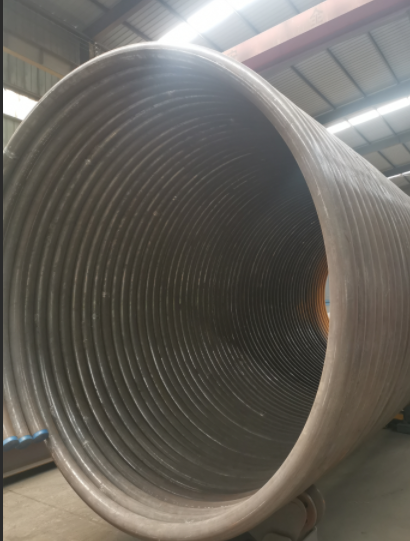
In the field of industrial high-temperature heating, heat-conducting oil furnaces are widely applied in chemical, textile, building material, food, pharmaceutical and many other industries due to their advantages of low pressure with high temperature, accurate temperature control and stable operation. As the core heat-absorbing and heat-exchanging component of the furnace, the heat-conducting oil furnace coil is a key carrier for realizing thermal energy conversion and ensuring efficient equipment operation. Its structural design, material technology and operating state directly determine the heat exchange efficiency, service life and production safety of the heat-conducting oil furnace, making it an indispensable core part of the entire heat-conducting oil heating system.
I. Core Functions of Helical coiled pipes
Also known as furnace pipes or heat-conducting oil pipes, heat-conducting oil furnace coils are the sole heat-absorbing and heat-exchanging components of heat-conducting oil furnaces. Their core function is to absorb heat generated by fuel combustion and transfer it to the internally circulating heat-conducting oil to complete thermal energy conversion and transmission, which can be divided into three core dimensions.
Efficient thermal energy conversion
For oil-fired, gas-fired, coal-fired and electric heating furnaces, high-temperature heat is exchanged through pipe walls. Coils circulate thermal oil while exposed to high-temp flue gas, providing stable heat source.
Medium circulation & bearing
Dedicated flow channel cooperating with circulating pumps to realize closed forced circulation, ensuring continuous heat supply with low pressure.
Equipment safety protection
Reasonable structural design avoids local overheating & coking, prevents bulging & leakage, ensuring long-term safe low-pressure operation.
II. Mainstream Structure and Working Principle of Helical coiled pipes
At present, the multi-pass disc coil structure is widely used in industrial heat-conducting oil furnaces, which is compatible with vertical and horizontal heat-conducting oil furnaces. Consisting of radiation and convection heat-absorbing sections with a compact structure and scientific heat exchange path, it has become the mainstream design in the industry.
In terms of structural composition, the coils are mostly designed with multi-layer dense inner and outer surrounding rings, including inner, middle and outer ring coils connected in series to form a multi-pass heat exchange channel. The inner ring coil is close to the furnace combustion chamber as the radiation heat-absorbing surface, directly absorbing radiant heat from flames and high-temperature flue gas and undertaking most of the heat absorption task. The middle and outer ring coils surround the inner ring and fully contact with high-temperature flue gas to form the convection heat-absorbing surface, which absorbs residual heat of flue gas, maximizes heat energy recovery, reduces flue gas exhaust temperature and improves the overall thermal efficiency of the furnace. Some high-end equipment adopts a three-pass coil structure to further enhance the heat exchange effect by extending the heat exchange stroke between flue gas and coils. Coils can be spirally formed by a single pipe, or by double-pipe, three-pipe and even four-pipe parallel spiral arrangement.
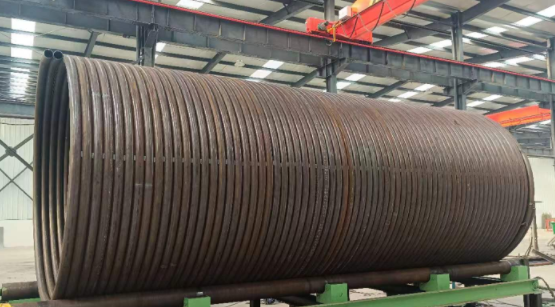
Its working principle is simple and efficient. After the equipment is started, the burner ignites and burns, and high-temperature flames and flue gas fill the furnace chamber to radiantly heat the inner ring coils. Meanwhile, the circulating oil pump drives low-temperature heat-conducting oil to flow uniformly inside the coils, and heat is quickly transferred from the pipe walls to the heat-conducting oil medium. High-temperature flue gas passes through the inner and outer coils for multi-stage heat exchange and is finally discharged as low-temperature flue gas. The heated high-temperature heat-conducting oil is delivered to production equipment, releases heat and cools down, then flows back into the coils for re-heating, continuously providing a stable heat source for the production line. The entire system operates in a liquid-phase low-pressure circulation state, achieving a high temperature of about 300°C without high pressure, with much higher safety than traditional steam boilers.
III. Material Selection Standards and Production Technology of Coils
Operating under harsh working conditions of high temperature, thermal cycling and long-term contact with heat-conducting oil media, heat-conducting oil furnace coils have extremely high requirements for material performance and processing technology, which are the key to ensuring equipment durability.
| Material Type |
Carbon steel high-pressure boiler pipes / Stainless steel pipes with high temp resistance, oxidation resistance, creep resistance & corrosion resistance. |
| Performance Requirements |
Long-term operation at 250-350°C without deformation or cracking, prevent leakage. |
| Production Technology |
Integral precision bending, one-piece forming, combined expansion & welding technology, precise coil spacing design, necking protection design. |
IV. Common Fault Causes and Maintenance Key Points
Most faults of heat-conducting oil furnace coils stem from coking, blockage, corrosion and abrasion. Inadequate daily maintenance will directly lead to reduced heat exchange efficiency, increased energy consumption and even potential safety accidents.
Common Faults & Causes
- Coil coking and blockage: Oil deterioration, low flow velocity → carbonization & coking, reduced efficiency, local burnout.
- Tube wall corrosion and damage: Excessive water content, oxidation, corrosive flue gas → thinning pipe walls, pinholes leading to leakage.
- Coil deformation and cracking: Over-high temperature, flame deflection, ash accumulation → thermal deformation, fatigue cracks.
Core Daily Maintenance
- Regular detection & replacement of heat-conducting oil (viscosity, flash point, residual carbon).
- Regular ash and coke removal on flue gas side & inner walls.
- Strict control of operating parameters (temp, pressure, circulation flow velocity).
- Regular inspection & flaw detection (wall thickness, hidden cracks).
V. Application Advantages of Helical coiled pipes
Compared with traditional heat exchange pipe fittings, special disc coils for heat-conducting oil furnaces have significant structural advantages, meeting the needs of modern industry for energy saving, high efficiency and safety. Below are key advantages:
High heat exchange efficiency
(Thermal efficiency ≥95%)
Stable operation & low pressure
Energy-saving & durable
Wide adaptability (oil/gas/coal/electric)
First, high heat exchange efficiency. The combined radiation and convection heat exchange structure features a large heat absorption area, high thermal energy utilization rate and low flue gas heat loss, with the thermal efficiency of equipment reaching over 95%. Second, stable operation. The closed coil structure avoids steam loss, realizes low-pressure operation without high-pressure pipe bursting risks, and supports high-precision temperature control to accurately match the temperature requirements of various production processes. Third, energy-saving and durable. The optimized pipeline design reduces coking and abrasion problems, and the high-temperature resistant and anti-aging material extends service life and greatly reduces equipment operation and maintenance costs. Fourth, wide adaptability. It is compatible with oil-fired, gas-fired, coal-fired and electric heating heat-conducting oil furnaces, covering heating, textile setting, building material drying, food processing and other heating scenarios in various industries.
VI. Conclusion
As the "core component" of the heat-conducting oil heating system, the helical coiled pipe determines the heat exchange efficiency, energy consumption level and operational safety of the entire equipment through its structural design, material technology and operating state. Matching high-quality coil structure with standardized maintenance can maximize the advantages of heat-conducting oil furnaces including low pressure, high temperature, energy saving and high efficiency, reduce enterprise production costs and ensure continuous and stable operation of industrial production lines. Under the background of industrial energy conservation and upgrading, optimizing coil design and strengthening coil maintenance are core measures to improve the operational efficiency of heat-conducting oil furnaces and realize cost reduction and efficiency improvement.
Advanced thermal engineering · Helical coil solutions for energy-efficient heating