


Hydraulic Steel Tube Material Guide: E355 vs E235
Hydraulic steel tubes are seamless or welded precision pipes used to convey pressurised fluid in hydraulic systems. In mobile and industrial equipment, they typically operate at working pressures from 16 MPa up to 40 MPa (and higher for special applications). Tube material and manufacturing route jointly determine burst pressure, fatigue life, and tolerance to vibration and impulse loads.
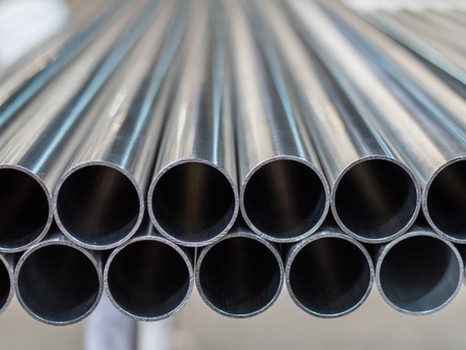
Material selection: why E355 dominates
For most high‑pressure hydraulic lines, E355 (minimum yield strength 355 MPa) is the default grade. Compared with E235 (235 MPa), E355 permits a thinner wall for the same working pressure – which reduces tube weight and improves bending formability. For example, a 25 mm OD tube at 35 MPa needs about 4 mm wall in E235, but only 3 mm in E355. That saves roughly 25% in material weight and makes routing easier in confined spaces.
For lower‑pressure return or suction lines, E235 or welded tubes are cost‑effective alternatives. For pump‑to‑actuator lines, however, E355 is the industry standard because it combines strength with good cold‑working behaviour – it can be bent, flared and swaged without cracking, provided the tube complies with proper cold‑drawing quality standards (see E355 material reference).
Critical manufacturing steps
Tube performance is largely determined by its manufacturing route. Cold drawing (or cold rolling) is the key operation – it delivers precise outside diameter (OD) and wall thickness tolerances, typically ±0.1 mm for OD and ±0.08 mm for wall. This precision is essential for reliable sealing with ferrule‑type or O‑ring fittings.
Cold drawing
Produces a smooth, work‑hardened surface with high dimensional accuracy. For E355, the drawing process slightly increases yield strength, providing extra margin for pressure spikes.
Bright annealing (NBK)
Relieves residual stresses from drawing and restores ductility. A tube that is not properly annealed may split during bending or flaring. NBK condition also leaves a clean, oxide‑free surface.
Honing and surface finish
For cylinder barrels or high‑flow lines, internal honing achieves roughness Ra ≤ 0.4 µm. This reduces friction losses and extends seal life. Honed tubes are often specified for servo‑valve circuits where cleanliness is critical.
In practice, most hydraulic steel tubes are supplied in the “cold‑drawn and stress‑relieved” condition – industry shorthand is BK + NBK. This gives the best combination of strength, formability and straightness.
What to look for in a hydraulic tube
- Burst pressure – Derived from yield strength and wall thickness. For E355, the burst‑to‑working pressure ratio is typically ≥4:1 for safety.
- Roughness – Inner surface Ra should be ≤ 0.8 µm for standard lines, and ≤ 0.2 µm for high‑performance systems to minimise pressure drop.
- Straightness – Maximum 1.0 mm per metre; exceeding this causes fitting misalignment and leaks.
- Roundness – Out‑of‑roundness < 0.5% of OD; otherwise ferrule seals will not grip evenly.
These are not secondary specifications; they directly impact assembly work, leak performance and long‑term service reliability. Many field failures trace back to poor tube quality rather than to the fittings themselves.
Relevant standards – which ones actually matter
ISO 10763 and EN 10305‑1 provide the general framework, but the real workhorse for hydraulic tubes is EN 10305‑4 (formerly DIN 2391). It covers seamless cold‑drawn tubes for hydraulic and pneumatic systems, including grades E235 and E355. For North American projects, SAE J524 (seamless) and J525 (welded) are also referenced, though they are less demanding on precision.
| Standard | Typical use | Material grades |
|---|---|---|
| EN 10305‑4 / DIN 2391 | Hydraulic lines, cylinder tubes | E235, E355 |
| ISO 10763 | Plain‑end precision tubes for hydraulic fluid power | E235, E355 |
| SAE J524 | Seamless low‑carbon tubing (annealed) | 1020, 1026 |
| ASTM A519 | Mechanical tubing (not hydraulic‑specific) | Various |
For most OEMs, the combination EN 10305‑4 + E355 is the default specification. Always verify that the tube is supplied to “precision” class – that ensures tight tolerances and adequate surface quality.
Typical applications and why tube choice matters
- Excavator boom lines – Subject to high impulse pressures and cyclic fatigue. E355 with a honed ID is preferred to dampen pressure spikes.
- Hydraulic press cylinders – Require thick‑wall E355 for static holding pressures up to 50 MPa, often with induction‑hardened bore.
- Marine steering gear – Corrosion‑resistant tubes (e.g., 316L) are mandatory; if carbon steel is used, a thick phosphate coating is applied.
- Wind turbine pitch control – Lightweight E355 tubes help reduce nacelle mass, improving tower fatigue life.
In every application, tube specification shall be defined based on operating pressure, service environment and assembly limits, rather than following a general‑purpose checklist.
Practical selection guide
When selecting a hydraulic steel tube, start with the maximum system pressure (including spikes). Then decide whether weight or cost is the priority. For mobile equipment, lightweight E355 often pays back through fuel savings and easier installation. For stationary industrial presses, E235 may be adequate if wall thickness is not a constraint.
Quick rule of thumb: For pressures above 25 MPa, use E355. For pressures up to 20 MPa, E235 is acceptable. Always check the actual yield strength certificate – do not rely solely on the nominal grade.
Also consider the fitting type: metric O‑ring face seal (ORFS) or 24° cone (DIN 2353) require extremely precise OD and roundness, so order tubes with “precision” tolerance class. For welded flanges, tube wall concentricity becomes important – ask the supplier for eccentricity data.
To sum up: material grade (E355 versus E235) and manufacturing quality (cold‑drawn, NBK stress‑relieved, honed bore) matter more than vague “high‑precision” marketing labels. Match tube specifications to real‑world working pressure, service conditions and fitting interfaces to prevent premature in‑service failures.