

KL-type integral finned tube|KL Footed Fin Tube
KL Footed Fin Tube
What Is KL Footed Fin Tube
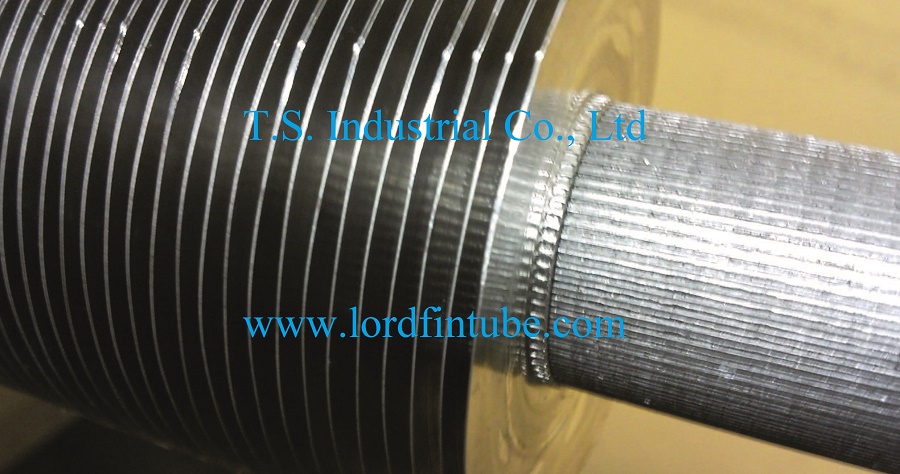
What is KL Footed Fin Tube? KL Footed Fin Tube is one kind of L-shaped winding tube. The surface of the tube is rolled first during manufacturing, and then rolled once on top of the L-foot simultaneously when winding the tube, so that part of the L-foot area is embedded in the surface of the tube.. This design is engineered for heating or cooling fluids in demanding industrial environments. Unlike wrapped or extruded fin tubes, the KL variant uses a mechanical rolling process that forms fins directly from the base material, creating a seamless, robust structure.
Why does this matter for heat exchangers? The integral construction eliminates the gap between fin and tube, which drastically reduces thermal contact resistance. For procurement professionals, understanding this distinction is critical when specifying tubes for high-temperature or high-pressure services. The KL Footed Fin Tube delivers consistent performance where reliability and efficiency are non‑negotiable.
KL Footed Fin Tube Manufacturing Process
KL-Type Integral Fin Tube Manufacturing Process: The production of KL Footed Fin Tubes follows a precise sequence that ensures metallurgical integrity and dimensional accuracy.
- Surface preparation: The base pipe undergoes a rolling operation that imparts a patterned groove onto its outer surface. This step increases surface roughness and creates mechanical keying points for the subsequent fin winding stage. Specialized finning machines with hardened blades perform this rolling, maintaining tight tolerances on groove depth and pitch.
- Fin winding: Thin, elongated metal strips — typically of the same material as the base pipe — are spirally wound into the prepared grooves. The winding tension and angle are precisely controlled to ensure the fins are firmly seated. Because the fins are mechanically locked into the grooves, the assembly remains stable under thermal cycling and mechanical vibration.
- Post‑forming treatment: After winding, the tubes may undergo stress-relief annealing or surface coating, depending on the final service environment. Quality checks include fin height measurement, pull‑off strength testing, and non‑destructive examination of the bond interface.
KL Footed Fin Tube Technical Specifications
Which technical parameters define KL Footed Fin Tube performance? The following table compiles key dimensions and ratings commonly specified by engineers and buyers. Actual values depend on the base material and application requirements.
| Parameter | Typical Range / Options |
|---|---|
| Base Tube Material | Carbon steel (A179, A192), stainless steel (TP304, TP316L), copper‑nickel, titanium (on request) |
| Tube Outer Diameter (OD) | 25 mm – 219 mm (1″ – 8″) |
| Tube Wall Thickness | 2.0 mm – 8.0 mm (0.080″ – 0.315″) |
| Fin Height | 8 mm – 16 mm (0.315″ – 0.630″) |
| Fin Pitch | 3 mm – 8 mm (0.118″ – 0.315″) |
| Fin Thickness | 0.3 mm – 1.2 mm (0.012″ – 0.047″) |
| Maximum Operating Temperature | Up to 250 °C (482 °F) — depends on material |
| Maximum Operating Pressure | Typically ≤ 3.2 MPa (464 psi) |
| Fin‑to‑Tube Bond Type | Integral (rolled) — no filler or braze |
How do these specifications influence selection? Higher fin density (closer pitch) increases surface area but may reduce cleanability. For fouling services, a wider pitch is often preferred. The integral bond ensures that even with aggressive thermal transients, the fins remain securely attached — a critical factor for long‑term reliability.
KL Footed Fin Tube Operating Conditions
KL-Type Integral Fin Tube Scope of Application: KL Footed Fin Tubes are engineered for demanding thermal duties. Their operating envelope is defined by both temperature and pressure limits, which are intrinsically linked to the base material and fin geometry.
- Temperature: KL Footed Fin Tubes perform reliably up to 250 °C. For higher temperatures, special alloys or alternative fin designs may be considered.
- Pressure: The integral construction allows operation at pressures up to 3.2 MPa. The absence of brazed or soldered joints eliminates weak points that could fail under pressure cycling.
- Corrosive environments: When fabricated from stainless steel or nickel alloys, KL tubes exhibit excellent resistance to oxidation and chemical attack. This makes them suitable for applications involving flue gases, process streams with chlorides, or marine atmospheres.
- Thermal cycling: The mechanical bond between fin and tube accommodates differential expansion without loosening, a common failure mode in mechanically attached fins.
KL Footed Fin Tube Advantages
KL-Type Integral Fin Tube Advantages: Why do procurement specialists and design engineers consistently favor KL Footed Fin Tubes? The following advantages are frequently cited in project evaluations.
Which of these advantages matters most for your application? For high‑temperature air heaters, the structural stability and corrosion resistance are paramount. For condenser bundles, the high heat transfer efficiency directly reduces the required surface area and capital cost.
KL Footed Fin Tube Applications
KL-Type Integral Fin Tube Applications: KL Footed Fin Tubes are used across a wide spectrum of industries where efficient thermal management is essential. Typical installations include:
- Air conditioning and refrigeration: Evaporator and condenser coils in commercial HVAC systems, where compactness and energy efficiency are key.
- Cooling towers: Heat exchanger bundles for process cooling, particularly in power generation and petrochemical facilities.
- Automotive radiators: Heavy‑duty engine cooling for trucks, construction equipment, and stationary engines.
- Chemical processing: Reactor cooling, distillation column reboilers, and waste heat recovery units.
- Oil and gas: Gas coolers, intercoolers, and aftercoolers in compression trains.
- Power generation: Air‑cooled condensers and auxiliary cooling systems for gas turbines and diesel generators.
In each of these environments, the KL Footed Fin Tube contributes to system reliability and thermal efficiency. Its proven track record in both new builds and retrofit projects underscores its value as a dependable heat‑transfer component.
When specifying KL Footed Fin Tubes for a new project, consider the operating conditions, cleaning frequency, and required heat duty. Collaborating with a qualified manufacturer ensures that the final product meets all dimensional and performance requirements.
KL Footed Fin Tube Comparisons
How does KL Footed Fin Tube stack up against other common finned tube types? The table below compares KL, L‑type, and LL‑type designs across several critical attributes. This side‑by‑side view helps buyers make informed decisions based on their specific service conditions.
| Feature | KL Footed Fin Tube | L‑Type (Wrapped) | LL‑Type (Overlapped) |
|---|---|---|---|
| Fin Attachment | Integral rolled (no filler) | Mechanically wrapped, brazed | Overlapped wrapped, brazed |
| Thermal Contact Resistance | Very low | Moderate (gap possible) | Low (overlap improves contact) |
| Maximum Service Temperature | 250 °C (base material dependent) | ~150 °C (braze limits) | ~200 °C (braze limits) |
| Corrosion Resistance | Excellent (alloy dependent) | Good (braze can create crevices) | Good (overlap reduces crevices) |
| Resistance to Vibration | High (integral bond) | Moderate (wrapped fins may loosen) | Moderate to high |
| Typical Applications | High‑temp, high‑pressure, critical services | General HVAC, low‑pressure air cooling | Corrosive or fouling services |
| Cost Level | Higher (specialized rolling) | Lower | Medium |
Which type is right for your project? If your operating temperature exceeds 180 °C or if pressure integrity is paramount, the KL Footed Fin Tube offers clear advantages. For less demanding services, L‑type or LL‑type tubes may provide a more economical solution. The KL design excels when long‑term reliability and thermal performance are the primary drivers.
KL Footed Fin Tube Selection Factors
What factors should guide the selection of KL Footed Fin Tubes for a new heat exchanger? Procurement and engineering teams typically evaluate the following criteria:
- Thermal duty: Required heat transfer rate (kW or BTU/hr) determines the necessary surface area. Fin height and pitch are adjusted to meet this target while respecting pressure‑drop constraints.
- Operating environment: Temperature, pressure, and fluid corrosivity dictate the base material and any protective coatings. For sour gas or seawater applications, duplex stainless steel or titanium may be specified.
- Maintenance access: Tubes with wider fin pitch are easier to clean mechanically. For fouling fluids, a pitch of 6‑8 mm is often preferred.
- Cost‑benefit analysis: While KL tubes have a higher initial cost, their longer service life and reduced maintenance often yield a lower total cost of ownership over a 10‑year horizon.
- Manufacturing lead time: Integral fin tubes require specialized rolling equipment. Confirm that your supplier has the capacity and quality certifications (e.g., ASME, PED) to meet your schedule.
KL Footed Fin Tube Maintenance
How should KL Footed Fin Tubes be maintained to ensure optimal performance over their service life? Proper maintenance extends tube life and preserves heat transfer efficiency.
- Periodic cleaning: Depending on the fluid, fins can accumulate dust, scale, or biological growth. Use low‑pressure water jetting or chemical cleaning agents that are compatible with the tube material. Avoid high‑pressure blasting that could deform the fins.
- Inspection: Regularly check for fin damage, corrosion, or signs of mechanical loosening. Thermal imaging can identify areas of reduced heat transfer caused by fouling or partial blockage.
- Corrosion monitoring: In aggressive environments, install corrosion coupons or use ultrasonic thickness measurement to track wall loss. Early detection allows for planned replacements rather than unplanned downtime.
- Thermal performance monitoring: Track approach temperatures and pressure drops across the exchanger. A gradual increase in pressure drop often signals fouling, while a drop in heat transfer may indicate fin damage or fluid bypass.
By following a structured maintenance program, plant operators can maximize the return on their investment in KL Footed Fin Tubes. Many users report service lives exceeding 15 years in moderate duty applications.
Why KL Footed Fin Tube Performance Matters
Why does the performance of KL Footed Fin Tube have such a significant impact on overall system efficiency? The answer lies in its ability to transfer heat effectively while withstanding the rigors of continuous operation.
KL Footed Fin Tubes play a vital role in modern heat transfer systems. Their combination of high efficiency, structural integrity, and corrosion resistance makes them a preferred choice for engineers and procurement specialists alike. Whether you are designing a new air‑cooled heat exchanger or replacing tubes in an existing shell‑and‑tube unit, the KL Footed Fin Tube offers a proven solution that balances performance and durability.