


Boiler Economizer Manufacturers: Who Leads the Market?
Leading Boiler Economizer Manufacturers | Market Insights
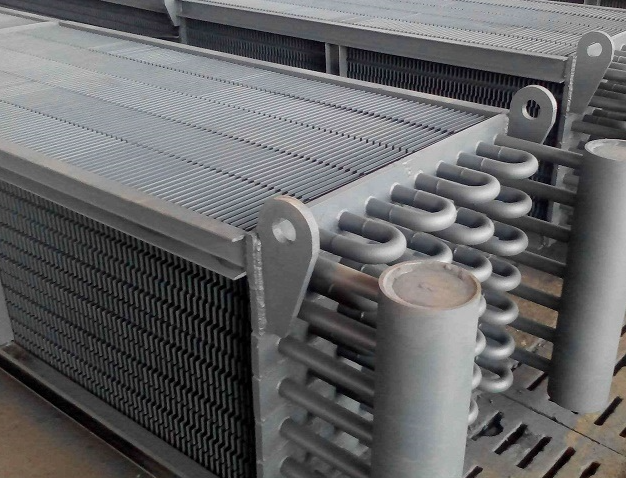
A boiler economizer directly tackles rising energy costs. It captures waste heat from exhaust flues to preheat feedwater. The global market is projected to exceed USD 5.2 billion by 2030. Not because of regulations alone. Plant managers face real pressure from volatile gas and coal prices. Recovering heat from flue gas above 200°C can slash boiler fuel consumption by 4–8%. That turns a simple heat exchanger into a critical profit centre.
Which engineering houses actually deliver on these savings? Below is a curated look at ten key players, with a clear eye on where each truly excels—and where they don’t. (Listed roughly by market influence, not alphabetically.)
Utility boilers? B&W is the default
B&W isn’t just another supplier; it’s the default choice for large utility and power boilers. When a plant needs pendant tube sections that withstand extreme thermal cycling and high‑pressure headers, B&W’s Chanute facility delivers custom fin‑tube welding and bending that few can replicate. What sets them apart is their ability to handle sour gas and high‑sulfur fuels without accelerated corrosion—a niche that keeps them on every major EPC’s shortlist.
Thermax owns the industrial floor
If B&W owns the utility space, Thermax owns the industrial floor—especially in Asia and the Middle East. Their DEWtherm condensing economizer isn’t just about efficiency; the integrated "optimizer" actively prevents feed‑pump cavitation, a real headache for plants with fluctuating condensate return temperatures. Why buyers choose Thermax: better lead times, on‑the‑ground service networks, and a package approach that fits inside tight boiler‑house footprints.
When it’s marine, Alfa Laval has no real rival
Alfa Laval doesn’t chase land‑based power plants; they dominate the shipboard waste‑heat recovery segment. Their Aalborg line (Micro, XS, XW) is engineered to handle the wildly variable exhaust loads of two‑stroke marine diesels. The marine edge: 1–2 year payback on a vessel burning heavy fuel oil, translating to up to 25% fuel savings per voyage. For offshore platforms and LNG carriers, Alfa Laval’s forced‑circulation XW design prevents dry‑running during engine start‑up—a critical safety feature.
Cleaver‑Brooks: condensing for firetube
Cleaver‑Brooks took a different path: integrate the economizer directly with the firetube boiler. Their CBEX‑3W achieves 3% oxygen across a 10:1 turndown—meaning it modulates down to 10% load without opening a bypass damper, saving fan power. Their C2X‑HE two‑stage condensing unit hits 94% efficiency (HHV) by pulling latent heat from water vapour. Who benefits most: commercial buildings, district heating, and mid‑sized industrial plants running natural gas 24/7.
Cain: retrofit is their game
Cain doesn’t sell boilers—they sell rectangular‑tube recovery (RTR) units that bolt onto existing 50 HP to 250,000 lb/hr steam generators. The Cain difference: their CXL/DXL condensing series includes built‑in drainable tube bundles that handle acidic condensate better than most. For plants unwilling to replace their boiler, Cain offers the quickest mechanical payback (often 12–18 months).
Spirax Sarco looks at the whole steam system
Spirax Sarco treats the economizer as one component of a complete steam loop. Their approach focuses on matching the economizer outlet temperature to the deaerator inlet, avoiding thermal shock. Why this matters: a badly integrated economizer can cause flashing in the feed line. Spirax’s system‑wide perspective prevents that, making them the go‑to for complex process plants (paper, food, petrochemical) where steam quality is non‑negotiable.
Miura: for plants that start and stop
Miura’s once‑through water‑tube design reaches full steam in under 5 minutes from a cold start. Their economizer is standard, but the real story is how they handle thermal stress: the forced‑flow design eliminates the need for a heavy steam drum, so the economizer warms up uniformly. For factories that operate two shifts and shut down overnight, Miura’s fast ramp‑up saves more fuel during startup than any static efficiency number suggests.
Cochran: a niche player with clever retrofits
While not a top‑tier global giant, Cochran holds a strong position in the UK and Commonwealth markets, especially for firetube retrofits. They have a unique capability to design economizers that fit inside existing boiler stacks without major civil work—a practical advantage for plants with space constraints.
Victory Energy: North American biogas specialty
Victory Energy focuses on custom industrial economizers for gas‑fired and biogas applications. They are often chosen for projects requiring ASME Section VIII pressure vessel certification and short fabrication cycles. Their niche is handling corrosive flue gases from refuse‑derived fuels.
Greens Power: H‑fins for dirty fuels
Greens Power carries the legacy of Edward Green, but their modern value lies in H‑finned tube manufacturing for heavy ash‑laden flue gases (coal, biomass). Why H‑fins? They reduce soot buildup and make cleaning easier—a lifesaver for plants firing low‑grade solid fuels. While they don’t compete on price, they win on longevity in harsh environments.
Three real‑world pitfalls when buying a boiler economizer
1. Acid dew‑point corrosion
When feedwater drops below the acid dew point (typically 120–140°C for sulfur‑bearing fuels), sulfuric acid condenses on tubes. What to ask: Does the supplier use ND steel, 316L, or enamel coating? For gas‑fired units, standard carbon steel often suffices—but for oil/coal, material upgrades are non‑negotiable.
2. System pressure drop penalties
A tighter tube bundle captures more heat but increases flue‑gas side pressure drop, forcing the induced‑draft fan to work harder. How to calculate net gain: Ask for the guaranteed pressure drop (in mmH₂O) and compare it to your fan’s spare capacity. A 4% fuel saving is worthless if it adds 5% to your electricity bill.
3. Cold‑start thermal shock
During a cold start, the economizer sees hot gas before water circulation stabilises. This can warp tube sheets. Which suppliers handle this best: Miura (once‑through design) and Alfa Laval (forced‑circulation) have built‑in protections. For others, insist on a recirculation pump or bypass stack damper in the design.
At‑a‑glance: which manufacturer fits your boiler room?
| Manufacturer | Home turf | Core weapon | Best‑fit application |
|---|---|---|---|
| Babcock & Wilcox | USA | Heavy‑duty pendant sections, sour‑gas resistance | Utility coal/oil power stations |
| Thermax | India | Integrated pump‑protection, fast delivery | Industrial gas‑fired cogeneration |
| Alfa Laval | Sweden | Forced‑circulation marine XW design | Ships, offshore platforms |
| Cleaver‑Brooks | USA | Firetube condensing (94% HHV) | Commercial buildings, district heat |
| Cain Industries | USA | Rectangular bundles for easy retrofits | Existing large water‑tube boilers |
| Spirax Sarco | UK | System‑level thermal integration | Process plants (paper, food, chem) |
| Miura Boiler | Japan | 5‑min cold start, drumless design | Intermittent shifts, quick response |
| Cochran Boiler | UK | Stack‑fit retrofits, compact layout | Space‑limited firetube upgrades |
| Victory Energy | USA | ASME‑certified, biogas‑ready units | Waste‑to‑energy, RDF fuels |
| Greens Power | UK | H‑finned tubes for dirty flue gases | Coal/biomass heavy‑ash plants |
If you ask me: for marine applications, Alfa Laval is the only logical choice. For coal or biomass with heavy ash, Greens Power’s H‑finned tubes are worth the premium. For a quick retrofit on an existing water‑tube boiler, call Cain Industries. And if your plant cycles on and off daily, Miura’s fast‑start design will save you more fuel than a static efficiency number suggests. Everything else? Match your fuel and load to the supplier’s proven track record – and always demand a pressure‑drop guarantee.
✦ Ready to secure your next project? Talk to our technical team for tailored inspections.
© 2026 Lord Fin Tube (Shanghai T.S. Industrial Co., Ltd). All Rights Reserved.