


Lord Fin Tube-ASTM A213 TP304 Low-fin Tubes
ASTM A213 TP304 Low-fin Tubes Specifications and Procurement
For engineers, plant managers, and procurement specialists sourcing heat exchanger components, selecting the right tube material and design directly impacts operational efficiency, maintenance costs, and system longevity. This guide provides detailed, actionable information on ASTM A213 TP304 Low-fin Tubes, focusing on the data points that matter for your buying decision and project specification.
ASTM A213 TP304 Low-fin Tubes
These are integrally finned tubes manufactured from seamless ASTM A213 TP304 austenitic stainless steel. The "low-fin" design refers to fins that are extruded from the tube wall itself, resulting in a lower fin height compared to wound or welded fins. This construction creates a robust, one-piece unit with excellent heat transfer properties and mechanical integrity.
Key Distinction for Buyers: Unlike attached fins, the integral fin in low-fin tubes eliminates the thermal contact resistance found at the fin-to-base tube interface. This translates directly to more efficient heat transfer in your exchanger, often allowing for a more compact design or reduced energy consumption.
Material Specification and Composition
The base material, ASTM A213 TP304 (UNS S30400), is a cornerstone chromium-nickel stainless steel. Its reliability in a wide range of environments makes it a default choice for many applications.
| Element | Composition (%) | Role in Performance |
|---|---|---|
| Chromium (Cr) | 18.0 - 20.0 | Forms a passive oxide layer for corrosion resistance. |
| Nickel (Ni) | 8.0 - 11.0 | Provides austenitic structure, ductility, and resistance to organic acids. |
| Carbon (C) | 0.08 max | Lower carbon minimizes carbide precipitation during welding. |
| Manganese (Mn) | 2.0 max | Aids in hot workability and strength. |
| Silicon (Si) | 1.0 max | Deoxidizer during steelmaking. |
| Phosphorus (P) | 0.045 max | Impurity controlled for weldability. |
| Sulfur (S) | 0.03 max | Impurity controlled for hot workability. |
Note: Composition conforms to ASTM A213/A213M standard. Trace elements may be present within specified limits.
Standard Dimensions and Fin Geometry
Low-fin tubes are typically specified by their root tube diameter, fin height, fin density, and overall length. Common configurations are shown below. Custom geometries are often available to match existing bundles or optimize new designs.
| Root Tube OD (mm) | Root Tube Wall (mm) | Fin Height (mm) approx. | Fins per Inch (FPI) | Typical Surface Area Ratio* |
|---|---|---|---|---|
| 15.88 | 1.65 / 2.11 | 1.0 - 1.3 | 19 - 26 | 2.5 - 3.5 |
| 19.05 | 2.11 / 2.77 | 1.2 - 1.5 | 16 - 23 | 2.3 - 3.2 |
| 25.40 | 2.11 / 2.77 | 1.4 - 1.8 | 13 - 20 | 2.2 - 3.0 |
*Surface Area Ratio = Total outside surface area / Bare tube outside surface area. This is a key metric for thermal design.
Performance and Selection Criteria
Heat Transfer Efficiency
The integral fin design provides optimal thermal conductivity. The increased surface area (see ratio table) allows for more heat transfer within the same footprint. Engineers can often reduce the required tube count or length, leading to cost savings on the shell and supporting structure.
Fouling Resistance and Cleanability
The smooth, helical fin profile and hard, polished stainless steel surface make these tubes resistant to fouling from many process fluids. If fouling does occur, the low-fin profile is easier to clean mechanically (e.g., with brushes) or chemically compared to high-fin densities.
Mechanical and Pressure Integrity
As a seamless, monolithic structure, the tube maintains the pressure rating of the root tube. The finning process work-hardens the fin area, increasing local strength. ASTM A213 TP304 provides good tensile and yield strength across a range of temperatures.
Corrosion Resistance
TP304 offers excellent resistance to:
- Atmospheric corrosion and rusting.
- Many oxidizing and organic chemicals.
- Food, beverage, and pharmaceutical process fluids.
- Moderately corrosive industrial environments.
Limitation Note: TP304 is susceptible to chloride-induced stress corrosion cracking (SCC) and pitting in stagnant, chloride-rich environments (>~200 ppm). For such conditions, ASTM A213 TP316L tubes should be evaluated.
Common Industry Applications
These tubes are specified where reliable performance and cleanliness are paramount:
- Shell and Tube Heat Exchangers: For heating, cooling, or condensing process streams in chemical, petrochemical, and refining.
- Compressor Aftercoolers and Intercoolers: In air and gas compression systems.
- Feedwater Heaters: In power generation cycles.
- Process Chillers and HVAC: For industrial cooling systems.
- Food, Dairy, and Brewing: Where cleanability and material purity are required by standards.
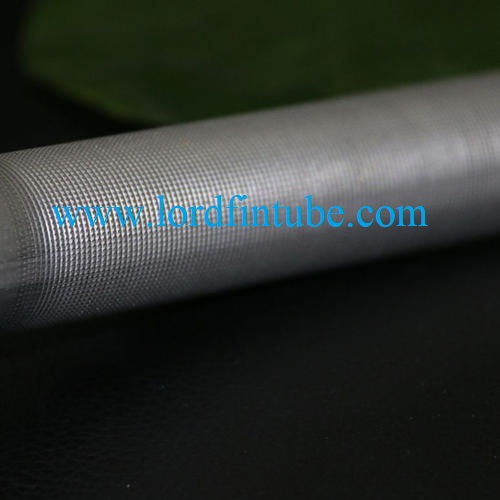
ASTM A213 TP304 Low-fin Tubes demonstrating the integral, extruded fin geometry.
ASTM A213 TP304 Low-fin Tubes Procurement Checklist
When requesting a quote or placing an order, ensure your specification includes:
- Full Material Designation: ASTM A213 TP304 (or equivalent EN/DIN/JIS standard).
- Dimensions: Root Tube OD, minimum wall thickness (after finning), fin height, FPI, and overall length.
- Tolerances: On diameter, straightness, and length.
- Certification: Requirement for Mill Test Certificate (MTC) per EN 10204/3.1 or equivalent.
- End Preparation: Plain, beveled for welding, or grooved for roller expansion.
- Cleaning & Packaging: Specify degreasing or passivation if needed for critical service.
Understanding these technical details ensures you procure ASTM A213 TP304 low-fin tubes that deliver optimal performance, longevity, and value for your specific heat transfer application. Always consult with your tube suppliers engineering team to confirm suitability for your operating conditions.