


Oval Fin Tubes with C70600 Tube and C12200 Fin
In critical industrial equipment such as heat exchangers, condensers, and waste heat recovery systems, heat transfer efficiency and material corrosion resistance are always the core considerations in design and selection. The heat transfer element, featuring C70600 (coppernickel alloy, cupronickel) as the base tube and C12200 (phosphorus deoxidized copper) as the fin material, combined with an Oval base tube and square fin structure, is becoming an ideal solution for demanding conditions such as seawater cooling and chemical media heat exchange, owing to its excellent physical properties and structural advantages.
Material Combination: Base Tube B111 C70600 & C12200 Fin
1.C70600 Base Tube (CopperNickel Alloy, 90/10 CuproNickel)
C70600 conforms to ASTM B111 standard. It is an alloy containing approximately 90% copper and 10% nickel, with small additions of iron and manganese to optimize performance.
The addition of iron and manganese helps improve resistance to erosioncorrosion and promotes the formation of a protective oxide film.
C70600 Mechanical Properties
Tensile Strength: ≥ 290 MPa
Yield Strength: ≥ 105 MPa
Elongation: ≥ 30%
Key Advantages
Excellent Seawater Corrosion Resistance
Effective Biofouling Resistance
Good Machinability & Workability
C70600 Core Performance
Nickel enhances pitting resistance
Copper ions inhibit marine microbes
Suitable for expansion & welding
Typical Application Scenarios
Marine Engineering & Shipbuilding
Coastal Power Plants
Seawater Cooling Systems
Excellent Seawater Corrosion Resistance: The addition of nickel significantly enhances resistance to pitting and stress corrosion cracking, making it particularly suitable for marine engineering, shipbuilding, and coastal power plants.
Biofouling Resistance: The release of copper ions effectively inhibits the attachment of marine microorganisms, keeping the inner surface of the tube clean.
Good Workability: It possesses moderate strength and ductility, suitable for various connection methods such as expansion and welding.
2.C12200 Fins (Phosphorus Deoxidized Copper)
It is highpurity phosphorus deoxidized copper, named for the trace amount of residual phosphorus.
The trace residual phosphorus ensures high fluidity and oxidation resistance during the brazing process.
Tensile Strength: ≥ 220 MPa
Yield Strength: ≥ 70 MPa
Elongation: ≥ 40%
C12200 Core Performance
Thermal Conductivity: ~390 W/m·K
Excellent Formability
Good Brazing Compatibility
Processing Advantages
Easily stamped into square fins
No processing cracks
Strong metallurgical bond with C70600
Structural Advantages of Oval Base Tube + Square Fins
Traditional circular finned tubes generate larger vortex zones in gas or liquid flows. The combination of an Oval base tube and square fins offers the following fluid dynamic and structural advantages:
- Reduced Pressure Drop: The streamlined shape of the ellipse reduces flow resistance around the tube, especially beneficial for highvelocity gasside or shellside flows.
- Enhanced Heat Transfer Coefficient: For the same frontal area, the Oval Fin Tubes have a longer outer perimeter. Combined with square fins, more heat transfer surface can be arranged, thereby increasing the effective heat transfer area.
- Compact Layout: Oval tubes allow for smaller tube pitches, reducing the overall size of the heat exchanger and enhancing the heat transfer capacity per unit volume.
- Square Fin Advantages: Compared to circular fins, square fins, under the same tube row arrangement, can reduce airflow bypass effects and enhance turbulence intensity, further improving heat transfer performance.
Standard Dimensions of our Oval Fin Tubes
This product features a standardized design, with typical specifications as follows:
Base Tube Outer Diameter: 36 mm × 14 mm (Oval major axis × minor axis)
Fin Size: 55 mm × 26 mm (Square fin long side × short side)
Base Tube Wall Thickness: customizable
Fin Thickness: customizable
Fin Pitch: customizable
Standard Dimensions of our Oval Fin Tubes
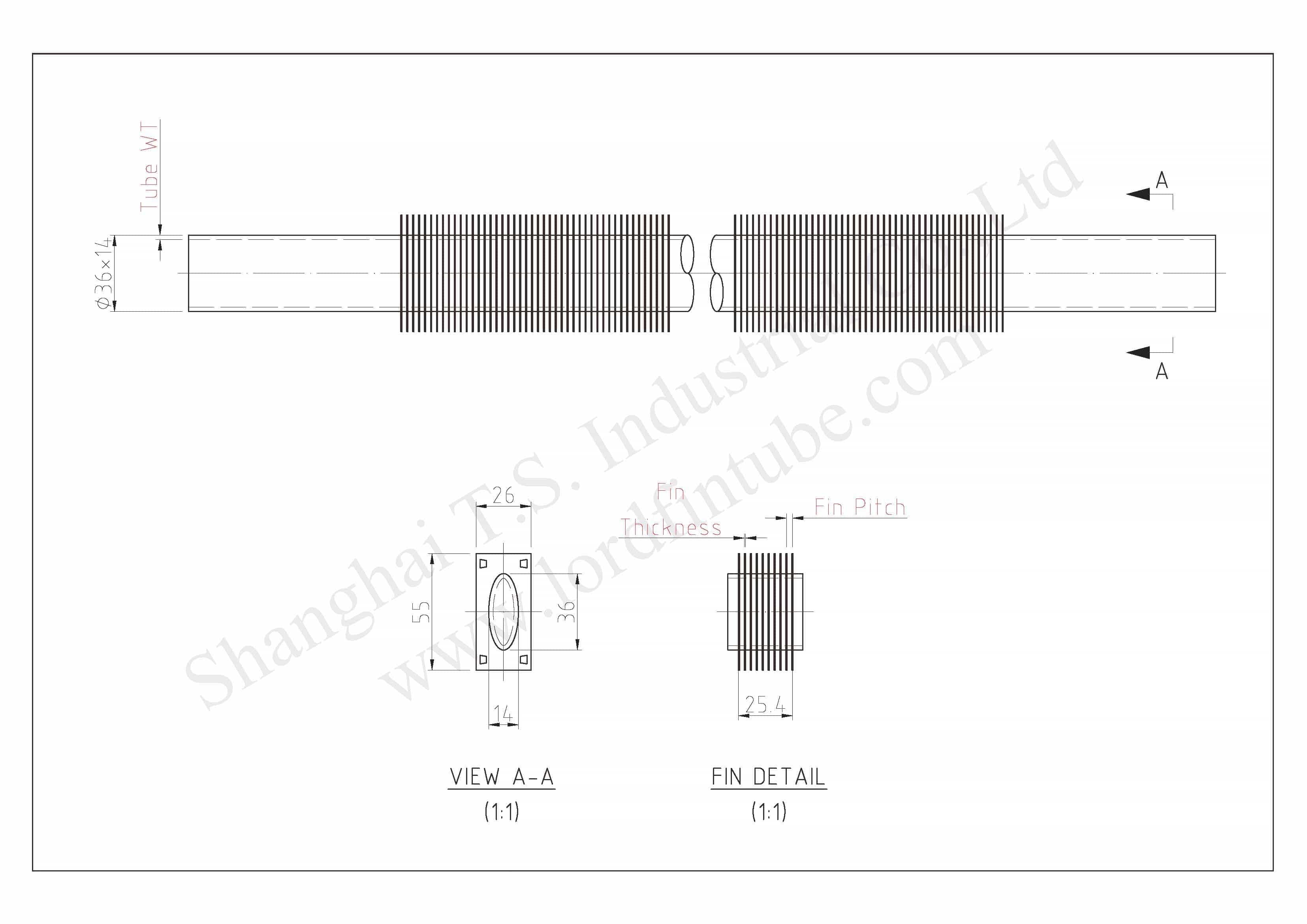
This dimensional specification offers wide applicability in compact heat exchanger design, balancing heat transfer efficiency and fluid flow resistance. Precise tolerance control ensures reliable tube bundle to tubesheet assembly and long term operational stability.
Manufacturing Process: Sleeving + Brazing
Achieving a strong bond between the C12200 square fins and the C70600 Oval base tube is a core manufacturing challenge. The mainstream process employs mechanical sleeving + furnace brazing:
Sleeving Process
C12200 square fins are prestamped into shape. Specialized equipment then sequentially sleeves these fins onto the C70600 Oval base tube. The equipment ensures uniform fin pitch and good perpendicularity, maintaining a small gap between the fins inner hole and the tubes outer wall to provide capillary channels for subsequent brazing.
Brazing Process
Brazing filler metal is preplaced at the interface between the fins and the base tube. The assembly is then passed through a continuous brazing furnace under a protective atmosphere and heated to the melting point of the filler metal. Capillary action draws the molten filler metal uniformly into the gaps, forming a dense metallurgical bond upon cooling.
Process Advantages
High Bond Strength: The metallurgical bond interface results in nearzero contact thermal resistance, ensuring efficient heat transfer.
No Residue Risk: Protective atmosphere brazing eliminates the need for flux, avoiding corrosive residues.
Consistent Quality: Suitable for mass production, ensuring high product uniformity.
Typical Application
This composite finned tube excels in the following areas:
Marine Engineering and Shipbuilding
Used in central cooling systems and heat exchangers for desalination plants. The C70600 base tube withstands seawater corrosion, while the C12200 fins provide efficient heat dissipation in air or on the fresh water side, ensuring long system life.
Petrochemical Industry and Power Plants
In aircooled condensers (e.g., direct aircooled systems in power stations), the Oval Fin Tubes with square fins can significantly reduce fan power consumption. For process gases containing sulfur or ammonia, the corrosionresistant layer of the base tube offers an extra safety margin.
HVAC and Refrigeration
Applied in evaporators and condensers, the compact Oval structure helps reduce equipment footprint, while the natural antimicrobial properties of copper enhance hygiene standards.
Waste Heat Recovery
In flue gas waste heat recovery units, Oval finned tubes are less prone to fouling, easier to clean, and can handle corrosive condensates that may be present in the flue gas.
Comparison and Selection Recommendations
| Parameter | C70600/C12200 Oval Fin Tube | Traditional Carbon Steel/Aluminum Finned Tube |
|---|---|---|
| Seawater Corrosion Resistance | Excellent suitable for long-term use |
Poor requires coating or sacrificial anodes |
| Thermal Conductivity Efficiency | High (all-copper construction + metallurgical braze bond) |
Moderate (depends on contact resistance between fin and tube) |
| Resistance to Fluid Impact | Good | Fair |
| Initial Cost | Higher | Lower |
| Life Cycle Cost | Low (less maintenance, longer life) |
High (frequent replacement or repair) |
When the media is corrosive (especially containing chloride ions), or when equipment requires longterm continuous operation with difficult maintenance access (e.g., offshore platforms, remote power plants), the C70600+C12200 composite Oval finned tube represents the most costeffective solution.
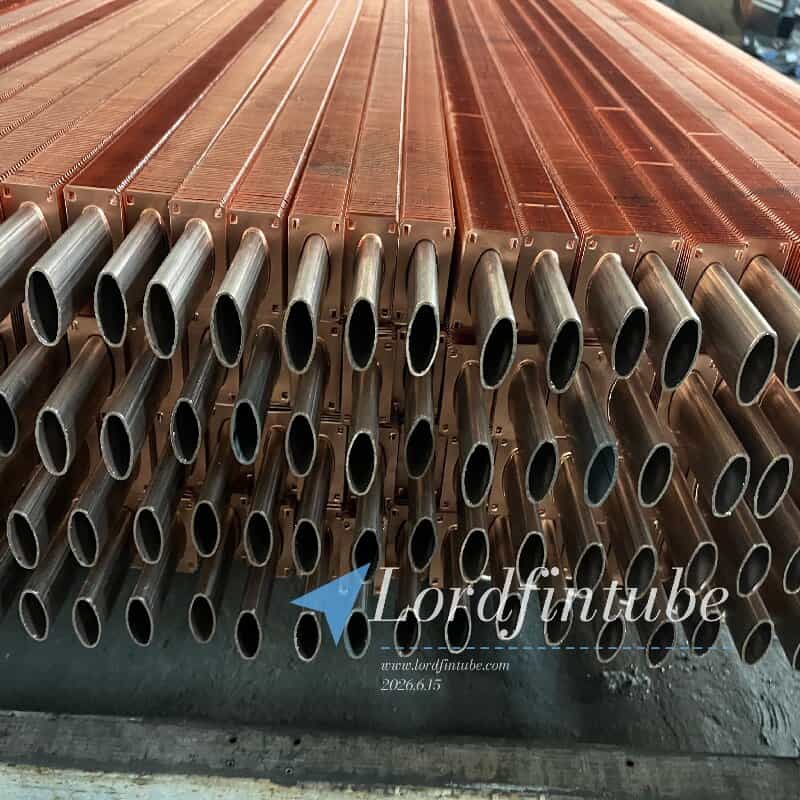
C70600/C12200 Oval Fin Tubes
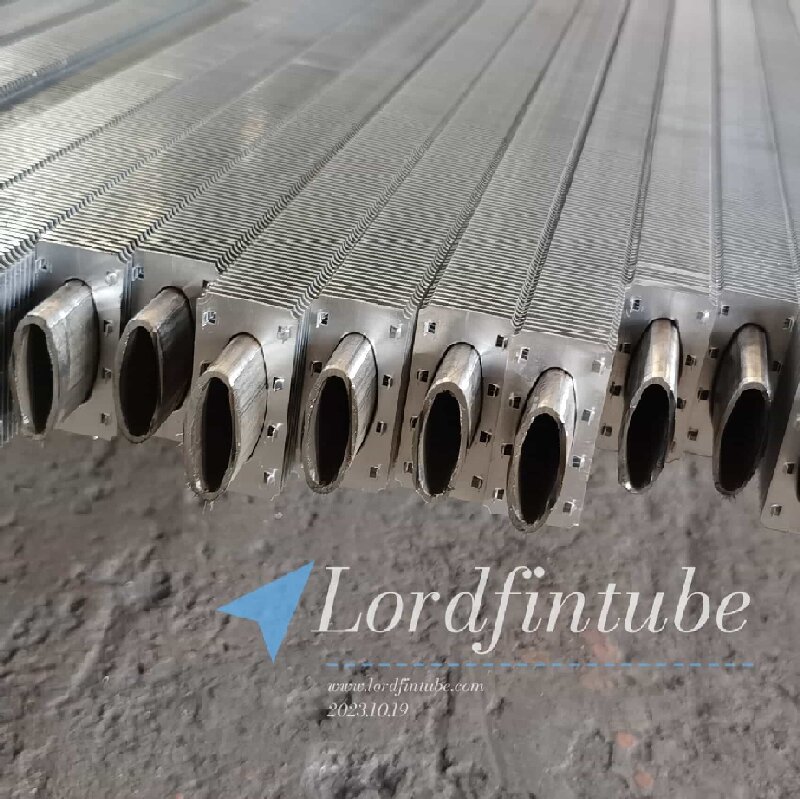
Carbon Steel/Aluminum Oval Fin Tubes
Considerations
1.Galvanic Corrosion Considerations
Although the electrochemical potentials of C70600 and C12200 are similar (potential difference in seawater is approx. 5080 mV) and typically do not cause severe galvanic corrosion, special attention is needed in the following situations:
Dissimilar Metal Connections: When connecting to carbon steel tubesheets or stainless steel components, insulation measures or sacrificial anodes should be considered.
Ammonia Environment Sensitivity: C70600 is susceptible to stress corrosion cracking in environments containing ammonia. Finned tubes should not be subjected to high tensile stresses in such atmospheres.
2.Fluid Erosion Protection
Despite C70600s good erosion resistance, in highvelocity flows containing sand or particulates, protective inlet baffles or increased wall thickness allowance should be considered at the tube bundle inlet.
3.Thermal Expansion Compensation
Heat exchanger design should account for the difference in thermal expansion coefficients between the copper alloy tubes and the shell material (typically carbon steel). Expansion joints should be provided if necessary.
For further technical consultation or custom design, please contact a professional heat exchanger manufacturer.