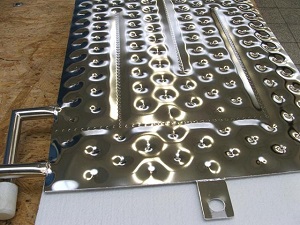

Lord Fin Tube--Plate type heat transfer plate
What is plate type heat transfer plate
Plate type heat transfer plate is a multi-use component that can be welded and formed according to customer specifications. It can be made into virtually any shape to meet high-temperature, high-pressure, or corrosive operating conditions. This versatility makes it a preferred solution across many industrial sectors. The plate type heat exchanger plate design enables efficient thermal exchange in both liquid and gas media.
Which industries benefit most from plate type heat transfer plate? Chemical processing, pharmaceutical manufacturing, food and beverage production, power generation, and HVAC systems all rely on these plates for precise temperature control. How does the plate achieve such adaptability? Through a combination of material selection, forming techniques, and welding methods that accommodate diverse operational demands.
Why choose plate type heat transfer plate over traditional tubular heat exchangers? The plate configuration offers a larger surface area per unit volume, resulting in higher heat transfer coefficients and more compact installations. This translates to lower operating costs and reduced footprint in plant layouts.
Plate type heat transfer plate applications
The plate type heat transfer plate serves a wide spectrum of heating and cooling duties across process industries. Below are the primary application categories:
- Immersion type heating or cooling
- External heating or cooling, heat preservation
- Device built-in heating or cooling, such as internal heating fluidized bed
- Special heat exchanger configurations
- Evaporator and condenser duties
- Reaction kettle built-in, alternative to coil designs
- Polymerization kettle cooling / heating baffle
- Ice storage systems
- Heat recovery boards
- Drum insulation and tank cladding
- Printing and dyeing heaters
- Flue gas heat recovery boards
- Built-in concentrator or reboiler
- Large internal baffle plates for cooling vegetable oil
Which application fits your process? The plate type heat transfer plate can be tailored for immersion, external jacket, or built-in configurations. Whether you need to heat viscous fluids, cool exothermic reactions, or maintain precise storage temperatures, these plates offer a practical and cost-effective solution.
| Application Type | Typical Industry | Key Benefit |
|---|---|---|
| Immersion heating / cooling | Chemical, food | Direct contact, rapid response |
| External jacket heating / cooling | Storage tanks, reactors | No contamination, easy maintenance |
| Built-in heating / cooling | Fluidized beds, columns | Space-saving, high efficiency |
| Evaporator / condenser | Pharmaceutical, power | High surface area, compact design |
| Ice storage | HVAC, cold storage | Energy storage, peak shaving |
Plate type heat transfer plate characteristics
What makes plate type heat transfer plate stand out in demanding thermal applications? The following characteristics define its performance and reliability:
- Can provide a variety of materials including stainless steel, alloy, and carbon steel
- High operating pressure capability
- High operating temperature resistance
- No gasket design eliminates leakage paths
- Corrosion resistance for aggressive media
- Can be customized according to customer needs in any shape
- Easy to use field cutting and processing
- Efficient heat transfer type with low thermal resistance
- Immersion type heating or cooling
- External heating or cooling, heat preservation
- Integrated jacket type heating and cooling
- Custom heat exchanger design available
- Evaporator and condenser functionality
- Easy cleaning and polishing treatment for sanitary applications
- Low pressure drop design reduces pumping costs
- Can provide pharmaceutical and food grade surface heat transfer plates
- More heat transfer panels are used to address the special needs of users
How do these characteristics translate to operational advantages? The no-gasket design minimizes maintenance while the material variety ensures compatibility with almost any process fluid. The ability to customize shapes means existing equipment can be retrofitted without major modifications.
| Material | Temperature Range | Pressure Range | Corrosion Resistance | Typical Applications |
|---|---|---|---|---|
| Stainless Steel (304/316) | -40°C to 800°C | Up to 100 bar | Excellent | Food, pharma, chemical |
| Alloy (Hastelloy, Inconel) | -100°C to 1100°C | Up to 150 bar | Superior | High-corrosion, high-temp |
| Carbon Steel | -20°C to 450°C | Up to 80 bar | Moderate | General industrial, water |
Plate type heat transfer plate types
Which type of plate type heat transfer plate suits your process? The selection depends on the installation surface, thermal duty, and space constraints. The two primary forming methods are double side raised and single side raised designs.
Double side raised heat transfer plate
Both sides are pressed and formed, typically used for most general applications. For heating and cooling processes, the plate thickness is uniform on both sides. Available in stainless steel, alloy, and carbon steel, with different material and thickness options to meet work pressure requirements. The double-side raised design creates turbulence on both surfaces, significantly improving heat transfer efficiency.
Single side raised heat transfer plate
Only one side is pressure-formed, usually for single-surface applications such as tank body walls and transport beds. The two sides of the plate typically have different thicknesses. Available in stainless steel, alloy, and carbon steel, with different materials and thicknesses to meet work pressure specifications. This design is ideal when only one side is exposed to the process fluid.
Before welding, a punch is used to create flow channels, increasing the flow area. This method can be applied to stainless steel, alloy, and carbon steel. Different material and thickness combinations ensure the plate meets the required work pressure.
| Feature | Double Side Raised | Single Side Raised |
|---|---|---|
| Forming method | Both sides pressed | One side pressed |
| Thickness uniformity | Same on both sides | Different on each side |
| Turbulence generation | High on both surfaces | High on formed side only |
| Heat transfer efficiency | 15% higher than single side | Standard performance |
| Typical installation | Immersion, internal, external | Tank walls, transport beds |
| Materials available | Stainless, alloy, carbon steel | Stainless, alloy, carbon steel |
Plate type heat transfer plate installation
How is plate type heat transfer plate installed in existing systems? The double plate design is easy to mount on storage tanks and equipment, offering a cost-effective temperature maintenance method. Key installation considerations include:
- Easy to install on the outer wall of storage tanks and equipment
- Can meet special shapes and dimensions for custom fits
- Manufacturing can accommodate existing inlet/outlet piping, control systems, and support structures
- Available in stainless steel and carbon steel materials
- The inherent advantage of the double side raised design is the turbulence it creates, ensuring high turbulence even at low flow rates, greatly improving heat transfer efficiency
- Experimental results show that the heat transfer performance of the double side raised heat transfer plate is 15% higher than that of the single side plate
Why does turbulence matter so much? Higher turbulence disrupts the boundary layer, reducing thermal resistance and increasing the overall heat transfer coefficient. This means smaller plates can handle the same thermal duty, saving space and material costs.
Where should you install plate type heat transfer plate? Common locations include:
- Device built-in heating or cooling
- Container jacket type heating, cooling, or heat preservation
- Immersion heating or cooling
- Ice storage systems
- Heat recovery boards
- Drum insulation
- Device groove clip sleeves
- Evaporators
- Printing and dyeing heaters
- Flue gas heat recovery boards
- Built-in concentrators or reboilers
- Large internal baffle plates for cooling vegetable oil
Plate type heat transfer plate media compatibility
Which heat transfer media can be used with plate type heat transfer plate? The plate design accommodates a wide range of fluids, making it suitable for diverse industrial processes. The following media are commonly handled:
- Steam
- Hot water
- Cooling water
- Heat conduction oil (thermal oil)
- Heat transfer fluids (glycols, synthetic fluids)
What about corrosive or high-purity media? The availability of stainless steel and alloy materials ensures compatibility with aggressive chemicals, while pharmaceutical and food-grade surface finishes meet stringent hygiene standards. The no-gasket design eliminates contamination risks associated with elastomeric seals.
How does the plate perform with different flow rates? The raised pattern on both sides (double side design) promotes turbulence even at low velocities, ensuring consistent heat transfer across a wide range of operating conditions. This makes the plate type heat transfer plate an energy-efficient choice for variable-load processes.
Plate type heat transfer plate common questions
What is the difference between double side and single side raised plate type heat transfer plate?
Double side raised heat transfer plates are pressed on both sides, offering higher turbulence and 15% better heat transfer efficiency compared to single side plates. Single side raised plates are pressed on one side only, typically used for single-surface applications such as tank walls and transport beds.
Which materials are available for plate type heat transfer plate?
Plate type heat transfer plates are available in stainless steel (304, 316), alloy materials (Hastelloy, Inconel), and carbon steel. Different materials and thicknesses are selected to meet specific work pressure, temperature, and corrosion resistance requirements.
How to maintain plate type heat transfer plate?
Plate type heat transfer plates are easy to clean and can be polished for surface treatment. Regular inspection of welds and pressure testing is recommended. The no-gasket design reduces maintenance frequency and simplifies upkeep.
What is the maximum operating temperature for plate type heat transfer plate?
The maximum operating temperature depends on the material selected. Stainless steel plates can handle high temperatures up to 800°C, while alloy materials offer even higher temperature resistance. Carbon steel plates are suitable for moderate temperature ranges.
How to choose the right plate type heat transfer plate for specific applications?
Selection depends on operating temperature, pressure, media corrosiveness, and installation space. Consider whether you need immersion heating, external heating, or built-in configuration. Custom shapes and dimensions can be manufactured to meet specific requirements.
Why choose plate type heat transfer plate over shell-and-tube exchangers?
Plate type heat transfer plates offer a larger surface area per volume, higher heat transfer coefficients, and more compact footprint. The no-gasket design reduces leakage risks, and the ability to customize shapes allows retrofitting into existing equipment without major modifications.