


Lord Fin Tube--Stainless steel 904L solid fin pipe
904L Solid Fin Pipe
When sourcing heat exchanger components, procurement specialists focus on durability, efficiency, and total cost of ownership. The 904L solid fin pipe stands out for demanding applications where corrosion resistance is non-negotiable. This page details its specifications, manufacturing, and key buyer considerations.
What is a 904L Solid Fin Pipe?
A solid fin pipe is a heat exchanger tube with fins integrally welded to its outer surface. This design drastically increases the surface area for heat transfer. When the base tube is made from stainless steel 904L—an austenitic alloy high in nickel, chromium, and molybdenum—the component gains exceptional resistance to aggressive media like sulfuric acid, seawater, and chloride solutions. This makes the 904L solid fin pipe a preferred choice for chemical processing, offshore platforms, and desalination plants.
904L Solid Fin Pipe Specifications
Buyers typically evaluate finned tubes based on precise dimensional and material parameters. The table below outlines a common inquiry for a large-scale project, reflecting real-world procurement specs.
| Standard Project Inquiry: 904L Solid Fin Pipe for Seawater Cooler | ||||
|---|---|---|---|---|
| Parameter | Detail | Parameter | Detail | Notes |
| Base Tube Material | ASTM B677 UNS N08904 (904L) | Fin Material | 316L Stainless Steel | Fin material can match base or differ based on service. |
| Tube Outer Diameter | 168.3 mm (6") | Tube Wall Thickness | Sch 40 (approx. 10.97 mm) | Wall thickness ensures pressure integrity. |
| Fin Height | 19 mm (0.75") | Fin Thickness | 1.2 mm | Thicker fins resist mechanical damage. |
| Fin Pitch | 3 FPI (Fins Per Inch) | Fin Length | 5040 mm | Long fins reduce welding joints in bundles. |
| Tube Length | 6000 mm | Quantity | 400 Pieces | Typical order for a single heat exchanger unit. |
| Performance Note: This configuration offers a surface area increase of roughly 12-15x compared to bare pipe, significantly boosting heat transfer rates in compact spaces. The 904L base provides immunity to stress corrosion cracking in chloride environments above 60°C. | ||||
Welding Methods for Solid Fin Pipes
The fin-to-tube weld is critical for longevity and thermal performance. Two primary methods are used, each with distinct advantages for buyers to consider.
| Welding Method | Process Overview | Best For | Buyer Advantage |
|---|---|---|---|
| High Frequency Resistance Welding (HFRW) | Uses high-frequency current to heat and fuse fin root to tube surface. A fast, continuous process. | High-volume production; carbon steel, stainless steel fins. | Cost-effective for large orders; consistent weld along entire length. |
| Laser Welding | Precise, high-energy laser beam creates a deep, narrow weld with minimal heat input. | Exotic materials (like 904L), thin fins, where minimal thermal distortion is vital. | Superior weld integrity for corrosive service; often extends service life. |
For 904L base tubes, laser welding is often specified for critical applications because it preserves the alloys corrosion resistance in the heat-affected zone. HFRW remains a robust choice for standard duties.
Why 904L Base Pipe
Procurement teams select 904L not for its low cost, but for its lifecycle cost savings in harsh environments. Key drivers include:
- Superior Pitting Resistance: The high Molybdenum (4-5%) content raises the Pitting Resistance Equivalent Number (PREN) above 35, outperforming 316L.
- Acid Resistance: Excellent performance in phosphoric, sulfuric, and acetic acids, common in chemical reactors.
- Long-Term Durability: Low carbon content prevents sensitization during welding, avoiding intergranular corrosion.
- Temperature Tolerance: Maintains strength and corrosion resistance in continuous service up to 400°C.
A common alternative like 316L may cost less upfront but can fail prematurely in hot chloride service, leading to downtime and replacement expenses. The 904L solid fin pipe, therefore, is an investment in reliability.
904L Solid Fin Pipe Procurement Checklist
When requesting quotes for 904L solid fin pipes, include these points to ensure clarity and quality:
- Specify full material certifications (ASTM B677 for 904L, with mill test reports).
- Define welding method and request weld macro-section samples for review.
- Require finned tube samples for dimensional verification before full production.
- Clarify inspection protocols: 100% visual, hydrostatic testing pressure, and non-destructive testing if needed.
- Discuss packaging for export to prevent fin damage during shipping.
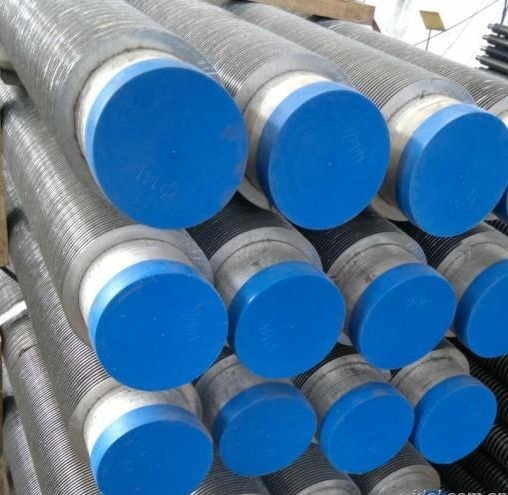
A finished bundle of 904L solid fin pipes, ready for shipment to a seawater desalination plant. The consistent fin spacing and robust welds are visible.
Applications of 904L Solid Fin Pipe
This component is not a generic item but a solution for specific challenges. Its primary applications are:
- Seawater Cooling Systems: Condensers and coolers in power plants and ships.
- Acid Gas Heat Recovery: Waste heat boilers in sulfuric acid plants.
- Marine Offshore Exchangers: Platform cooling where space is limited.
- Pharmaceutical & Fine Chemical Reactors: Where fluid purity is essential.
Need a Custom Quote or Technical Data Sheet?
For project-specific specifications or to discuss the feasibility of 904L solid fin pipes for your application, direct consultation with an engineer is recommended. Provide your service media, temperature, pressure, and available space for accurate sizing.
The 904L solid fin pipe is a high-performance engineering component where material choice directly impacts system longevity. By focusing on precise specifications, welding quality, and verified material grades, buyers can secure a component that delivers decades of reliable service in the most corrosive environments.