


Will the thermal hydraulic system use finned tube?
Thermal Hydraulic System for Heat Transfer
Thermal hydraulic systems require precise engineering to balance fluid dynamics and heat transfer. A common question for design engineers involves the choice between standard hydraulic tubing and specialized fin tube assemblies. The optimal selection depends entirely on the primary system function—fluid conveyance versus active thermal management.
Thermal Hydraulic System Fundamentals
These systems manage energy transfer through a pressurized fluid medium. The fluids thermal properties, flow rate, and the systems architectural layout dictate the required components. Engineers must analyze whether the primary challenge involves moving heat away from a component, adding heat to a process, or maintaining a stable fluid temperature across varying operational loads.
The hydraulic fluid itself acts as a heat sink, but its capacity is finite. Without effective heat exchange interfaces, system efficiency drops and component lifespan can decrease. This is where the surface area of the fluid-carrying conduit becomes a critical design parameter.
Hydraulic Tubing in Thermal Systems
Used when the main requirement is reliable, high-pressure fluid transport. These tubes, like those from specialized hydraulic tube suppliers, are engineered for structural integrity under pressure cycles and temperature fluctuations. Heat transfer, while occurring, is a secondary effect.
- Material: Typically carbon steel or stainless steel for strength and corrosion resistance.
- Focus: Pressure containment and fluid integrity.
- Thermal Role: Passive; relies on fluid mass and flow for heat carriage.
In such setups, external heat exchangers are often added to the circuit for active temperature control.
Finned Tube Integration
Employed when maximizing heat exchange within a compact footprint is essential. The fins dramatically expand the contact surface with air or a secondary liquid. The choice of fin type—fin tube styles like extruded, serrated, or welded—depends on the media and temperature differential.
- Material: Base tube similar to hydraulic tube, with aluminum or steel fins.
- Focus: Active and efficient heat dissipation or absorption.
- Thermal Role: Active; designed to be the primary heat transfer interface.
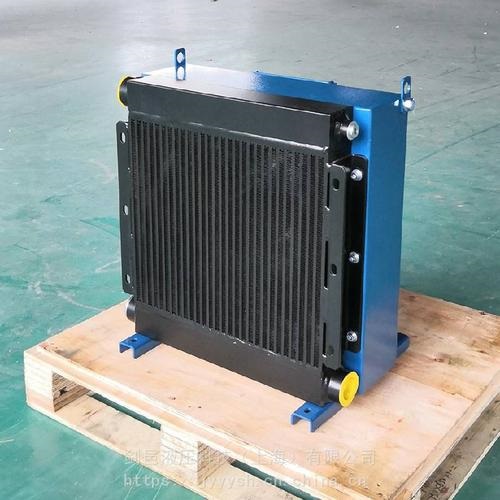
This makes them integral to air-cooled oil coolers, charge air coolers, and shell-and-tube heat exchangers.
Thermal Hydraulic System Component Comparison
| Design Parameter | Standard Hydraulic Tube | Finned Tube Assembly |
|---|---|---|
| Primary Function | Fluid conveyance under pressure | Optimized heat transfer between fluid and external environment |
| Surface Area Ratio | 1 (Baseline) | 8 to 20 times baseline (varies by fin density and height) |
| Typical Pressure Rating | Very High (for system working pressure) | High (must contain fluid, but fin attachment influences design) |
| System Applications | Hydraulic actuator lines, main system piping, reservoir connections | Oil coolers, radiator cores, boiler economizers, process gas heaters |
| Installation Consideration | Routing, bending radius, vibration resistance | Air/liquid flow direction across fins, cleaning access, potential for fouling |
| Maintenance Focus | Leak inspection, corrosion monitoring | Fin cleanliness, debris removal, corrosion at fin-to-tube bond |
Thermal Hydraulic System Design Selection
Selecting between tube types is not an either/or decision. Modern thermal hydraulic systems frequently combine both. A hydraulic circuit might use standard tubing throughout most of its run, with strategically placed finned tube bundles acting as in-line coolers.
Key selection criteria include:
- Heat Load (kW): The amount of thermal energy that must be added or removed.
- Available Space: Finned tubes offer more surface area per unit length.
- Cooling/Heating Medium: Air, water, or another process fluid.
- Fluid Compatibility: The tube and fin material must resist corrosion from both the internal hydraulic fluid and the external environment.
- Pressure Drop Tolerance: Finned bundles can increase flow resistance, affecting pump selection.
Engineering Insight: For high-pressure systems with significant heat loads, a hybrid approach is often most effective. Use high-integrity hydraulic tubing for main runs and incorporate a dedicated finned-tube heat exchanger as a separate module. This simplifies maintenance and allows for optimal orientation of the fins to the cooling stream.
Thermal Hydraulic System Performance Optimization
Beyond component choice, overall system performance hinges on integration. The thermal interface—whether a bare tube wall or an extended fin surface—must be matched to the external heat transfer coefficient. For air cooling, fins are almost always necessary due to airs lower thermal conductivity. For water cooling, a bare tube might suffice, but fins can drastically reduce the required exchanger size.
Material selection also plays a dual role. It must ensure longevity against corrosion while maintaining efficient thermal conductivity. For finned tubes, the bond between the fin and the base tube is critical; a poor bond creates a thermal barrier, negating the benefit of the added surface area.
Ultimately, a successful thermal hydraulic system design is a balanced equation. It weighs the mechanical requirements of fluid containment against the thermodynamic imperative of heat management. Understanding the distinct roles and capabilities of hydraulic tubes and finned tubes allows engineers to specify the right component for each segment of the system, ensuring reliability, efficiency, and control over the operating temperature range.