


Lord Fin Tube-Waste Heat Recovery Heat Exchange
Industrial Waste Heat Recovery
Capturing and reusing thermal energy that would otherwise be released into the environment represents a significant opportunity for industrial facilities to improve energy efficiency and reduce operational costs. This process, central to modern sustainable manufacturing, involves converting excess heat into a valuable resource for other processes.
Waste Heat Recovery Fundamentals
The process involves intercepting and repurposing thermal energy generated as a byproduct of industrial operations. Primary methods for harnessing this energy include heat exchange mechanisms, conversion to electrical power, and systems for heating or cooling applications. Implementing these systems requires careful analysis of temperature profiles, flow rates, and compatibility with existing equipment.
Waste Heat Resource Characteristics
Thermal byproducts represent secondary energy generated during primary energy conversion or from combustible materials. This energy manifests after completing industrial processes where fuel combustion occurs. Classification by temperature provides a framework for technology selection:
- High-grade thermal resources (above 600°C): Often from direct combustion processes, suitable for steam generation or power production.
- Medium-grade resources (300–600°C): Commonly found in exhaust streams, applicable for preheating or medium-pressure steam.
- Low-grade resources (below 300°C): Available from equipment surfaces, cooling systems, or low-temperature exhaust, ideal for space heating or preheating intake air.
Sources vary significantly across industries, including exhaust gases, cooling mediums, steam vents, chemical reactions, high-temperature materials, slag, and combustible waste streams.
Selecting appropriate recovery technology depends heavily on matching the temperature grade with suitable applications. High-temperature waste heat offers the most flexibility for conversion, while low-temperature recovery often requires specialized heat exchange surfaces.
Industrial Waste Heat Utilization Technologies
The diverse nature of thermal byproducts—spanning wide temperature ranges and multiple carrier forms—demands tailored technological solutions. Facility constraints, production requirements, and process specifications determine the optimal approach. Common equipment includes finned tube air preheaters, kiln regenerators, thermal oil heaters, steam generators, and low-temperature turbines.
Current methodologies group into three primary categories based on energy transfer or conversion characteristics:
| Technology Type | Operating Principle | Typical Applications | Temperature Range |
|---|---|---|---|
| Heat Exchange Systems | Direct thermal transfer without phase change or energy conversion | Air preheating, feedwater heating, process fluid heating | 100°C – 600°C |
| Thermal Power Conversion | Conversion of thermal energy to mechanical or electrical power | Organic Rankine Cycle (ORC) systems, steam turbines | 250°C – 800°C+ |
| Refrigeration & Heating | Using thermal energy to drive cooling cycles or provide direct heat | Absorption chillers, district heating, drying processes | 80°C – 300°C |
Waste Heat Recovery Heat Exchange
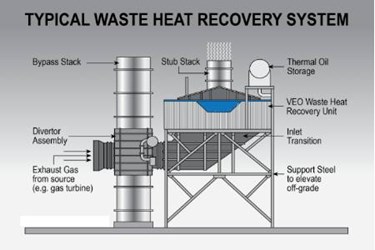
The most efficient approach involves using recovered energy within the same system or process, minimizing energy conversion stages and maximizing primary energy reduction. Industrial applications frequently employ heat exchangers—including air preheaters, regenerators, and process heaters—to transfer thermal energy to combustion air, fuel streams, materials, or workpieces.
This technology enhances furnace performance and thermal efficiency while reducing fuel consumption and emissions. For higher-temperature exhaust streams, waste heat boilers or evaporation coolers generate steam or hot water for process use. The common feature is energy form preservation—thermal energy transfers directly to another process stream without conversion.
Equipment for this purpose ranges from traditional shell-and-tube designs to specialized finned tubes and heat pipe configurations. Extended surfaces like fins significantly increase heat transfer efficiency, making previously marginal recovery projects economically viable. Properly designed waste heat recovery installations can improve system performance by 15-30% in many applications.
Implementation Considerations for Procurement
Evaluating thermal recovery opportunities requires assessing multiple factors beyond simple temperature measurements. Procurement specialists should consider:
- Thermal profile consistency: Fluctuating temperatures or flow rates impact system design and economics.
- Fouling potential: Stream composition affects maintenance requirements and heat exchanger selection.
- Spatial constraints: Available space often determines configuration possibilities.
- Integration complexity: Connecting to existing processes may require shutdowns or modifications.
- Economic parameters: Payback periods vary with energy costs, utilization rates, and maintenance expenses.
Modern systems increasingly incorporate advanced materials and monitoring technologies to optimize performance under variable operating conditions. Successful projects typically begin with comprehensive waste heat audits to quantify available energy and identify the most valuable applications for recovered thermal resources.