


Lord Fin Tube--What is water coal slurry boilers?
What are water coal slurry boilers
What is water coal slurry boilers?
Water coal slurry (WCS) boilers are a type of industrial boiler designed to efficiently burn coal mixed with water to form a slurry. In WCS boilers, coal is ground finely and mixed with water to create a thick slurry with a consistency similar to that of heavy cream. This slurry is then pumped into the boiler combustion chamber, where it is burned to produce heat.
The advantage of using a water coal slurry is that it can be pumped and atomized more easily than dry coal, leading to more efficient combustion. Additionally, the water in the slurry helps to control emissions by reducing the formation of nitrogen oxides (NOx) and sulfur dioxide (SO2) compared to traditional coal combustion.
WCS boilers can be used in various industrial applications where coal is a primary fuel source, such as power generation plants, industrial boilers, and heating systems. They offer the potential for improved efficiency and reduced emissions compared to conventional coal-fired boilers. However, the technology requires careful handling of the slurry and specialized equipment for pumping and combustion.
Water coal slurry boiler advantages, the main contents are:
(1) Coal-water slurry boiler is good at environmental protection and energy saving, and high efficiency, the burning rate can reach more than 98%.
(2) the adjustment of the load is very convenient and can be adjusted in the range of 35% - 100%, in order to be able to achieve economic operation.
(3) Coal-water slurry boiler can effectively improve the utilization of land, can save more than 50%.
(4) Coal-water slurry boiler running costs are relatively low, and the degree of automation is very high, but also to save manpower.
However, Water coal slurry boiler also has some shortcomings, such as:
(1) the operating requirements of the operator are very high, and the technical requirements for the maintenance work are also very high, and the workload is very large.
(2) the use of the easy to consume more, and the cost of spare parts is relatively high.
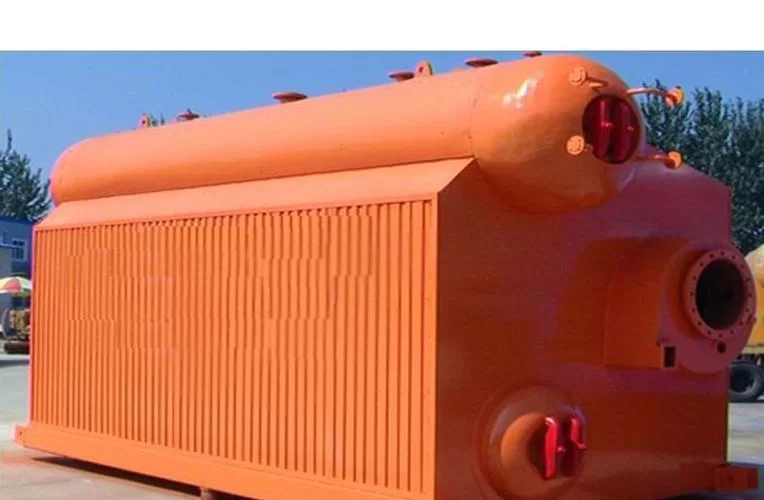
Water coal slurry boilers
How water coal slurry boilers operate
The operational cycle of water coal slurry boilers involves several integrated stages that transform raw coal and water into high-temperature steam. Understanding each stage helps operators optimize performance and reduce downtime.
Fuel preparation and pumping
Raw coal is first crushed and ground in ball mills to a particle size of 200–300 mesh. The powdered coal is then mixed with water and a small amount of dispersant to form a stable, pumpable slurry with a solids concentration of 60%–70%. The slurry is stored in agitated tanks and fed to the boiler through positive-displacement pumps that maintain consistent pressure and flow.
Atomization and combustion
At the burner, the slurry is atomized using high-pressure air or steam into a fine mist of droplets. These droplets enter the combustion chamber where they ignite almost instantly. The water content in the slurry moderates the flame temperature, which reduces thermal NOx formation while ensuring complete carbon burnout. The combustion zone is designed with swirlers and refractory linings to stabilize the flame and maximize heat release.
Heat transfer and steam generation
Hot flue gases from combustion pass through water-tube or fire-tube heat exchangers, transferring thermal energy to produce steam. The finned tube designs commonly used in WCS boilers enhance heat transfer efficiency by increasing the surface area available for convection. Steam pressures typically range from 10 bar to 100 bar, depending on the application and boiler configuration.
Why water coal slurry boilers offer efficiency gains
Several intrinsic characteristics of water coal slurry technology contribute to superior thermal efficiency and operational economy compared to conventional coal-fired systems.
Combustion efficiency
With burning rates exceeding 98%, water coal slurry boilers achieve near-complete carbon conversion. The fine particle size and uniform dispersion of coal in the slurry ensure that each particle is exposed to oxygen during combustion, minimizing unburned carbon in ash. This high efficiency translates directly into lower fuel consumption per unit of steam produced.
Emission control
The water content in the slurry acts as a natural flame suppressant, reducing peak flame temperatures and consequently lowering thermal NOx generation. Additionally, the wet combustion environment facilitates the absorption of SO2 by calcium-based sorbents that can be injected into the furnace. Many WCS installations achieve NOx levels below 200 mg/Nm³ and SO2 removal rates above 90% without expensive post-combustion scrubbers.
Load flexibility
Water coal slurry boilers can modulate output from 35% to 100% of rated capacity with minimal efficiency loss. This wide turndown ratio allows plants to respond quickly to changing steam demands, reducing the need for auxiliary boilers or thermal storage. The responsiveness of the slurry feed system, combined with rapid ignition characteristics, makes WCS boilers suitable for both base-load and peak-load operation.
Water coal slurry boilers applications
Industries that require reliable, high-temperature steam and have access to coal supplies are prime candidates for water coal slurry boiler technology. The following sectors have adopted WCS systems with positive results.
Power generation
Many cogeneration and independent power plants use water coal slurry boilers to produce electricity while also supplying process steam to adjacent facilities. The fuel flexibility of WCS allows plants to switch between coal grades and even co-fire with biomass or petroleum coke, providing operational resilience against fuel price volatility.
Industrial heating
Chemical plants, pulp and paper mills, and food processing facilities rely on WCS boilers for consistent, high-pressure steam used in drying, distillation, and sterilization processes. The ability to adjust load without major efficiency penalties makes WCS ideal for facilities with variable production schedules.
District heating
In colder regions, centralized district heating networks use water coal slurry boilers to supply hot water and steam to residential and commercial buildings. The low-emission profile of WCS helps cities meet air quality standards while maintaining affordable heating costs for consumers.
Water coal slurry boilers performance factors
Several key parameters determine the overall performance and economic viability of a water coal slurry boiler installation. The tables below summarize typical performance metrics and compare WCS technology with traditional coal-fired alternatives.
| Parameter | Water Coal Slurry Boiler | Conventional Coal Boiler |
|---|---|---|
| Combustion efficiency | 98% – 99% | 85% – 92% |
| Load turndown ratio | 35% – 100% | 50% – 100% |
| NOx emissions (mg/Nm³) | 150 – 250 | 350 – 600 |
| SO2 removal efficiency | 85% – 95% | 60% – 80% |
| Fuel preparation cost | Moderate | Low |
| Maintenance intensity | Higher | Lower |
When evaluating water coal slurry boilers for a specific project, plant engineers should consider the following technical specifications that vary by manufacturer and boiler size.
| Boiler Capacity (t/h steam) | Pressure (bar) | Temperature (°C) | Fuel Consumption (kg/h) | Efficiency (%) |
|---|---|---|---|---|
| 10 – 20 | 10 – 25 | 180 – 220 | 750 – 1500 | 98.2 |
| 25 – 50 | 25 – 45 | 220 – 300 | 1900 – 3800 | 98.5 |
| 60 – 100 | 45 – 80 | 300 – 400 | 4500 – 7500 | 98.8 |
| 120 – 200 | 80 – 100 | 400 – 540 | 9000 – 15000 | 99.0 |
Selecting the right water coal slurry boiler involves balancing capital cost, fuel availability, emission requirements, and maintenance capabilities. Facilities with access to high-quality coal and skilled technical staff often achieve the best return on investment with WCS technology.
Water coal slurry boilers frequently asked questions
What is the typical combustion efficiency of water coal slurry boilers?
Water coal slurry boilers typically achieve combustion efficiency above 98%, with some advanced designs reaching 99%. This high efficiency results from the fine grinding of coal particles and the atomization process that ensures complete burning of the fuel.
How does water coal slurry compare to pulverized coal in terms of emissions?
Water coal slurry combustion produces significantly lower NOx and SO2 emissions compared to pulverized coal. The water content in the slurry helps reduce flame temperature, which suppresses thermal NOx formation. Additionally, the wet process allows for better capture of sulfur compounds during combustion.
What maintenance requirements do water coal slurry boilers have?
Water coal slurry boilers require regular inspection of the pumping system, atomization nozzles, and combustion chamber. The slurry handling equipment needs periodic cleaning to prevent clogging. Maintenance intervals are typically shorter than conventional coal boilers due to the abrasive nature of the slurry, but modern designs have improved reliability.
Which industries benefit most from water coal slurry boiler technology?
Power generation plants, chemical processing facilities, paper mills, and district heating systems benefit most from water coal slurry boiler technology. These industries require consistent, high-temperature heat output and benefit from the fuel flexibility and emission control advantages that WCS boilers provide.
How does the load adjustment capability of water coal slurry boilers work?
Water coal slurry boilers offer load adjustment from 35% to 100% of rated capacity. This flexibility is achieved by varying the slurry feed rate and atomization pressure. The ability to modulate load allows operators to match steam demand efficiently, reducing fuel waste during periods of lower demand.