


Lord Fin Tube--ASME certified finned tube heat exchanger
ASME certified shell and tube heat exchanger
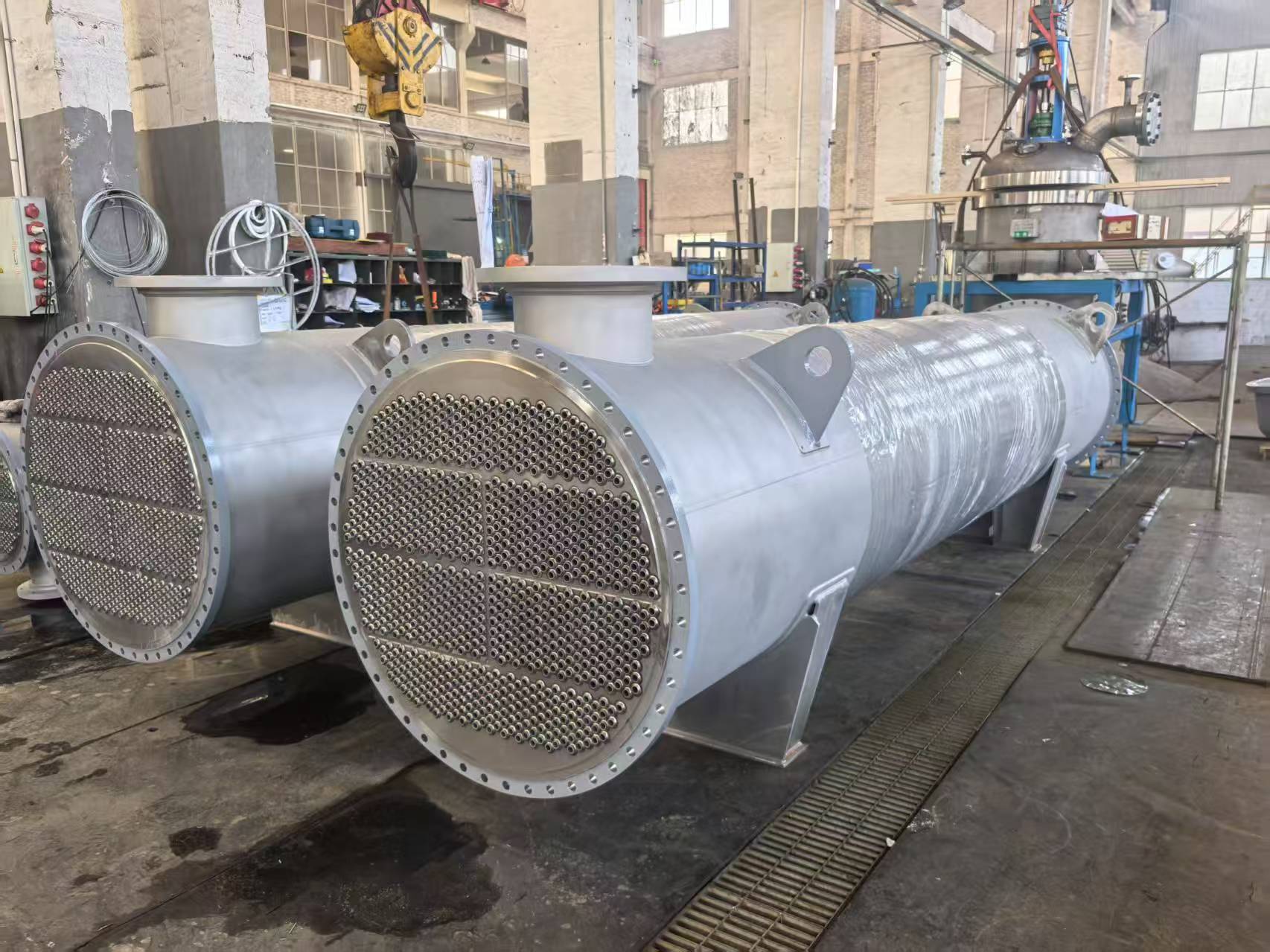
ASME certified shell and tube heat exchanger | finned tube heat exchanger
Tube heat exchanger is the feature product in our company, of which the structure design, manufacturing and application are unique. Spiral tube type, arc tube and baffle plate type tubular exchanger are independent R&D products in the company, featuring advanced technology in the world, widely used in industries particularly in petrifaction, electricity and metallurgy.
Heat exchanger, also called heat transfer machine, is the equipment that can transfer certain heat from the thermal fluid to the cold fluid. It is the essential equipment to achieve the heat exchange and transfer during the production process.
The type of heat exchanger that our company can provides: Spiral-plate heat exchanger, corrugated tube heat exchanger, threaded pipe heat exchanger, plate heat exchanger, spiral baffle plate heat exchanger, double-tube plate heat exchanger, fin tubular heat exchanger, float-head heat exchanger, U-tube heat exchanger, stacked heat exchanger, and decompose type heat exchanger etc.
Heat exchange area and pressure can be customized according to customers’ requirements. The tube heat exchangers which include U type, float-head type, corrugated tube type.
ASME certified shell and tube heat exchanger design principles
What makes an ASME certified shell and tube heat exchanger distinct from conventional units? The answer lies in the rigorous design codes and material specifications mandated by the American Society of Mechanical Engineers. Every ASME-certified unit must comply with Section VIII of the Boiler and Pressure Vessel Code, which governs the design, fabrication, inspection, and testing of pressure vessels.
How does the certification process affect the thermal and mechanical design? For a shell and tube heat exchanger, the ASME stamp requires that the design pressure, temperature, and corrosion allowance are calculated using recognized methods such as the TEMA standards (Tubular Exchanger Manufacturers Association). The tube sheet thickness, baffle spacing, and nozzle reinforcement are all verified against ASME formulae to ensure structural integrity under both operating and upset conditions. Why is this important for procurement engineers? Because an ASME-certified unit provides a verified safety margin, reducing the risk of catastrophic failure in high-pressure or high-temperature services.
Which design parameters are most critical? The tube diameter, pitch, and layout pattern (triangular, square, or rotated square) directly influence the heat transfer coefficient and pressure drop. The shell-side baffle type – single-segmental, double-segmental, or helical – determines the flow velocity and turbulence, which in turn affect fouling resistance and overall thermal performance. For ASME certified shell and tube heat exchangers, each of these parameters must be documented and stamped on the nameplate, providing full traceability.
ASME certified shell and tube heat exchanger technical specifications
When selecting an ASME certified shell and tube heat exchanger, procurement professionals need clear, comparable technical data. The table below presents typical specifications for three common design variants, each engineered to meet ASME Section VIII requirements while serving different operational profiles.
| Parameter | Type A (Fixed Tube Sheet) | Type B (U-Tube) | Type C (Floating Head) |
|---|---|---|---|
| Heat transfer area (m²) | 50 – 1,200 | 30 – 800 | 80 – 2,500 |
| Design pressure (MPa) | 0.6 – 6.4 | 1.0 – 10.0 | 0.6 – 8.0 |
| Design temperature (°C) | -20 ~ 350 | -40 ~ 450 | -10 ~ 400 |
| Tube OD (mm) | 19, 25, 32 | 19, 25, 38 | 25, 32, 50 |
| Tube wall thickness (mm) | 2.0 – 3.5 | 2.0 – 4.0 | 2.5 – 5.0 |
| Shell ID (mm) | 400 – 1,800 | 300 – 1,500 | 500 – 2,200 |
| Baffle spacing (mm) | 100 – 500 | 80 – 400 | 120 – 600 |
| ASME certification class | U, UM | U, UM | U, UM, UV |
Which type should you choose? The fixed tube sheet design (Type A) is economical for clean services where differential thermal expansion is minimal. The U-tube bundle (Type B) accommodates large temperature differences and allows tube bundle removal for cleaning. The floating head (Type C) offers the greatest flexibility, enabling both tube bundle extraction and differential expansion management, making it the preferred choice for high-fouling or high-temperature applications in refineries and chemical plants.
ASME certified shell and tube heat exchanger manufacturing standards
Why does ASME certification demand such meticulous manufacturing control? Because every weld, every rolled tube joint, and every pressure-retaining component must be traceable to certified material test reports (MTRs). The manufacturing sequence for an ASME certified shell and tube heat exchanger begins with material selection – typically carbon steel, stainless steel, or duplex alloys – followed by cutting, forming, and welding of the shell, channel, and tube sheet.
What are the critical steps in the fabrication process? Tube-to-tube sheet joining is particularly vital: hydraulic expansion, roller expansion, or strength welding are used depending on the service conditions. Each joint must pass a leak test, often using helium mass spectrometry or hydrostatic pressure. The ASME code also mandates that all pressure welds be radiographically or ultrasonically examined, with the results documented in the manufacturers data report.
How does post-weld heat treatment (PWHT) affect the exchangers integrity? For thicker sections or materials susceptible to stress corrosion cracking, PWHT is required to relieve residual stresses. This step is carefully controlled in ASME certified shell and tube heat exchanger production, with temperature and holding time recorded and verified. The final hydrostatic test, conducted at 1.3 times the design pressure, confirms that the assembled unit meets the required strength and leak-tightness standards before the ASME U-stamp is applied.
Which materials are commonly used in ASME certified shell and tube heat exchangers?
SA-516 Gr.70 carbon steel for shells, SA-179 or SA-213 tubes for general service, and SA-240 304/316 stainless steel for corrosive environments. High-alloy materials like Inconel and Hastelloy are available for extreme conditions.
How is tube bundle replacement handled for ASME-certified units?
For floating head and U-tube designs, the bundle can be withdrawn from the shell side. The ASME stamp remains valid as long as replacement bundles are fabricated using identical materials and the same design code, with updated documentation.
ASME certified shell and tube heat exchanger industrial applications
Where do ASME certified shell and tube heat exchangers deliver the most value? Their robustness and code compliance make them indispensable across multiple heavy industries. The following list highlights the primary sectors that rely on these units for critical heat transfer duties.
How do you match the exchanger type to the application? For fouling services in the petrochemical industry, the floating head or U-tube designs are preferred because they allow mechanical cleaning of the tube bundle. For high-pressure gas cooling in power plants, the fixed tube sheet type with a shell-side expansion joint may be more economical. Which configuration ultimately proves most cost-effective depends on the thermal duty, pressure drop constraints, and maintenance strategy.
ASME certified shell and tube heat exchanger performance optimization
What factors most significantly influence the thermal performance of an ASME certified shell and tube heat exchanger? Beyond the basic design parameters, the operating conditions and fouling behavior play decisive roles. The overall heat transfer coefficient (U) is a function of the film coefficients on both the shell and tube sides, as well as the thermal resistance of the tube wall and any fouling layers.
Why is fouling management critical for ASME-certified units? Fouling reduces the heat transfer rate, increases pressure drop, and can lead to localized overheating or under-cooling. ASME certified shell and tube heat exchangers are often equipped with removable bundles or access openings to facilitate periodic cleaning. The use of enhanced tube geometries – such as low-finned tubes or twisted-tape inserts – can improve the tube-side coefficient while maintaining code compliance.
How can you optimize the shell-side flow distribution? Baffle design is key: single-segmental baffles create a cross-flow pattern that enhances turbulence, while double-segmental or helical baffles reduce pressure drop at the expense of some heat transfer. For critical applications, computational fluid dynamics (CFD) analysis is used to validate the flow distribution and identify dead zones that could impair performance or accelerate localized corrosion.
Which operational parameters should be monitored to ensure long-term reliability? Temperature and pressure at both inlet and outlet, differential pressure across the exchanger, and vibration levels are the most important indicators. ASME certified shell and tube heat exchangers are designed with a fatigue life that corresponds to the specified cycle count, but actual service conditions – including startups, shutdowns, and transient events – must be tracked to update the remaining life assessment.
What is the typical design life of an ASME certified shell and tube heat exchanger?
With proper operation and maintenance, these exchangers commonly achieve 20–30 years of service. The design life is based on the number of thermal cycles and the corrosion allowance specified during the ASME design phase.
How does the ASME certification impact procurement lead times?
ASME-certified fabrication requires third-party inspection and data report documentation, which can extend lead times by 4–8 weeks compared to non-code units. However, the increased quality assurance and legal compliance often justify the additional schedule.
For detailed engineering data, dimension drawings, or a quotation for an ASME certified shell and tube heat exchanger that fits your specific process conditions, contact our technical sales team with your duty specifications and operating parameters.