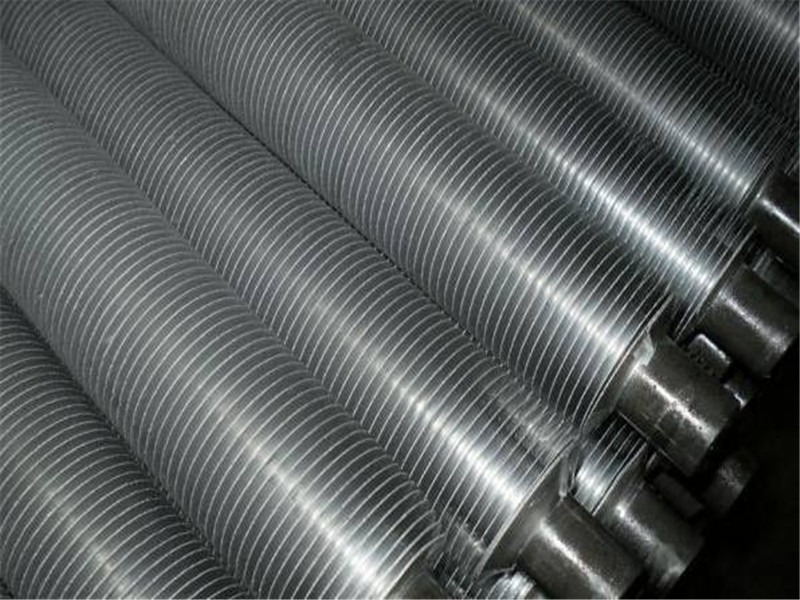

What is embedded spiral fin tube?
Embedded spiral fin tube
What is embedded spiral fin tube?
An embedded spiral fin tube is a tube with a spiral-shaped fin tightly wrapped around its outer surface. This special design helps the tube transfer heat better because the spiral fin increases the surface area of the tube that touches the heat source or the fluid that needs to be cooled down. This design is used in many machines and systems where efficient heat transfer is important, like air conditioners, heaters, and even big industrial machines.
An embedded spiral fin tube, also known as a "Imbedded spiral finned tube" is a type of heat exchanger component used in various industries to enhance heat transfer efficiency. It consists of a metal tube with a spiral-shaped fin wrapped around its outer surface. The fin is tightly wound around the tube, creating a continuous spiral pattern along the length of the tube.
How embedded spiral fin tube works
The embedded spiral fin tube operates on a principle that combines expanded surface area with flow manipulation. When a hot or cold fluid moves through the inner tube, thermal energy passes through the tube wall and into the spiral fin. The fin then releases or absorbs heat from the surrounding air or process fluid. The spiral geometry does more than just add surface area — it also disrupts the laminar boundary layer that typically forms along a smooth tube. This disruption creates localized turbulence, which forces the surrounding fluid to mix more vigorously and maintain closer contact with the fin surface. The result is a heat transfer coefficient that can be two to three times higher than that of a bare tube of the same diameter, depending on operating conditions.
Which factors influence the effectiveness of this heat transfer process? The fin height, fin pitch, tube material, and the velocity of the fluids all play significant roles. For instance, a tighter fin pitch increases surface area but may also increase air-side pressure drop, while a taller fin provides more surface area but can be more susceptible to mechanical damage. Engineers balance these variables to match the thermal and mechanical requirements of each specific application.
Embedded spiral fin tube material selection
Choosing the right material for an embedded spiral fin tube depends on the operating environment, the fluids involved, and the desired thermal performance. Each material brings its own set of characteristics that affect durability, heat transfer efficiency, and cost. The table below summarizes the most common options and their key attributes.
| Material | Thermal Conductivity (W/m·K) | Corrosion Resistance | Max Operating Temperature (°C) | Typical Applications |
|---|---|---|---|---|
| Stainless Steel (304/316) | 16 – 21 | Excellent | 800 – 900 | Chemical plants, marine environments, food processing |
| Aluminum (6061/6063) | 200 – 220 | Moderate | 150 – 200 | HVAC systems, air coolers, lightweight heat exchangers |
| Copper (C12200) | 380 – 400 | Good | 200 – 250 | Refrigeration, condensers, high-efficiency units |
| Carbon Steel (A179/A192) | 45 – 55 | Fair (needs coating) | 450 – 550 | General industrial heat exchangers, economizers |
Which material is right for your project? Consider the corrosiveness of the fluids, the operating temperature range, and the required thermal conductivity. Stainless steel offers the best all-around durability for aggressive environments, while copper delivers unmatched thermal performance for compact designs. Aluminum sits in the middle, offering a balance of cost and performance for air-side applications.
Embedded spiral fin tube application fields
Embedded spiral fin tubes are found across a wide spectrum of industries where thermal management is critical. Their ability to pack high heat transfer capacity into a compact footprint makes them a preferred choice in both small-scale equipment and large industrial installations.
- Petrochemical processing: Used in fired heaters, reformer furnaces, and waste heat recovery units where high temperatures and corrosive gases are common.
- Power generation: Employed in boiler economizers, air preheaters, and condenser cooling systems to improve overall cycle efficiency.
- Chemical manufacturing: Integrated into reactor cooling loops, distillation column reboilers, and solvent recovery systems.
- HVAC and refrigeration: Installed in air handling units, chilled water coils, and evaporator/condenser coils for commercial and residential buildings.
- Oil and gas: Used in offshore platforms, pipeline heating systems, and gas turbine cooling sections.
- Food and beverage: Applied in pasteurizers, sterilizers, and thermal fluid heating systems where hygiene and precise temperature control are essential.
- Data center cooling: Increasingly adopted in liquid-to-air heat exchangers for server rack thermal management.
What makes embedded spiral fin tubes so versatile across these fields? Their modular design allows for custom fin densities, tube diameters, and material combinations, enabling engineers to tailor the heat exchanger to the exact thermal duty and physical constraints of each project.
Embedded spiral fin tube features and benefits
1. Increased Surface Area: The primary purpose of the spiral fin is to increase the surface area of the tube. More surface area means more space for heat transfer to occur between the fluid inside the tube and the surrounding environment.
2. Improved Heat Transfer Efficiency: By increasing the surface area available for heat exchange, embedded spiral fin tubes significantly enhance the overall heat transfer efficiency. This is particularly useful in applications where efficient heat exchange is essential, such as in industrial processes, HVAC systems, and power generation.
3. Turbulent Flow Enhancement: The spiral shape of the fin disrupts the flow of the fluid passing over it, creating turbulence. Turbulent flow enhances the heat transfer process by ensuring that the fluid stays in close contact with the finned surface, improving heat exchange.
4. Compact Design: Embedded spiral fin tubes offer a compact way to achieve high heat transfer rates. The extended surface area provided by the fin reduces the need for longer tubes, which can save space in installations with limited room.
5. Flexibility in Materials: Embedded spiral fin tubes can be manufactured using various materials, such as stainless steel, aluminum, and copper. This flexibility in material selection allows for customization based on the specific needs of the application and compatibility with the fluids being transferred.
6. Resistance to Fouling: The spiral shape of the fin can help reduce the accumulation of dirt, debris, and fouling on the surface. This contributes to maintaining consistent heat transfer performance over time and reduces the need for frequent cleaning.
7. Wide Range of Applications: Embedded spiral fin tubes find applications in a variety of industries, including petrochemical, power generation, chemical processing, refrigeration, and air conditioning. They are used in heat exchangers, air coolers, condensers, and other systems that require efficient heat transfer.
Imbedded spiral finned tube technical specifications
Understanding the technical specifications of imbedded spiral finned tubes is essential for proper sizing and selection. The following table provides typical dimensional and performance parameters available from leading manufacturers. Note that custom specifications can often be accommodated based on project requirements.
| Parameter | Typical Range | Notes |
|---|---|---|
| Tube Outer Diameter (OD) | 25 mm – 219 mm (1″ – 8.6″) | Custom sizes available on request |
| Tube Wall Thickness | 2.0 mm – 8.0 mm | Depends on pressure rating and material |
| Fin Height | 8 mm – 25 mm (0.31″ – 0.98″) | Higher fins increase surface area but may affect structural integrity |
| Fin Pitch | 3 mm – 20 mm (0.12″ – 0.79″) | Tighter pitch = more fins per meter = higher heat transfer |
| Fin Thickness | 0.3 mm – 1.5 mm | Thicker fins offer better durability; thinner fins improve thermal response |
| Tube Length | Up to 18,000 mm (59 ft) | Longer lengths possible with specialized handling |
| Fin Material | Same as tube or different (bimetallic) | Bimetallic designs allow optimization of tube and fin properties separately |
| Surface Treatment | Bare, coated, galvanized, or aluminized | Coating enhances corrosion resistance and can reduce fouling |
Why do these specifications matter? Each parameter directly influences the thermal performance, mechanical strength, and cost of the finished heat exchanger. For example, selecting a fin pitch that is too tight may increase manufacturing complexity and pressure drop, while a fin height that is too tall may be prone to vibration damage in high-velocity gas streams. Engineers use these specifications to fine-tune the design for optimal performance under actual operating conditions.
What to consider when choosing embedded spiral fin tube
Selecting the right embedded spiral fin tube for a given project involves more than just picking a standard size from a catalog. Several interrelated factors must be evaluated to ensure the tube delivers the required thermal performance while maintaining reliability and cost-effectiveness over its service life.
- Operating temperature range: The tube and fin materials must withstand both the maximum and minimum temperatures expected during normal operation and transient conditions. Thermal expansion differences between the tube and fin materials should also be considered to prevent mechanical stress or bond failure.
- Fluid properties: The corrosiveness, viscosity, and fouling tendency of the fluids on both the inside and outside of the tube influence material selection and fin geometry. Highly viscous fluids may benefit from wider fin pitches to reduce pressure drop.
- Pressure requirements: The tube wall thickness and material grade must be sufficient to contain the internal fluid pressure safely. Higher pressures generally require thicker walls, which can affect heat transfer and weight.
- Space constraints: Available installation space often dictates the maximum tube length and bundle diameter. Compact designs with tighter fin pitches can increase heat transfer within a smaller footprint.
- Maintenance accessibility: Tubes installed in hard-to-reach locations may require more robust construction and fouling-resistant fin designs to minimize cleaning frequency and downtime.
- Cost considerations: Material costs, manufacturing complexity, and shipping logistics all contribute to the total project cost. Balancing initial investment against long-term operational savings is a key part of the selection process.
- Thermal performance requirements: The required heat duty, approach temperature, and allowable pressure drop define the baseline design criteria. Thermal modeling and simulation tools are often used to predict performance and optimize the fin geometry.
How can you be sure you have made the right choice? Consulting with experienced thermal engineers and conducting performance tests on prototype samples can provide valuable validation before full-scale production. Many manufacturers offer computational fluid dynamics (CFD) analysis and heat transfer simulations to help customers visualize and compare different design options.
Its important to note that while embedded spiral fin tubes offer significant heat transfer advantages, their design and installation may require specialized knowledge and equipment. When considering the use of embedded spiral fin tubes in a specific application, its advisable to consult with experts or engineers to ensure proper selection, design, and installation for optimal performance.