


Analysis of high frequency welded finned tubes
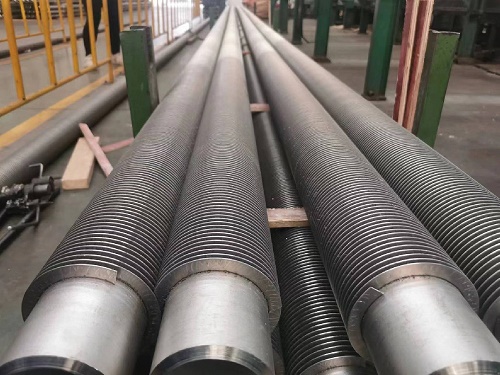
High-frequency welded finned tubes
High-frequency welded finned tubes find widespread utilization in industrial heating and cooling applications, playing a pivotal role in augmenting the heat transfer efficiency between fluids by significantly enhancing the surface area within the heat exchanger. The manufacturing process of these tubes involves the precise welding of fins onto a base tube through the application of high-frequency electric current.
The assessment of high-frequency welded finned tube performance necessitates the consideration of various pivotal factors, encompassing:
High frequency welded finned tubes fin geometry
The characteristics of the fins, encompassing their height, thickness, and spacing, exert a profound influence on both the heat transfer rate and the pressure drop encountered throughout the heat exchanger. Fins characterized by larger heights and thicknesses effectively amplify the available surface area for heat transfer, albeit potentially at the expense of heightened pressure drop and diminished fluid flow rates.
| Fin Parameter | Effect on Heat Transfer | Effect on Pressure Drop | Typical Range |
|---|---|---|---|
| Fin Height | Increases surface area and heat transfer rate | Raises pressure drop significantly | 8 – 16 mm |
| Fin Thickness | Improves fin efficiency and durability | Minimal impact on pressure drop | 0.8 – 1.5 mm |
| Fin Spacing | Tighter spacing increases surface area density | Narrower spacing raises pressure drop | 2 – 5 mm |
What determines the optimal fin geometry for a specific application? The balance between heat transfer enhancement and allowable pressure drop is the primary consideration. Engineers evaluate the fluid properties, flow rates, and thermal requirements to select fin height, thickness, and spacing that maximize overall heat exchanger performance without exceeding system pressure limits.
High frequency welded finned tubes welding quality
The caliber of the weld connecting the fins and the base tube is of paramount significance, as it fundamentally shapes the strength and enduring resilience of the finned tube. Subpar welding quality can precipitate leakage, corrosion susceptibility, and a notable decline in the heat transfer efficiency.
How does welding quality affect long-term reliability? A consistent, defect-free weld ensures mechanical integrity under thermal cycling and vibration. Poor weld penetration or porosity creates weak points where fatigue cracks may initiate, leading to premature tube failure. High-frequency welding parameters — including power, frequency, and travel speed — must be precisely controlled to achieve a uniform metallurgical bond along the entire fin-to-tube interface.
High frequency welded finned tubes material properties
The inherent material properties inherent to the finned tube, spanning attributes such as thermal conductivity, specific heat capacity, and density, wield a substantial influence over the heat transfer rate and the holistic effectiveness of the heat exchanger.
| Material | Thermal Conductivity (W/m·K) | Corrosion Resistance | Cost Level | Common Applications |
|---|---|---|---|---|
| Carbon Steel | 45 – 50 | Moderate | Low | General industrial heat exchangers |
| Stainless Steel | 16 – 21 | High | Medium | Corrosive or high-temperature environments |
| Copper | 380 – 400 | Moderate | High | Applications requiring superior thermal conductivity |
| Aluminum | 200 – 220 | Moderate | Medium | Lightweight and cost-sensitive designs |
Which material offers the best balance for a given operating environment? Carbon steel provides an economical solution for non-corrosive, moderate-temperature services. Stainless steel, while exhibiting lower thermal conductivity, delivers exceptional resistance to oxidation and chemical attack, making it indispensable in aggressive process streams. Copper and aluminum are favoured when weight reduction or ultra-high heat flux is the priority, though each carries distinct cost and mechanical constraints.
High frequency welded finned tubes operating conditions
The prevailing operating conditions within the heat exchanger, encompassing variables like fluid flow rate, inlet and outlet temperatures, and pressure drop, wield a substantial impact on the overall performance of the finned tube.
Why must operating conditions be carefully matched to finned tube design? Variations in fluid velocity alter the convective heat transfer coefficient on both the tube-side and fin-side surfaces. Elevated temperatures can affect material strength and thermal expansion, while pressure drop limits dictate the permissible fin density and geometry. A thorough understanding of the actual service conditions — including start-up, transient, and shutdown phases — is essential to select a high frequency welded finned tube that delivers consistent, efficient performance over its entire operational life.
What influences high frequency welded finned tubes heat transfer?
Multiple parameters collectively determine the thermal performance of high frequency welded finned tubes. Beyond fin geometry, welding quality, material properties, and operating conditions, the fin-to-tube contact resistance plays a critical role. A robust weld with full fusion minimizes thermal barrier at the joint, ensuring that heat flows efficiently from the tube wall into the fin base and along the fin height.
What role does fluid composition play? The presence of particulates, fouling agents, or corrosive species can degrade heat transfer over time. Selecting fin materials and coatings that resist fouling and corrosion preserves the designed thermal performance and extends service intervals. Additionally, the flow arrangement — counter-flow, cross-flow, or parallel-flow — interacts with finned tube geometry to influence the overall log mean temperature difference and, consequently, the heat duty achievable.
How to select HFW finned tubes for specific applications?
Selecting the appropriate HFW finned tubes requires a systematic evaluation of process requirements, mechanical constraints, and economic factors. What are the key steps in this selection process?
First, define the thermal duty — the amount of heat that must be transferred — along with the allowable pressure drop on both the tube-side and fin-side fluids. Second, characterise the fluid properties: viscosity, density, specific heat, thermal conductivity, and fouling tendency. Third, assess the operating temperature and pressure range, including any cyclic or transient conditions. Fourth, consider the installation environment — indoor or outdoor, corrosive atmosphere, seismic zone, and maintenance accessibility. Finally, perform an economic analysis comparing initial capital cost, energy consumption, maintenance frequency, and expected service life.
Which application parameters most strongly influence HFW finned tube selection? For high-temperature gas-to-liquid exchangers, fin material and weld integrity are paramount. In condensing or evaporating services, fin spacing and surface coating become critical to manage liquid drainage and film resistance. Each application demands a tailored approach, and consulting with experienced finned tube manufacturers ensures that the selected product aligns with both technical and commercial objectives.
Which industries commonly use high frequency welded finned tubes?
High frequency welded finned tubes are deployed across a broad spectrum of industries where efficient heat transfer between fluids is essential. Which sectors rely most heavily on this technology?
In the petrochemical and refining industry, HFW finned tubes are used in air-cooled heat exchangers, process heaters, and waste heat recovery units. Power generation facilities employ them in boiler economizers, air preheaters, and condenser systems. The chemical processing sector utilises finned tubes in reactors, distillation columns, and dryer systems where precise temperature control is required. Additionally, HVAC and refrigeration systems incorporate high frequency welded finned tubes in evaporator and condenser coils to maximise energy efficiency in commercial and industrial buildings.
What emerging applications are driving demand? The hydrogen economy, carbon capture systems, and waste-to-energy plants all require robust, high-performance heat exchange components. High frequency welded finned tubes, with their superior bond integrity and design flexibility, are increasingly specified for these challenging services where reliability and thermal efficiency are non-negotiable.
Why high frequency welded finned tubes are preferred in heat exchangers?
Why do engineers consistently choose high frequency welded finned tubes over other finned tube types? The answer lies in the combination of manufacturing precision, material versatility, and operational robustness.
The high-frequency welding process produces a continuous, homogeneous metallurgical bond between the fin strip and the base tube. This weld exhibits excellent shear strength and fatigue resistance, enabling the tube to withstand thermal expansion, vibration, and pressure cycling without degradation. Unlike mechanical finning methods, which rely on friction or interference fits, welded fins maintain consistent contact under all service conditions, eliminating the risk of fin loosening and the associated loss of heat transfer efficiency.
Furthermore, high frequency welded finned tubes accommodate a wide range of base tube diameters, fin heights, and fin densities, allowing designers to fine-tune the heat exchange surface to meet specific thermal and hydraulic targets. The absence of filler metal or brazing alloys simplifies quality control and ensures that the finished tube meets stringent industry standards, such as ASME, API, and EN specifications.
Engineers often resort to computational fluid dynamics (CFD) simulations and empirical experimentation executed under diverse operating scenarios to meticulously dissect the performance of high-frequency welded finned tubes. The insights garnered from these analyses are instrumental in refining the design of the finned tube, thereby accentuating its efficacy within specific applications.
High-frequency welded finned tubes