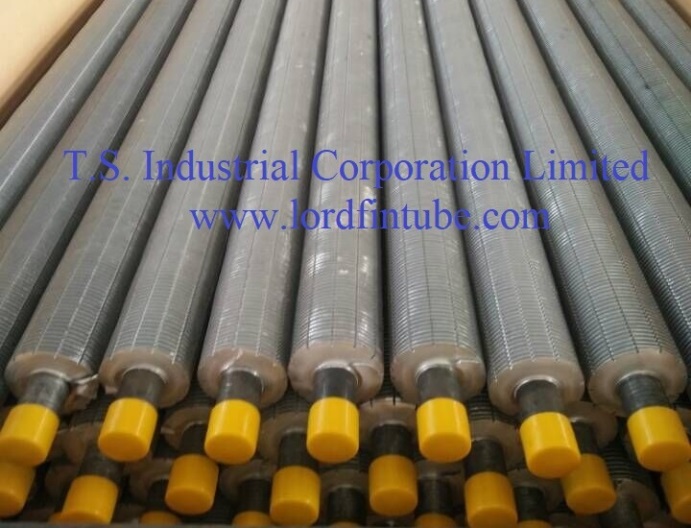

ASTM A213 T22 extruded finned tube
ASTM A213 T22 extruded finned tube
What is ASTM A213 T22 extruded finned tube?
ASTM A213 T22 extruded finned tube is a heat exchanger tube with extruded aluminum fins on the outside surface, made from T22 grade steel, which is an alloy steel per ASTM A213 standard. The fins are extruded from the base tube, which increases the surface area and enhances heat transfer efficiency. These finned tubes are typically used in high-temperature and high-pressure applications, such as boilers, superheaters, and heat exchangers in power plants or industrial settings. The T22 grade steel has good high-temperature strength and resistance to corrosion and oxidation.
What distinguishes ASTM A213 T22 extruded finned tube from other finned tube products is the seamless integration of the fins with the base tube. The extrusion process creates a metallurgical bond between the fin and the tube wall, which eliminates the thermal contact resistance often found in welded or mechanically attached fins. This results in a more efficient heat transfer path and a longer service life under cyclic thermal loads.
Which industries commonly specify ASTM A213 T22 extruded finned tube? Power generation, petrochemical processing, and refinery operations are among the primary sectors. The materials ability to withstand sustained high temperatures—up to 650 °C in some cases—makes it a preferred choice for critical heat exchange equipment where reliability and performance are non-negotiable.
Why use ASTM A213 T22 extruded finned tube?
ASTM A213 T22 extruded finned tubes are used in applications where high-temperature and high-pressure resistance is required, such as in boilers and heat exchangers. The use of an extruded finned tube made of this material can improve the heat transfer rate by increasing the surface area of the tube, which enhances the efficiency of heat transfer. The material itself, ASTM A213 T22, is a seamless ferritic and austenitic alloy-steel that is designed to withstand high temperatures and pressures, making it ideal for use in such applications. Additionally, the extruded fins provide better heat transfer performance compared to other types of fins, such as welded or spiral fins, due to the strong bond between the fins and the tube wall, resulting in increased heat transfer efficiency.
How does ASTM A213 T22 extruded finned tube contribute to operational cost savings? The enhanced heat transfer coefficient means that fewer tubes are required to achieve the same thermal duty, which reduces the overall footprint and material cost of the heat exchanger. Moreover, the extruded fin geometry offers a self-cleaning effect in certain flow conditions, minimizing fouling and extending maintenance intervals.
Which design considerations make ASTM A213 T22 extruded finned tube suitable for cyclic operation? The T22 alloy contains chromium and molybdenum, which provide resistance to thermal fatigue and creep. The extruded fin profile also reduces stress concentration at the fin-to-tube junction, a common failure point in welded fin designs. This combination of material properties and manufacturing precision ensures reliable performance even in demanding start-up and shut-down cycles.
ASTM A213 T22 extruded finned tube manufacturing process
The manufacturing process of ASTM A213 T22 extruded finned tube begins with the production of seamless T22 alloy tubes that meet ASTM A213 specifications. These tubes are then subjected to a specialized extrusion process in which aluminum is forced onto the outer surface under high pressure and temperature, forming integral fins that are mechanically locked to the tube wall.
What makes the extrusion process superior to other finning methods? Unlike welded fins, which introduce a heat-affected zone and potential corrosion sites, or wrapped fins, which rely on mechanical tension, the extruded fin forms a continuous, uninterrupted layer of aluminum that is tightly bonded to the steel substrate. This results in a finned tube with exceptional durability and thermal performance.
Which quality control measures are employed during manufacturing? Each tube undergoes dimensional inspection, fin height and pitch verification, and hydrostatic testing to ensure compliance with ASTM A213 and customer-specific requirements. Non-destructive testing methods, such as eddy current and ultrasonic inspection, are also applied to detect any subsurface imperfections in the base tube material.
How does the extrusion process affect the final mechanical properties of ASTM A213 T22 extruded finned tube? The controlled deformation during extrusion can induce beneficial compressive stresses in the fin root, which enhance the tubes resistance to fatigue cracking. The aluminum fin material also provides a degree of cathodic protection to the steel substrate in certain corrosive environments.
ASTM A213 T22 extruded finned tube regular sizes
The size of ASTM A213 T22 extruded finned tubes can vary depending on the specific application and the manufacturer. However, there are some common sizes available in the market. The outer diameter of the tube can range from 3/4 inch to 3 inches, and the fin height can range from 3/16 inch to 1 inch. The length of the tube can be customized according to the requirements of the application. It is always recommended to consult with the manufacturer or supplier for specific size and length requirements to ensure the tube is suitable for the intended application.
Which factors should be considered when selecting the size of ASTM A213 T22 extruded finned tube? The tube diameter, wall thickness, fin height, fin pitch, and total length all influence the thermal performance and pressure drop of the heat exchanger. A well-designed finned tube should balance heat transfer enhancement with manageable flow resistance and mechanical integrity under operating conditions.
What are the typical tolerances for ASTM A213 T22 extruded finned tube dimensions? Manufacturers generally adhere to the tolerances specified in ASTM A213 for the base tube, with additional allowances for fin geometry. Fin height tolerances are usually within ±0.5 mm, and fin pitch variations are controlled to ensure consistent performance across the entire tube length.
ASTM A213 T22 extruded finned tube performance characteristics
ASTM A213 T22 extruded finned tube exhibits a range of performance characteristics that make it a preferred choice for high-efficiency heat transfer applications. The extruded fin design provides a large surface area per unit length, which significantly enhances the heat transfer rate compared to bare tubes. The thermal conductivity of the aluminum fin material, combined with the intimate contact at the fin-tube interface, ensures efficient heat flow from the tube wall to the fin surface.
Which performance metrics are most critical for evaluating ASTM A213 T22 extruded finned tube? Heat transfer coefficient, pressure drop, fouling resistance, and thermal fatigue life are among the key parameters. The extruded fin geometry can be optimized for specific operating conditions by adjusting fin height, thickness, and pitch to achieve the desired balance between thermal performance and flow characteristics.
How does ASTM A213 T22 extruded finned tube perform in comparison with other fin types? Compared with other fin tube types such as T-finned tubes or spiral finned tubes, the extruded fin design offers superior bond strength and heat transfer efficiency. The integral fin construction eliminates the interface resistance that can degrade performance over time in mechanically attached fins.
What long-term performance advantages does ASTM A213 T22 extruded finned tube offer? The combination of T22 alloy steel and extruded aluminum fins provides excellent resistance to oxidation, corrosion, and thermal cycling. This results in a longer service life and reduced maintenance costs compared to conventional finned tube designs, especially in high-temperature applications where thermal fatigue is a concern.
| Parameter | Typical value | Test method |
|---|---|---|
| Heat transfer coefficient (air side) | 45–75 W/m²·K | ASTM D5334 |
| Maximum operating temperature | 650 °C | ASTM E21 |
| Fin bond strength | > 25 MPa | Pull-out test |
| Corrosion resistance (salt spray) | > 1000 h | ASTM B117 |
| Thermal fatigue life (cycles) | > 10,000 | Thermal cycling |
ASTM A213 T22 extruded finned tube application fields
ASTM A213 T22 extruded finned tube finds extensive use in a variety of high-temperature and high-pressure applications. The most common application fields include power generation boilers, superheaters, reheaters, and economizers. In the petrochemical industry, these finned tubes are used in process heaters, reformer furnaces, and waste heat recovery units.
Which specific equipment relies on ASTM A213 T22 extruded finned tube for optimal performance? Air-cooled heat exchangers, shell-and-tube heat exchangers, and finned tube coils for industrial ovens and dryers are among the key equipment types. The extruded fin design allows for compact heat exchanger configurations, which is particularly valuable in retrofit applications where space is limited.
How does ASTM A213 T22 extruded finned tube contribute to sustainable operations? By improving heat transfer efficiency, these finned tubes enable lower energy consumption and reduced emissions per unit of output. The extended service life also reduces the frequency of tube replacement, which minimizes material waste and lifecycle environmental impact.
What emerging applications are adopting ASTM A213 T22 extruded finned tube? Concentrated solar power (CSP) plants, biomass-fired boilers, and industrial heat pumps are increasingly specifying extruded finned tubes for their high-temperature heat exchange sections. The materials proven reliability and performance in demanding conditions make it a trusted solution for next-generation energy systems.
ASTM A213 T22 extruded finned tube typical inquiry
|
ASTM A213 T22 extruded finned tube |
||||
|
Base Tube Material |
Fin Material |
Tube Length (mm) |
Fin length (mm) |
Fin Tube Quantity (Pc) |
|
ASTM A213 T22 |
Aluminum |
9144 |
9040 |
740 |
|
Base Tube O.D (mm) |
Base Tube Thickness (mm) |
Fin Height (mm) |
Fin Thickness (mm) |
Fin Pitch (mm) |
|
25.4 |
3.04 |
15.88 |
0.4 |
2.54 |
|
ASTM A213 T22 is Standard Specification for Seamless Ferritic and Austenitic Alloy-Steel Boiler, Superheater, and Heat-Exchanger Tubes |
||||