


Lord Fin Tube--Bimetallic finned tube
Bimetallic Finned Tube
What is a bimetallic finned tube?
Bimetallic finned tubes are distinct from mono-metal or single-metal finned tubes. They consist of two different metals: a base tube and a separate fin material mechanically or metallurgically bonded to it. In contrast, mono finned tubes are made from a single piece of metal where the fins and tube are integral.
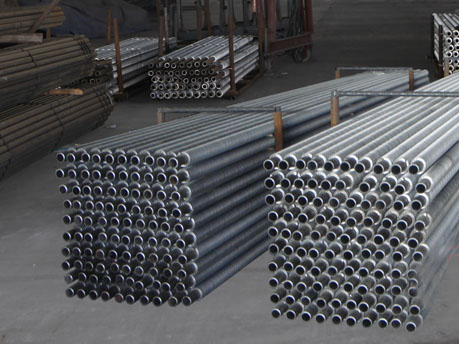 What types of finned tubes are bimetallic?
You can classify bimetallic finned tubes by the fin material or by the manufacturing process.
Bimetallic Finned Tube by Material
The choice of fin material directly impacts performance in specific environments.
- Aluminum Bimetallic Finned Tube: Common examples include the extruded aluminum finned tube and L/LL/KL/G embedded finned tube.
- Carbon Steel Bimetallic Finned Tube: This category includes carbon steel spiral finned tubes, high frequency welded finned tubes, studded pipes, H/HH finned tubes, and oval finned tubes.
- Stainless Steel Bimetallic Finned Tube: An example is the laser welded stainless finned tube.
- Copper Bimetallic Finned Tube: Such as the brazed copper finned tube.
Bimetallic Finned Tube by Process
The manufacturing process defines the bond strength and thermal characteristics. Primary processes are extruded finned tubes, wrapped finned tubes, high frequency welded finned tubes, laser welded finned tubes, and brazed finned tubes.
How does the process affect the tube? Each bonding method offers different benefits. For instance, extrusion creates a very strong mechanical bond, while brazing forms a metallurgical bond ideal for high-temperature cycling.
Why were bimetallic finned tubes developed?
Three main factors drive the use of bimetallic designs over mono-metal tubes.
- Material Flexibility: Mono finned tubes are limited to a few materials like copper or aluminum. Bimetallic tubes allow engineers to pair a corrosion-resistant or high-strength base tube (like stainless steel) with a highly conductive fin material (like aluminum).
- Fin Height and Design: Mono-metal tubes are generally restricted to low fin heights due to manufacturing constraints. Bimetallic construction enables much higher fins, significantly increasing the heat transfer surface area.
- Performance Combination: This is the key advantage. A bimetallic tube can meet conflicting requirements: the base tube provides mechanical strength and internal corrosion resistance for the fluid, while the fin material offers superior external thermal conductivity and environmental resistance.
Bimetallic Finned Tube Applications
These tubes are primarily used to enhance heat transfer on the gas or air side of a system. Their ability to combine materials makes them crucial for efficiency and durability.
| Industry Sector | Typical Application | Common Material Pairing |
|---|---|---|
| Waste Heat Recovery | Boilers, economizers, pre-heaters | Carbon steel base / Aluminum fins |
| HVAC & Refrigeration | Air coolers, condensers, evaporators | Copper base / Aluminum fins |
| Power Generation | Gas turbine inlet air cooling | Stainless steel base / Aluminum fins |
| Petrochemical | Process gas coolers, heaters | Stainless steel base / Carbon steel fins |
| Drying Systems | Food, pharmaceutical dryers | Stainless steel base / Aluminum fins |
Selecting a Bimetallic Finned Tube
What should you consider when choosing a bimetallic finned tube for a project? Focus on these core aspects:
- Operating Environment: Which gases and external conditions will the fins face? Consider temperature, humidity, and potential corrosives.
- Internal Medium: What fluid is inside the tube? Its pressure, temperature, and corrosiveness determine the required base tube material.
- Thermal Duty: How much heat must be transferred? This influences the required fin surface area, height, and spacing.
- Mechanical Requirements: Are there vibration, cleaning (soot blowing), or pressure cycle stresses?
- Budget and Lifespan: What is the balance between initial cost and long-term performance? A more resistant material pairing may have a higher upfront cost but a longer service life.
Bimetallic finned tubes offer a versatile solution for complex heat exchange challenges. By understanding the available materials, processes, and selection criteria, you can specify the optimal tube for applications ranging from industrial waste heat recovery to precision process cooling.