


Finned Tube Clamps: Critical Support for Heat Exchanger Tube Bundles
Finned Tube Clamps: Function, Selection and Installation
In heat-exchange equipment, finned tubes are the primary components across a range of applications – economizers, air-coolers, vaporizers and other thermal systems. However, many engineers focus solely on finned tubes while overlooking the small components that secure them in position: the clamps, also referred to as tube clips, bands, or support rings. Despite their modest size, clamps are essential for reliable equipment operation.
Primary Functions
The principal function of a clamp is to secure finned tubes firmly within the equipment. A typical heat exchanger contains dozens or even hundreds of tubes arranged in a compact bundle. During operation, mechanical vibration is inherent. Without adequate clamping, tubes may shift, rub against adjacent tubes, and sustain fin damage. These are minor concerns compared with tube wall erosion and weld cracking, which can lead to serious equipment failure.
In addition to positional restraint, clamps serve two auxiliary purposes. During transportation, finned tubes in close proximity are susceptible to fin deformation from road vibration and impacts. Clamps act as spacers to mitigate such damage. For long tube bundles, gravitational sagging over time is a known concern; clamps provide intermediate support to maintain tube straightness.
Experienced inspectors often examine clamps prior to inspecting fin surfaces. Assembly specifications for air-cooler bundles typically mandate clamps at both tube ends to prevent fin loosening. These components are not optional accessories but rather mandatory elements of the tube bundle assembly.
Geometric Types and Material Selection
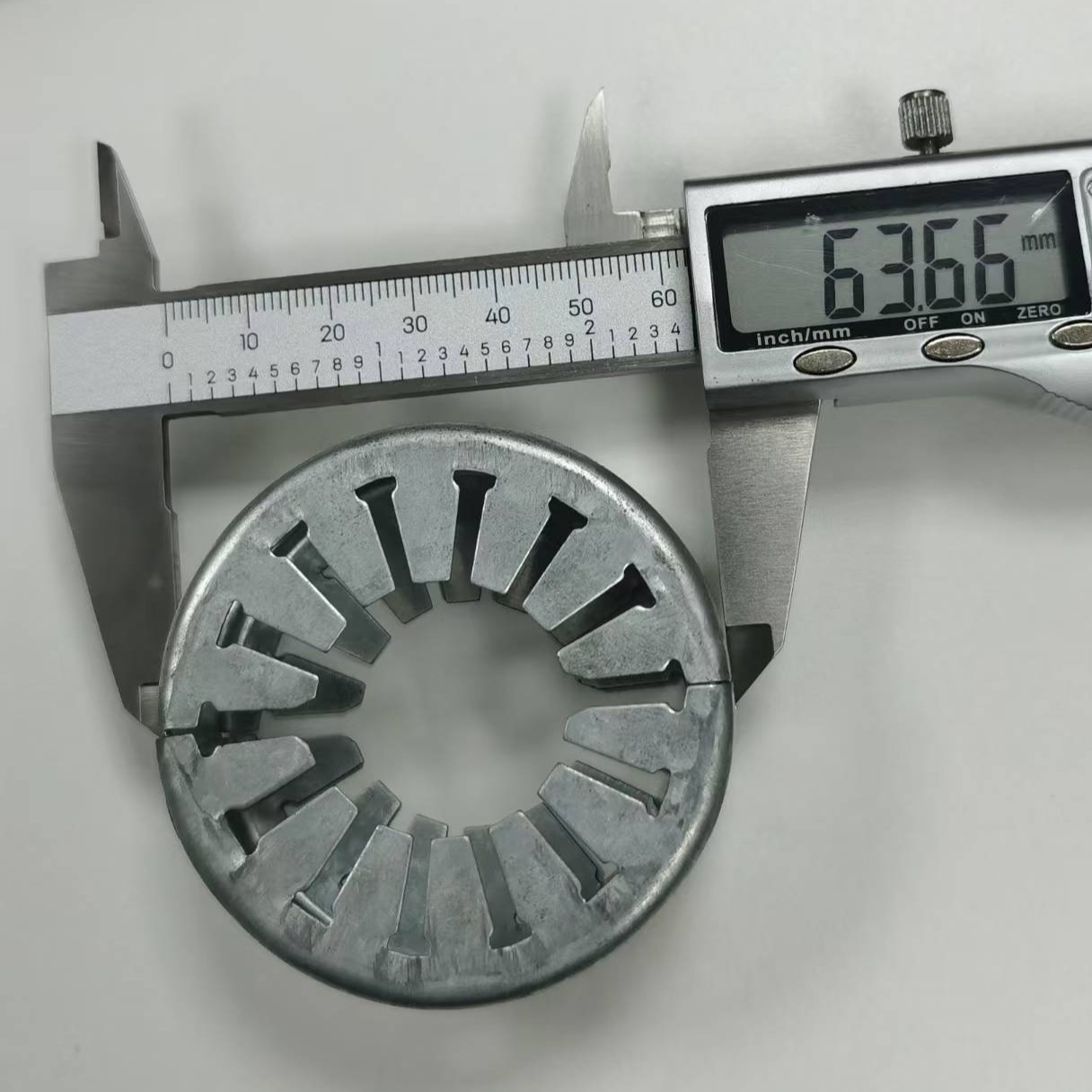
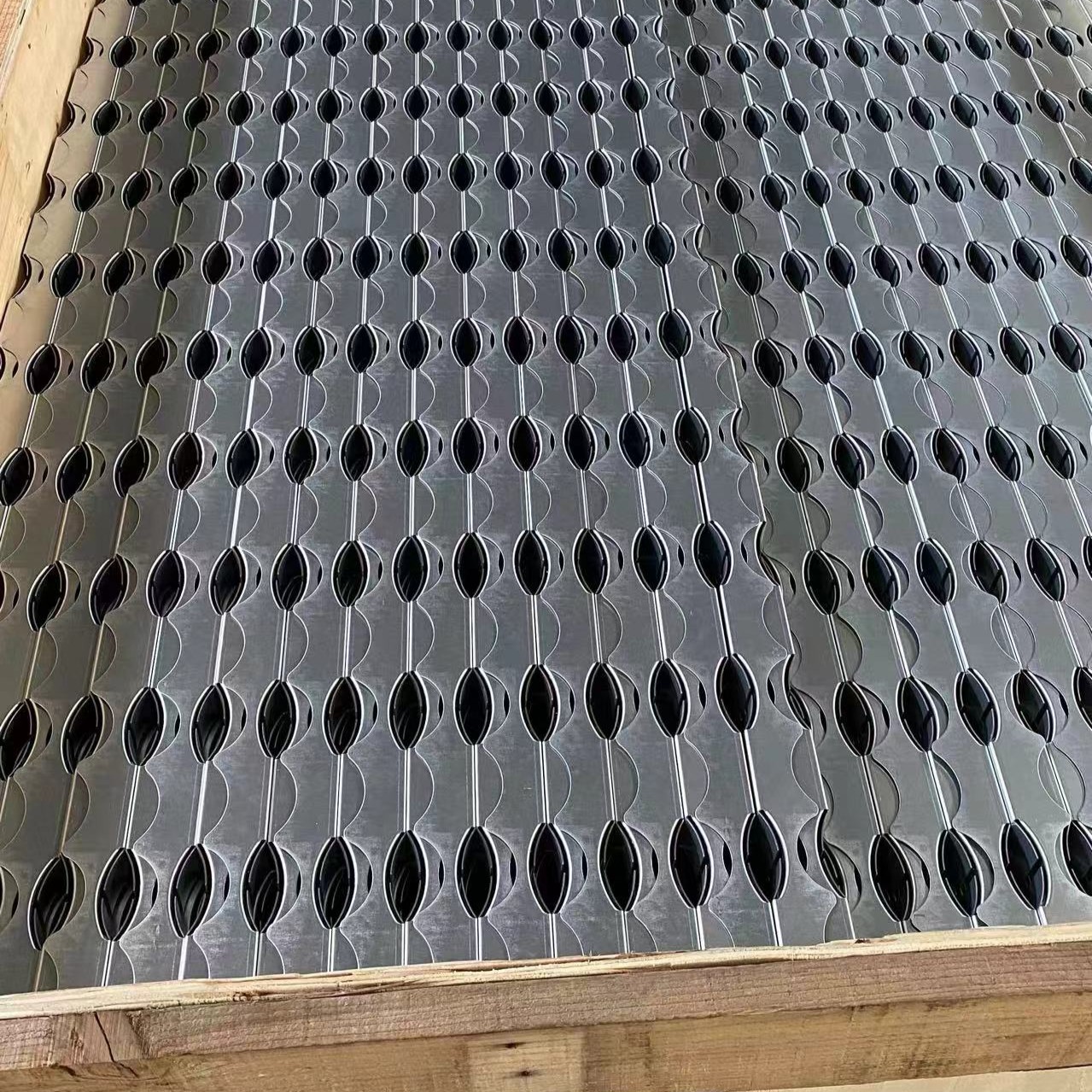
Clamps are available in several geometric configurations – round, hexagonal, and octagonal. Two primary construction variants exist: one-piece rings that slide over the tube, and split designs comprising two halves secured with bolts. A C‑shaped clamp variant is also common in plate‑fin heat exchangers.
Material selection is governed by operating conditions. Galvanized steel offers cost-effectiveness and is the most widely used option. Aluminium is lightweight and provides good thermal conductivity, suitable for standard environments. Stainless steel provides superior corrosion resistance, making it the preferred choice for chemical plants, coastal installations, and other aggressive environments.
Regarding dimensional compatibility, the clamp outer diameter shall match the outer diameter of the finned section. For instance, a 63.5 mm clamp is typically used with a 25.4 mm core tube; a 73.5 mm clamp pairs with a 31.75 mm core tube; and compatible clamp sizes also exist for 38.1 mm core tubes. Dimensions may vary slightly between manufacturers; therefore, dimensions shall be verified at the time of ordering.
Common Materials
- Galvanized steel – cost‑effective, most widely used
- Aluminium – lightweight, good thermal conductivity, standard duty
- Stainless steel – corrosion‑resistant, suitable for aggressive environments
Common Configurations
- Round – most versatile, widely compatible
- Hexagonal / Octagonal – used in specific equipment designs
- One‑piece ring – slides directly onto the tube
- Split type – two halves secured with bolts
| Clamp O.D. (mm) | Core Tube O.D. (mm) | Applicable Materials |
|---|---|---|
| 63.5 | 25.4 | Galvanized steel / Aluminium / Stainless steel |
| 73.5 | 31.75 | Galvanized steel / Aluminium / Stainless steel |
| — | 38.1 | Galvanized steel / Aluminium / Stainless steel |
Note: For 38.1 mm core tubes, clamp outer diameter specifications vary by manufacturer and should be confirmed at the time of ordering.
Installation Considerations
Despite their compact dimensions, improper installation of clamps may trigger serious operational failures. The following considerations are critical during installation.
Positioning. Clamps shall be located on the bare tube sections at both ends of the finned tube. Do not position clamps overlapping fin layers, as this will crush fins and degrade heat‑transfer performance.
Clamping Force
Insufficient tightness allows tubes to shift within the bundle, rendering the clamps ineffective. Excessive tightening may indent or deform the tube wall. For split‑type clamps employing bolted connections, bolts must be torqued in accordance with specifications, rather than relying on hand‑tightening judgment.
Thermal Expansion
Heat exchangers operate over a wide temperature range, causing tubes to expand and contract cyclically. If clamps rigidly restrain tubes with no allowance for movement, thermal stress will accumulate and may result in clamp fracture or tube cracking. Clamp spacing and quantity shall be calculated to provide adequate restraint while allowing for thermal displacement.
Material compatibility. Mismatched thermal expansion coefficients between clamp and tube materials can lead to failure at elevated temperatures. For example, an aluminium finned tube paired with a stainless steel clamp – the two materials exhibit different coefficients of thermal expansion – may result in clamp loosening or tube constriction over extended service. This factor is frequently overlooked and should be evaluated during the design phase.
Inspection and Maintenance
Over extended service intervals, clamps are subject to degradation. Common failure modes include: bolt loosening leading to clamp displacement, corrosion‑induced reduction of structural strength, and fatigue cracking from sustained vibration. Routine visual inspections – supplemented with appropriate lighting – should be conducted to identify loose, corroded, or deformed clamps. Fasteners shall be retightened to specification and damaged clamps replaced without delay to prevent tube dropout.
Dust and oily deposits tend to accumulate at clamp‑tube contact interfaces, accelerating localized corrosion. Periodic cleaning of these areas will extend the service life of both clamps and adjacent tubes.
Although clamps are low‑cost components with relatively simple designs, they are indispensable for heat‑exchanger reliability. When specifying finned tubes, engineers should verify clamp types, dimensions, and material compatibility. During installation, careful attention must be paid to positioning, clamping force, and thermal expansion clearance. In maintenance schedules, clamps should not be neglected during routine inspections.
For detailed specifications on finned tube clamp selection, refer to the product documentation. The fundamental design and installation principles for clamps remain consistent across boiler economizers, air‑coolers and similar equipment; proper attention to detail is critical for reliable operation. Further reference: Boiler economizer and air‑cooler applications.