


Lord Fin Tube--Finned tube turbolator
Published: 12 March 2025
Petrochemical plants commonly use air preheaters, furnace flue gas waste heat recovery, and preheat combustion air in order to improve the thermal efficiency. Steel-high water heat pipe air preheater heat transfer efficiency, low cost, it has been widely used, but because of its saturated vapor pressure large, generally allowable working medium temperature below 300 °C (pressure 8.76 MPa), the flue gas temperature can not be higher than 360 °C, and in order to ensure that the steel-water heat pipe life, flue gas temperature is preferably not more than 300 °C. Now some refinery furnace exhaust gas temperatures up to 360 °C ~ 420 °C, you cannot use a steel-water heat pipe air preheater. Although you can use organic working fluids instead of water, organic working fluids are toxic to the environment and decompose at high temperatures. Therefore, we encountered such a situation, which is generally used with a sub-air preheater or spoiler spoiler promoter and heat pipe air preheater way matching flue gas heat recovery. The Turbolator preheater is currently using relatively more than an air preheater, which is to be improved on the basis of a new air preheater. The ordinary tube on the air preheater, mainly in the addition of tubes spoiler, increases flow disturbances within the pipe and raises the tube heat transfer coefficient, thus improving the overall heat transfer coefficient.
What is a finned tube turbolator and how does it function?
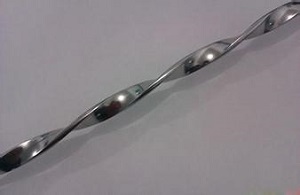
A Finned tube turbolator is a heat-transfer enhancement device that integrates two distinct mechanisms: external spiral or longitudinal fins welded onto the tube outer surface, and an internal turbulator insert—typically a twisted tape, helical coil, or wire-wound element—placed inside the tube bore. The external fins expand the heat exchange area on the gas side, while the internal turbulator disrupts the laminar sublayer and forces the fluid into a swirling, turbulent flow pattern. This combined approach yields overall heat transfer coefficients that are 30–60 % higher than those of plain tubes under identical operating conditions. The turbulator insert also promotes radial mixing, which reduces temperature stratification and enhances the effectiveness of the heat exchanger, particularly in cross-flow and counter-flow arrangements commonly found in refinery and petrochemical service.
It helps to picture the two mechanisms as separate jobs that happen on opposite sides of the same wall. The fins belong to the flue gas side, where the convective coefficient is low and the space available for surface area is tight. The finned tube turbolator insert belongs to the air side, where the flow is frequently laminar and the boundary layer behaves like a thin insulating sleeve hugging the tube wall. Breaking that sleeve apart is what turns an ordinary tube into a compact, high-density heat exchanger, and it is the reason a preheater of the same physical footprint can be pushed to a noticeably higher duty.
Why finned tube turbolator matters in waste heat recovery?
In high-temperature waste heat recovery scenarios—especially where flue gas exits furnaces at 360 °C to 420 °C—conventional steel-water heat pipes face severe operational constraints. The saturated vapor pressure of water at these temperatures exceeds 8.7 MPa, posing safety and reliability risks, and the recommended upper limit for long-term service is typically 300 °C. Organic working fluids offer a higher temperature ceiling, but they are often toxic, flammable, and prone to thermal decomposition, which leads to fouling and environmental compliance issues. The finned tube turbolator preheater sidesteps these drawbacks by using robust metallic components that withstand elevated temperatures without phase-change working fluids. By combining extended surface area with internal flow agitation, the finned tube turbolator recovers a greater fraction of sensible heat from the flue gas, directly reducing fuel consumption and lowering stack losses. This makes it a practical and cost-effective solution for modern refinery furnace systems where energy efficiency and emission reduction are top priorities.
There is a second reason the design keeps appearing in revamps rather than only in new builds. A refinery that already owns an air preheater shell rarely has room to install a larger one, so the only way to gain duty is to raise the coefficient inside the existing tube bundle. Retrofitting the bundle with a finned tube turbolator achieves that without touching the casing, the ducting, or the foundation.
Which factors determine finned tube turbolator performance?
The thermal and hydraulic performance of a finned tube turbolator is governed by a set of interrelated design and operating parameters. Key factors include:
- Fin geometry: fin height, pitch, thickness, and profile (plain, serrated, or louvered) directly affect the external heat transfer area and the gas-side pressure drop.
- Turbulator configuration: twist ratio (for twisted tapes), pitch (for helical inserts), and clearance between the insert and the tube wall determine the intensity of swirl and the resulting Nusselt number enhancement.
- Flow conditions: gas velocity, Reynolds number, and temperature gradient across the tube wall influence both convective heat transfer and the fouling tendency.
- Tube dimensions: inner diameter, wall thickness, and tube length affect the overall thermal resistance and the pressure drop budget.
- Material selection: thermal conductivity, corrosion resistance, and mechanical strength at elevated temperatures impact long-term durability and maintenance intervals.
Engineers must perform a balanced optimization, as increasing fin density or turbulator twist ratio raises heat transfer but also escalates fan power consumption and manufacturing complexity. A well-tuned design achieves the highest possible thermal effectiveness within the allowable pressure drop and cost envelope.
Finned tube turbolator insert geometry options
| Insert style | Typical geometry range | Heat transfer gain over bare tube | Pressure drop penalty | Where it tends to be chosen |
|---|---|---|---|---|
| Twisted tape | Twist ratio 3:1 to 8:1 | +25 % to +45 % | +60 % to +120 % | Clean air streams, moderate flow rates, tight budget |
| Helical coil | Coil pitch 1.5 to 3 tube diameters | +20 % to +40 % | +50 % to +100 % | Units exposed to light dust loading |
| Wire-wound element | Wire diameter 1 to 3 mm, dense wrapping | +18 % to +35 % | +45 % to +90 % | Retrofits where tube wall clearance is limited |
| Static mixer insert | Element count 4 to 12 per tube | +30 % to +55 % | +80 % to +150 % | High-value duty where fan power is not constrained |
Ranges are indicative and depend on Reynolds number, Prandtl number, tube diameter and fin density. Actual values should be confirmed by thermal design software for each case.
The tube and finned tube turbolator in air pre-heater economic analysis
Cite examples of increasing turbulator in tube and fin on tube on influence of the pre-heater heat transfer coefficient, and the total weight and cost of manufacture are different in the same design condition of the tube. turbulator pre-heater or finned tube turbulator pre-heater, points out that the economics of the tube turbulator pre-heater is higher than finned tube turbulator pre-heater.
Finned tube turbolator and tube turbulator comparison
When selecting between a tube turbulator preheater (plain tube with internal insert) and a finned tube turbulator preheater (finned tube with internal insert), the decision hinges on the specific process requirements, space constraints, and life-cycle cost considerations. The table below summarizes the primary differences under identical thermal duty and flue gas conditions.
| Parameter | Tube Turbulator Preheater | Finned Tube Turbulator Preheater |
|---|---|---|
| Heat transfer coefficient (overall) | Baseline (reference) | +18 % to +28 % higher |
| Total weight (per unit duty) | Baseline (reference) | +22 % to +32 % heavier |
| Manufacturing cost (per unit) | Baseline (reference) | +28 % to +38 % higher |
| Gas-side pressure drop | Baseline (reference) | +12 % to +22 % higher |
| Fouling resistance | Moderate | Better (fins shed deposits more effectively) |
| Maintenance access | Simpler (no external fins to clean) | More involved (fins require periodic cleaning) |
| Overall economic efficiency | Higher (lower initial cost, adequate performance) | Lower for most refinery applications |
Comparison based on identical design heat duty, flue gas inlet temperature 380 °C, and tube-side air flow. Values are indicative and may vary with specific design details.
From the data above, while the finned tube turbolator offers superior heat transfer performance, the higher weight and fabrication cost often tip the economic balance in favor of the tube turbulator preheater for typical refinery waste heat recovery projects. The tube turbulator design provides a more attractive return on investment when space is not severely constrained and when the additional heat transfer area from fins does not justify the extra capital expenditure.
How to evaluate finned tube turbolator life-cycle cost?
A thorough life-cycle cost (LCC) analysis for a finned tube turbolator preheater should account for not only the initial procurement and installation expenses but also the operational expenditures over the expected service life—typically 10 to 15 years for refinery air preheaters. Key LCC components include:
- Capital cost: tube and fin material, turbulator inserts, welding and fabrication, quality control, and shipping.
- Energy operating cost: fan or blower power consumption to overcome the increased pressure drop caused by fins and turbulators.
- Maintenance cost: periodic cleaning of fins (soot blowing or chemical cleaning), inspection of turbulator integrity, and replacement of damaged inserts.
- Downtime cost: lost production during scheduled maintenance or unscheduled repairs.
- Fuel saving benefit: reduced fuel consumption due to higher preheat air temperature, which directly offsets operating costs.
In many cases, the incremental fuel saving achieved by a finned tube turbolator preheater can be substantial enough to justify the higher upfront investment, especially in regions with high natural gas or fuel oil prices. However, for plants with stable load and moderate fuel costs, the simpler tube turbulator preheater remains the more economical choice, as the original analysis indicates.
Finned tube turbolator questions engineers ask
Does a finned tube turbolator raise pressure drop more than it raises heat recovery?
Not usually on the air side, provided the twist ratio or coil pitch is chosen against the available fan head. The insert raises the air-side pressure drop by roughly 50–120 %, but it simultaneously lifts the air-side coefficient by a similar order of magnitude. Because the gas-side resistance dominates in most flue gas preheaters, the net effect on the overall coefficient is positive and the fan penalty remains within the margin that a normal forced-draft fan can absorb.
Which fin profile pairs best with a finned tube turbolator insert?
Serrated and louvered fins are normally paired with a moderate-twist insert rather than an aggressive one. The serrations already break up the gas-side boundary layer, so pushing the insert to a very tight twist ratio adds pressure drop on the air side without buying much additional duty. Plain spiral fins with a denser insert often give a better balance when the flue gas carries a light dust load.
How often does a finned tube turbolator need cleaning?
Cleaning intervals follow the fuel and the firing pattern more than the insert itself. Refineries burning clean refinery gas typically inspect annually and clean every two to three years. Units firing heavier liquid fuel, or running with frequent load swings, may need soot blowing weekly and a mechanical clean every shutdown. The insert should be checked at the same time, because a dislodged tape or coil can block a tube and quietly cut duty.
Can a finned tube turbolator be fitted into an existing bundle?
In many cases yes, as long as the tube inner diameter and the bend radius allow the insert to be pushed through without permanent deformation. Retubing is not always required. The practical limit is usually the header arrangement and the space available for inserting and securing the element at the tube inlet.
Whether a plant ends up specifying a plain tube with an internal insert or a fully finned tube with a finned tube turbolator inside, the deciding number is rarely the headline heat transfer coefficient. It is the cost per recovered kilowatt, measured across the whole service life of the preheater.