


Lord Fin Tube--Flue Gas Cooler
Flue Gas Cooler
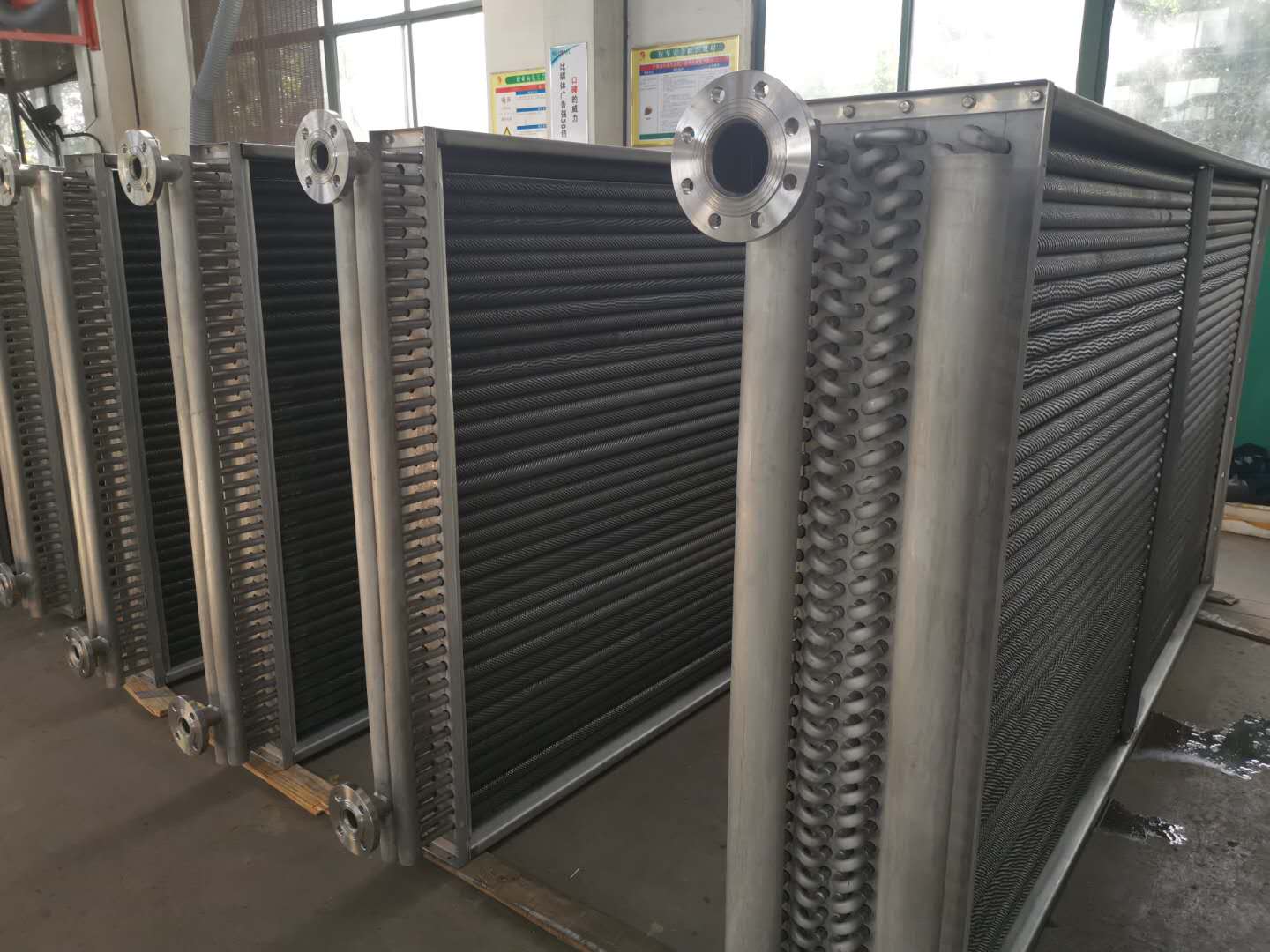
Flue gas cooler production for the boiler condenser, also known as flue gas condenser, boiler using flue gas condenser, which can effectively save production costs, reduce the boiler exhaust gas temperature, improve boiler thermal efficiency. So that the operation of the boiler in line with national energy-saving emission reduction standards.
What Is a Flue Gas Cooler
A flue gas cooler is a heat recovery device installed in the exhaust path of industrial boilers, furnaces, or gas turbines. Its primary function is to extract thermal energy from hot flue gases before they are released into the atmosphere. By reducing the exhaust temperature, the cooler captures both sensible heat and latent heat from water vapor condensation, delivering the recovered energy back into the system for preheating feedwater, combustion air, or other process streams. This directly improves the overall thermal efficiency of the combustion plant.
The "Boiler Energy-Saving Technical Supervision and Management Procedures" (effective December 1, 2010) mandate that boiler exhaust gas temperature should not exceed 170℃, and energy-efficient gas boilers must achieve a thermal efficiency of 88% or above. Boilers that fail to meet these efficiency indicators cannot be registered for operation. A flue gas cooler is one of the most effective solutions to meet and exceed these regulatory requirements.
How Does a Flue Gas Cooler Work
In conventional boilers, fuel combustion generates high-temperature flue gases. The water vapor within these gases remains in gaseous form and carries away a substantial amount of heat. Natural gas, which contains approximately 20–25% hydrogen by mass, produces flue gas with significant water vapor content. For every 1 m³ of natural gas burned, the steam generated carries away roughly 4,000 kJ of heat — equivalent to more than 10% of the fuels high calorific value.
The flue gas cooler employs a low-temperature medium — typically water or air — to cool the exhaust stream. As the flue gas temperature drops, it approaches the dew point. Water vapor begins to condense on the heat exchange surface, releasing both the sensible heat from the gas cooling and the latent heat of condensation. This recovered thermal energy is transferred to the medium inside the heat exchanger, raising its temperature. The heated medium can then be used for boiler feedwater preheating, space heating, or other industrial processes, substantially improving the boilers thermal efficiency.
The flue gas cooler is typically constructed with finned tubes as the primary heat exchange elements. The finned design maximizes the heat transfer surface area while maintaining a low pressure drop on the flue gas side, ensuring compatibility with burner requirements and draft system constraints.
Why Use a Flue Gas Cooler
The economic and environmental benefits of installing a flue gas cooler are substantial. Consider the following thermal performance calculation: 1 Nm³ of natural gas combustion produces approximately 10.3 Nm³ of theoretical flue gas (about 12.5 kg). With an excess air coefficient of 1.05, the actual flue gas volume is around 14 Nm³ (approximately 16.6 kg). Cooling the flue gas from 200℃ down to 70℃ releases about 1,600 kJ of physical sensible heat. If the water vapor condensation rate reaches 50%, an additional 1,850 kJ of latent heat is released. The total recovered heat amounts to 3,450 kJ — roughly 10% of the natural gas low heating value.
When 80% of the flue gas flow is directed through the heat recovery device, the overall thermal energy utilization can be improved by more than 8%, translating into nearly 10% savings in natural gas fuel consumption. Beyond fuel economy, the cooler reduces greenhouse gas emissions, lowers the flue gas plume visibility, and minimizes acid dew-point corrosion risks by removing condensable water vapor and acidic compounds from the exhaust stream.
Which Industries Use Flue Gas Coolers
Flue gas coolers are deployed across a wide spectrum of industrial sectors where combustion processes are integral to operations. The table below outlines the primary industries and their typical applications:
| Industry Sector | Application | Key Benefit |
|---|---|---|
| Power Generation | Boiler exhaust heat recovery | 8–12% fuel savings, lower emissions |
| Chemical Processing | Process heating & steam generation | Reduced operating costs, improved safety |
| Food & Beverage | Steam production for cooking & drying | Energy efficiency, consistent output |
| Pharmaceutical | Clean steam & sterilization | Cost reduction, regulatory compliance |
| Pulp & Paper | Heat recovery from recovery boilers | Lower fuel consumption, reduced stack losses |
| Refining & Petrochemical | Furnace flue gas cooling | Enhanced thermal efficiency, corrosion control |
Flue Gas Cooler Technical Specifications
The technical performance of a flue gas cooler depends on several key parameters, including flue gas composition, temperature range, and flow rate. The following specifications are typical for industrial-grade units:
| Parameter | Value Range |
|---|---|
| Operating Temperature (Inlet) | 150℃ – 280℃ |
| Operating Temperature (Outlet) | 50℃ – 80℃ |
| Design Pressure | 0.5 – 2.5 MPa |
| Tube Material | Carbon Steel / Stainless Steel 304 / 316L |
| Fin Material | Aluminum / Copper / Stainless Steel |
| Fin Type | Spiral wound / Helical / Serrated |
| Heat Transfer Coefficient | 30 – 60 W/m²·K |
| Pressure Drop (Flue Gas Side) | 200 – 800 Pa |
| Flow Rate Capacity | 10 – 500 m³/h (per module) |
Flue Gas Cooler Performance Comparisons
The actual heat recovery performance varies with operating conditions. The table below compares different inlet temperatures and their corresponding recovery outcomes, assuming a finned-tube design with water as the cooling medium:
| Flue Gas Inlet Temp | Flue Gas Outlet Temp | Sensible Heat Recovered | Latent Heat Recovered | Total Heat Recovery | Efficiency Gain |
|---|---|---|---|---|---|
| 200℃ | 70℃ | 1,600 kJ/Nm³ | 1,850 kJ/Nm³ | 3,450 kJ/Nm³ | 8–10% |
| 180℃ | 65℃ | 1,420 kJ/Nm³ | 1,780 kJ/Nm³ | 3,200 kJ/Nm³ | 7–9% |
| 220℃ | 75℃ | 1,780 kJ/Nm³ | 1,820 kJ/Nm³ | 3,600 kJ/Nm³ | 9–11% |
| 160℃ | 60℃ | 1,280 kJ/Nm³ | 1,550 kJ/Nm³ | 2,830 kJ/Nm³ | 6–8% |
These figures demonstrate that higher inlet temperatures yield greater total heat recovery, but the condensation rate — and thus the latent heat contribution — depends strongly on the flue gas moisture content and the cooling medium temperature. Optimal performance is achieved when the outlet temperature is maintained below the dew point of the flue gas.
Flue Gas Cooler Installation and Configuration
Flue gas coolers are available in split-layout designs, offering flexibility in installation and integration with existing boiler systems. The modular construction allows for horizontal or vertical orientation, with multiple configurations to suit site constraints and process requirements. The finned-tube heat exchanger core is the central component, ensuring high heat transfer efficiency and adequate heating surface area while maintaining a low flue gas side pressure drop.
Installation options include in-line duct mounting, bypass arrangements for maintenance access, and integrated economizer configurations. The cooler can be equipped with soot-blowing systems or cleaning ports to maintain performance over extended operating periods. The robust construction ensures reliable operation under cyclic thermal loads and variable flue gas conditions.