


In industrial heat exchange systems, the tube sheet plays a critical role in ensuring efficiency and durability. This component serves as the backbone for tube alignment and fluid separation, directly impacting performance and maintenance costs. For procurement teams, understanding technical specifics can lead to better sourcing decisions and long-term value.
What is Heat Exchanger Tube Sheet?
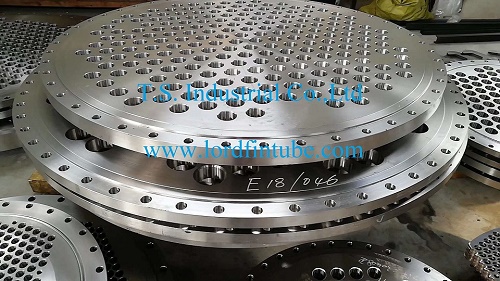
A heat exchanger tube sheet is a flat, perforated plate that secures tubes within a heat exchanger. It maintains separation between two fluid streams—typically shell-side and tube-side—while providing structural support. Tubes are attached via welding or expansion, and the sheet is crafted from materials like carbon steel, stainless steel, or titanium based on operational demands. Proper design ensures optimal heat transfer and prevents fluid mixing, which can compromise system integrity.
Heat Exchanger Tube Sheet Materials
Material selection depends on factors such as corrosion resistance, temperature tolerance, and budget. Common options include carbon steel for cost-effective non-corrosive applications, stainless steel for corrosive environments, and titanium for high-purity or aggressive media. Alloys like duplex stainless steel may also be used for enhanced strength. The table below outlines key material properties to aid in evaluation.
| Material | Corrosion Resistance | Max Temperature Range | Pressure Tolerance | Typical Applications |
|---|---|---|---|---|
| Carbon Steel | Moderate (requires coating in humid settings) | -20°C to 400°C | High | Power plants, non-corrosive fluid systems |
| Stainless Steel 316 | High (excellent for chlorides and acids) | -250°C to 800°C | Medium-High | Chemical processing, marine environments |
| Titanium | Exceptional (resists seawater and oxidizers) | -270°C to 600°C | Medium | Desalination plants, aerospace, pharmaceutical |
| Duplex Stainless Steel | Very High (good for stress corrosion cracking) | -50°C to 300°C | Very High | Oil and gas pipelines, high-pressure exchangers |
Heat Exchanger Tube Sheet Design
Design considerations include hole patterns (triangular or square layouts), thickness, and tolerances. Triangular patterns enhance heat transfer but may complicate cleaning, while square layouts allow easier maintenance. Thickness is calculated based on pressure differentials and tube diameter; undersized sheets risk deformation. Advanced designs incorporate double tube sheets for hazardous fluid isolation or clad materials for cost efficiency. Computational fluid dynamics (CFD) simulations often validate layouts before manufacturing.
Heat Exchanger Tube Sheet Fabrication
Fabrication involves precision drilling, welding, and stress relief. Holes must maintain tight tolerances (±0.1 mm) to ensure tube fit. Welding techniques like TIG (Tungsten Inert Gas) produce leak-proof joints, while hydraulic expansion secures tubes without thermal distortion. Post-weld heat treatment reduces residual stresses, extending service life. Quality checks include ultrasonic testing for cracks and dimensional verification with coordinate measuring machines (CMM).
Heat Exchanger Tube Sheet Applications
Tube sheets are integral to shell-and-tube, double-pipe, and plate heat exchangers across industries. In HVAC, they facilitate refrigerant condensation; in refineries, they cool hydrocarbon streams. Specialty applications include nuclear reactor coolants and food processing systems, where material cleanliness is paramount. Custom heat exchanger tube sheet designs address unique thermal or spatial constraints.
Heat Exchanger Tube Sheet Maintenance
Regular inspection prevents failures from corrosion or fouling. Techniques include eddy current testing for tube wall thinning and visual checks for gasket wear. Cleaning methods like hydroblasting remove scale deposits. Procurement specialists should prioritize suppliers offering lifecycle support, including spare parts and technical documentation, to minimize downtime.
Selecting the right tube sheet involves balancing technical specs with total cost of ownership. Partnering with experienced manufacturers ensures compliance with standards like ASME and TEMA. For further details on variants, refer to our resource on heat exchanger tube sheet specifications.