


What is the maximum operating temperature of finned tubes?
In heat exchanger design, maximum operating temperature isn’t just a number on a datasheet—it’s the boundary between reliable performance and costly, unplanned downtime. Push a finned tube past its thermal limit, and you risk fin loosening, widening air gaps that choke heat transfer, accelerated oxidation, or even complete tube failure.
But here’s the catch: the "maximum temperature" stamped on a product brochure often tells only half the story. The real limit depends on how the fin is attached, what materials are involved, and—critically—how your actual process conditions differ from the lab environment.
This guide cuts through the marketing claims and gives you a practical, engineer‑to‑engineer look at the true temperature capabilities of the major finned tube types available today.
Why the Bonding Method Changes Everything
Before diving into numbers, let’s get one thing straight: the weakest link in any finned tube isnt the base metal—it’s the interface between the fin and the tube wall.
When heat cycles the assembly, the fin and base tube expand at different rates if they’re dissimilar metals. In mechanically wrapped designs, that differential movement gradually loosens the fin’s grip. The resulting microscopic air gap acts as a thermal insulator, sending the base tube temperature climbing while the fin itself runs cooler. Eventually, the tube wall may overheat and creep, even though the fin looks perfectly fine.
Welded and extruded designs avoid this problem by creating a continuous metallic path—no gap, no relaxation, just reliable conduction up to much higher thresholds.
So, let’s walk through each type.
Wound‑Type Finned Tubes – Mechanical Wrap Designs
These are the workhorses of low‑to‑medium temperature service. They’re affordable, widely available, and perfectly adequate—provided you respect their temperature ceilings.
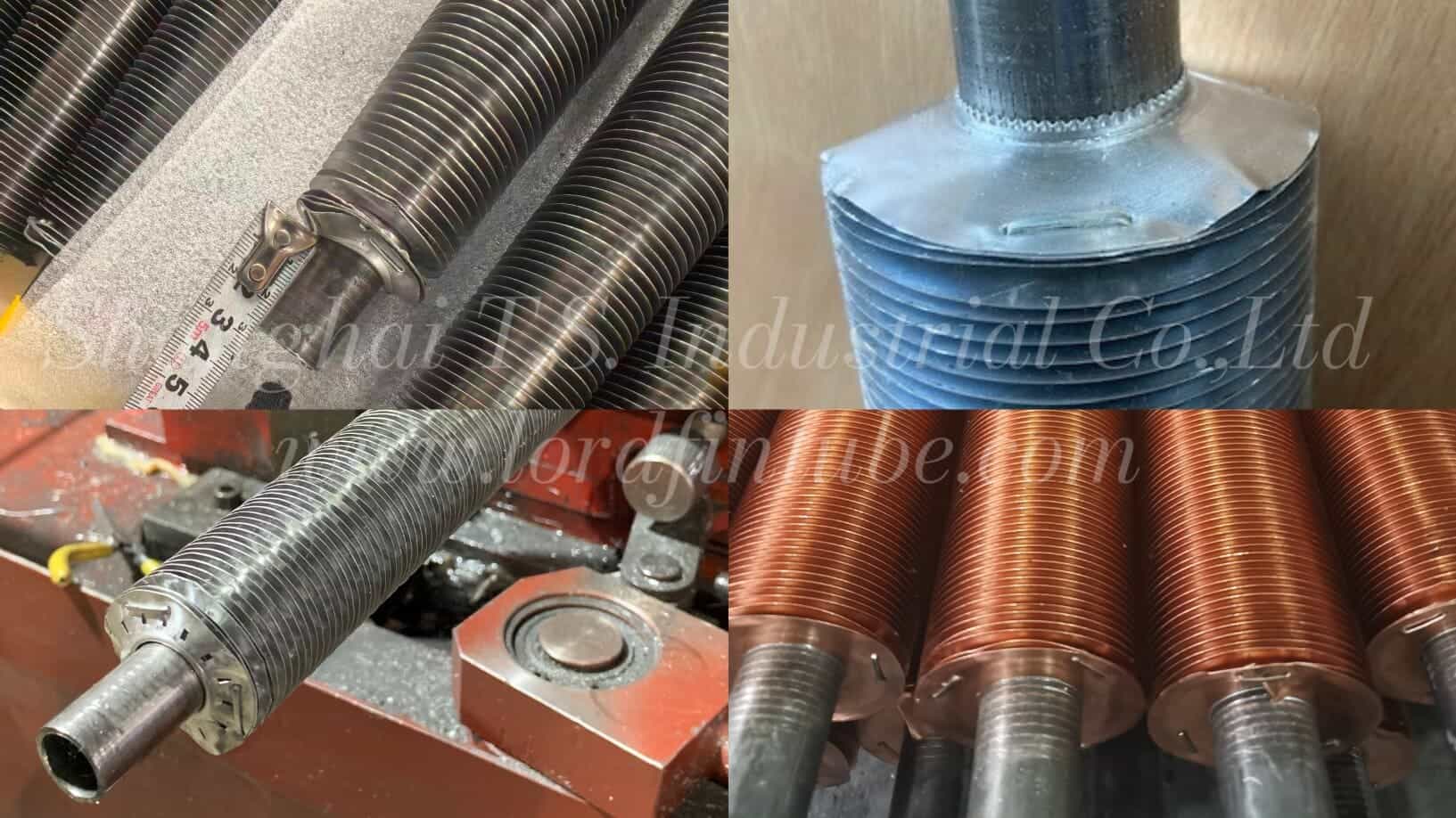
The fin strip is tension‑wound with an L‑shaped foot that hugs the tube. It’s a simple, cost‑effective solution for clean, indoor applications like air‑cooled condensers or unit heaters. Once your tube wall temperature consistently exceeds 130°C, however, the aluminum fin’s grip relaxes, and thermal performance starts sliding downhill.
By overlapping the fin edges, this design fully shrouds the base tube—offering better protection against mild corrosion. The maximum sits at 165°C, making it a popular budget‑friendly alternative to extruded fins in environments like chemical plant air coolers with moderate fouling.
The base tube is knurled before winding, which creates a more positive mechanical interlock. That extra bite pushes the ceiling to 250°C, bridging the gap to higher‑temperature economizers and heat recovery units where L and LL types simply can’t hold up.
This is the overachiever of the mechanical‑bond family. Instead of relying on tension alone, the fin strip is embedded into a pre‑cut helical groove on the tube wall. The groove locks the fin in place, accommodating differential thermal expansion much better than surface‑wound designs. At 400°C, G‑Type tubes are a go‑to choice for boiler superheaters, reformer furnaces, and waste heat boilers—provided you switch to steel or stainless steel fins (aluminum will soften well before this point).
Extruded Finned Tubes – The Monolithic Option
Extruded Finned Tubes – 300°C
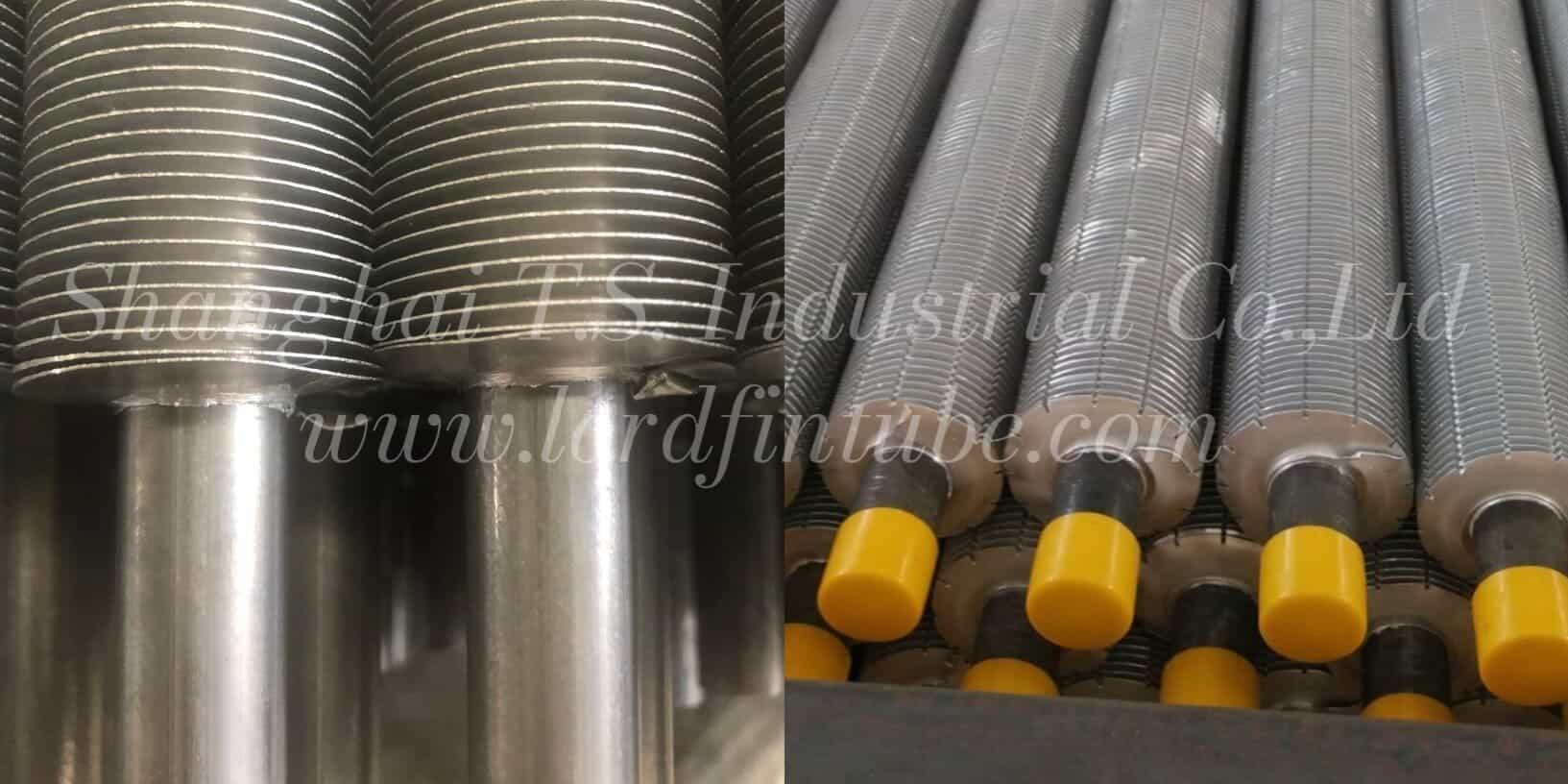
Extrusion (or thread‑rolling) forms the fins directly from the outer layer of a bi‑metallic tube—typically an aluminum sleeve over a steel core. Because the fin and the sleeve are a single, continuous piece of metal, there’s zero contact thermal resistance. That’s a huge advantage for fouling‑prone or corrosive services, as there are no crevices for moisture to attack.
The temperature limit of 300°C isn’t set by the bond—it’s dictated by the aluminum fin material itself. Above 300°C, aluminum begins to soften and lose mechanical strength, even though the steel core could take more. For aggressive outdoor environments with moderate temperatures, extruded fins often outlast wrapped alternatives by a wide margin.
Extruded Serrated Finned Tubes – 300°C
A variant where the fin edges are notched to create turbulent flow and boost heat transfer. The temperature ceiling remains 300°C, but the serrated pattern is a favorite for gas turbine recuperators and thermal oil heaters where you need every bit of surface coefficient you can get.
Welded Finned Tubes – Built for the High‑Heat Frontier
When your process runs north of 400°C, mechanical bonds and even extruded aluminum start to reach their limits. That’s when you move to welded fins—where the fin is metallurgically fused to the tube wall. These are the only designs that can reliably handle steam cracking, fired heaters, and incineration plants.
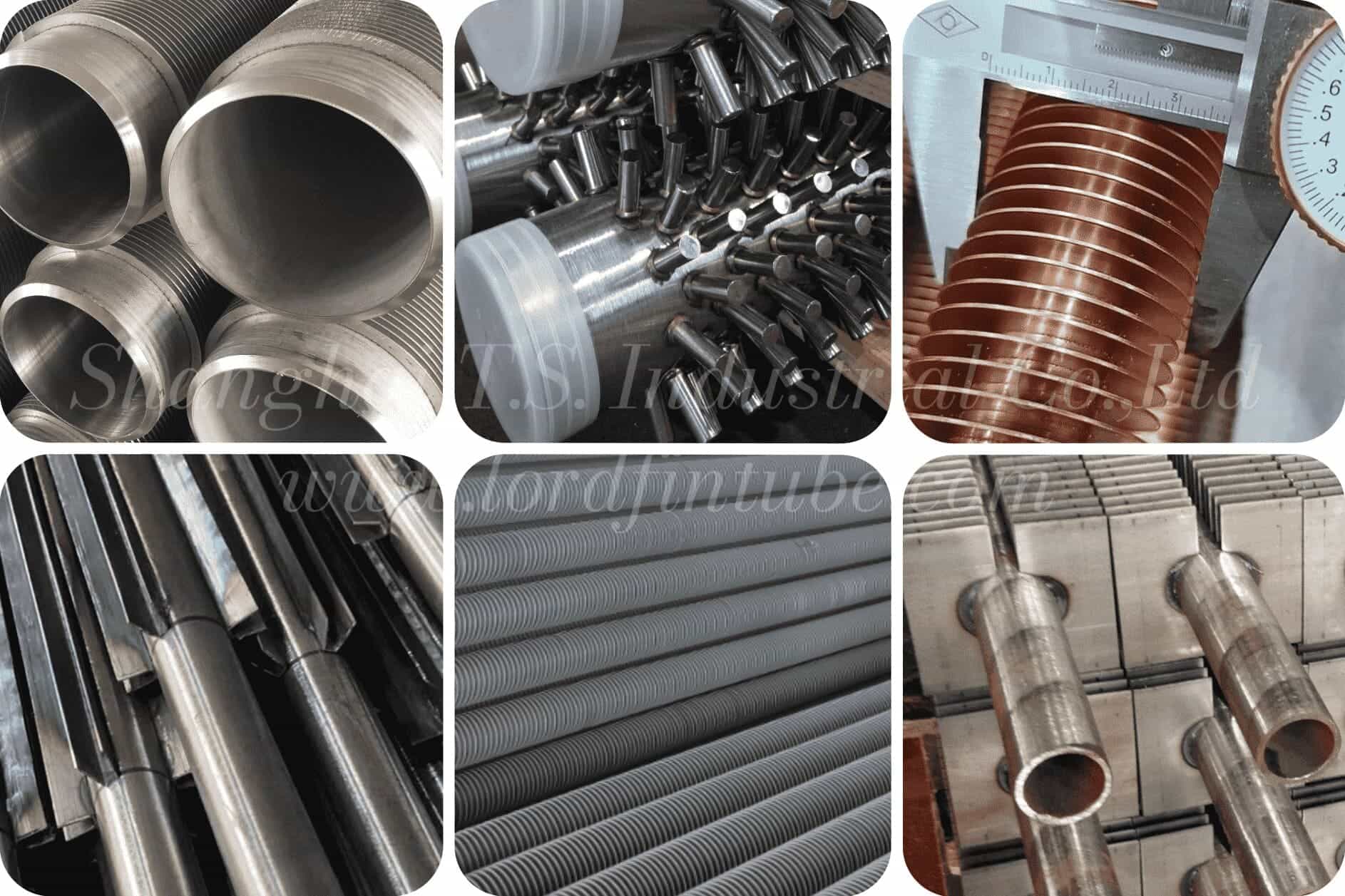
HFW uses high‑frequency resistance to forge‑weld the fin strip directly onto the tube. The weld is continuous, strong, and thermally seamless. The practical ceiling depends almost entirely on your base material:
- • Carbon steel → ~450°C
- • Low alloy steels (T11, T22) → 550°C
- • Stainless 304/316 → 650°C
- • High‑grade alloys like 310S or Inconel → special designs up to 800°C
If you’re specifying HFW for a heat recovery steam generator or air preheater, always check the fin material, too—steel fins are mandatory above 450°C.
Laser welding delivers a 100% full‑penetration weld with an exceptionally narrow heat‑affected zone. That means minimal metallurgical damage to the base tube, which is critical for high‑pressure applications like process gas coolers. The limit of 600°C makes it the go‑to when you need both extreme temperature and pressure integrity.
These feature rectangular fins welded symmetrically onto one tube (H‑type) or two parallel tubes (HH‑type). The "H" shape is remarkably rigid, and the straight‑through gas paths make them highly resistant to fouling in dust‑laden flue gases—think coal‑fired economizers and waste incinerators.
The temperature ceiling is 300°C, not because of the weld (which is sound), but because H/HH tubes are almost always specified in carbon steel for economic reasons. If you need them hotter, stainless variants can push higher, but standard off‑the‑shelf ratings stay at 300°C. An added bonus: they offer roughly 15–25% more surface area per unit length than round‑finned equivalents.
Instead of continuous fin strips, studded pipes have cylindrical pins or nails welded to the tube surface. They’re not pretty, but they’re brutally effective in high‑velocity, high‑temperature gas streams—especially in the petrochemical and refining sectors where the atmosphere is corrosive and heavily laden with particulates.
The discrete studs disrupt boundary layers and boost turbulence, while the heavy weld fillets provide exceptional mechanical strength. For carbon steel, keep it at or below 600°C; for stainless steel grades, you can safely run up to 800°C. Alloy steel like 15CrMo is a sweet spot for intermediate temperatures.
Here, longitudinal fins run parallel to the tube axis, attached via continuous high‑frequency or laser welds. This geometry offers a unique advantage: very low pressure drop and self‑cleaning characteristics, making it a top pick for fired heaters, reformer convection sections, and sub‑sea oil/gas coolers where compactness matters.
The heat transfer area jumps to 2.5–4× that of a bare tube. Temperature limits vary sharply with material:
- • Carbon steel → 450°C
- • Stainless steel 304/316 → 800°C
- • Titanium alloy → 600°C (selected for extreme corrosion resistance at high temperatures).
The continuous weld path means zero risk of delamination—a critical reliability factor for sour gas service.
Quick Reference – Temperature Limits
| Finned Tube Type | Max Temperature | What Limits It |
|---|---|---|
| L‑Type (L‑Foot) | 130°C | Fin tension loss due to differential expansion |
| LL‑Type (Overlapped) | 165°C | Same as above, but slightly better grip |
| KL‑Type (Knurled) | 250°C | Enhanced mechanical interlock buys extra headroom |
| G‑Type (Embedded) | 400°C | Groove‑locked design handles expansion well |
| Extruded (Plain / Serrated) | 300°C | Aluminum fin softening (not the bond) |
| H/HH Square/Rectangular | 300°C | Standard carbon steel economic limit |
| Studded Pipe (Pin Tube) | 600°C (C.S.) / 800°C (S.S.) | Base material oxidation and creep resistance |
| Longitudinal Finned | 450°C (C.S.) / 800°C (S.S.) / 600°C (Ti) | Base material grade dictates the ceiling |
| High‑Frequency Welded (HFW) | 400–650°C (800°C special) | Alloy selection—tube material is the gatekeeper |
| Laser Welded | Up to 600°C | Weld integrity and tube metallurgy |
How to choose the correct type?
Choosing the right finned tube isn’t about picking the highest number on the table—it’s about matching the tube’s thermal, mechanical, and corrosion envelope to your actual service conditions. Here’s how experienced engineers approach it:
- Below 130°C – L‑Type is your most economical bet for clean, dry services.
- 130°C – 165°C – LL‑Type adds corrosion resistance without a big cost jump.
- 165°C – 250°C – KL‑Type gives you stability when temperatures start creeping up.
- 250°C – 300°C – You have two solid paths: Extruded fins (if corrosion resistance matters) or H/HH tubes (if fly ash erosion is your main concern).
- 300°C – 400°C – G‑Type embedded fins with steel or stainless steel fins are a proven workhorse in boiler and fired‑heater duty.
- 400°C – 650°C – You’re now in welded territory. HFW or longitudinal fins with alloy steel are the standard solutions.
- Above 650°C – Laser‑welded, stainless studded pipes, or high‑grade longitudinal fins are your only realistic choices.
If your wall temperature consistently exceeds 250°C, walk away from L, LL, and KL. They will eventually loosen, and that heat transfer penalty will cost you more in lost production than you saved on the initial purchase. For extreme cases, consider specialized high temperature solutions designed for sustained performance.
Common Misunderstandings We Hear Regularly
"The base tube material has no upper limit."
Not true in practice. Every material suffers from creep and oxidation above a certain threshold. Even Inconel has a maximum service temperature per ASME Section VIII. Always check the allowable stress tables—they shrink as temperature climbs.
"A higher rated tube is always better."
Not if you’re over‑specifying for a low‑temperature, corrosive service. An HFW stainless finned tube might survive 650°C, but it’s overkill (and expensive) for a 150°C cooling water application where an LL‑Type would last decades.
"All welded finned tubes can take the same heat."
Far from it. H/HH tubes at 300°C, studded pipes at 600–800°C, and longitudinal designs at 450–800°C are completely different beasts. The welding process, the fin geometry, and most importantly—the actual material grade—set the real limit.
Quality Assurance – What to Look For
When you’re sourcing finned tubes for critical high‑temperature service, don’t settle for a generic certificate. Demand:
- Full Mill Test Reports with traceability to heat numbers
- Welding Procedure Specifications (WPS) that match your service temperature
- Non‑Destructive Testing (NDT) records—hydrostatic, ultrasonic, or dye penetrant as applicable
- Compliance with recognized codes—ASME Section VIII, EN 13445, or GB/T 15386‑94 where relevant
For high‑pressure steam or critical process fluids, insist on seamless base tubes. A longitudinal weld seam in the base tube is an extra failure point you simply don’t need at 500°C and 10 MPa.