


Spiral finned tube|Integral Spiral Finned Tubes
Spiral Finned Tube for Heat Exchanger Efficiency
As a leading spiral finned tube manufacturer, we are committed to advancing heat transfer technology. This guide delves into the engineering, benefits, and applications of Spiral Finned Tubes, with a focus on the superior Spiral finned tube|Integral Spiral Finned Tubes. Discover how these components are pivotal for creating sustainable and high-performance thermal systems.
Table of Contents for Spiral Finned Tubes
Basic Introduction to Spiral Finned Tubes
The spiral finned tube is an efficient heat transfer element characterized by helical fins that significantly increase the surface area compared to a bare tube. This design amplifies heat transfer rates, reduces fluid flow resistance, and optimizes metal usage, leading to more economical and reliable heat exchange equipment. They are extensively used in boilers, air preheaters, economizers, and waste heat recovery systems across power generation, chemical, and industrial heating sectors.
Core Advantages of Implementing Finned Tubes:
- Enhanced Heat Transfer: Expands the effective heat exchange area within a confined space, boosting efficiency by factors of 4 to 15 times over bare tubes.
- Space Optimization: Allows for compact heat exchanger design, crucial for modern, space-constrained industrial layouts.
- Economic & Safety Benefits: Lowers overall equipment cost, reduces pressure drop on the fluid side, and increases structural stiffness for improved seismic resistance.
- Material Efficiency: Contributes to sustainable manufacturing by reducing raw material consumption for equivalent thermal duty.
Manufacturing Methods of Spiral Finned Tubes
Several advanced techniques are employed to produce spiral finned tubes, each with distinct characteristics suitable for different operational demands.
High-Frequency Resistance-Welded (HFRW) Spiral Finned Tubes
This method uses high-frequency current to generate localized heat at the contact point between the fin strip and the base tube. Pressure is applied to forge a weld. Its a fast, cost-effective process ideal for carbon and low-alloy steel tubes, producing a durable mechanical bond.
Brazed Spiral Finned Tubes
A filler metal with a lower melting point than the base materials is used. When heated, the brazing alloy flows into the joint by capillary action, creating a metallurgical bond upon cooling. This method is excellent for joining dissimilar metals, such as aluminum fins to copper tubes, commonly used in HVAC applications.
Integral Spiral Finned Tubes
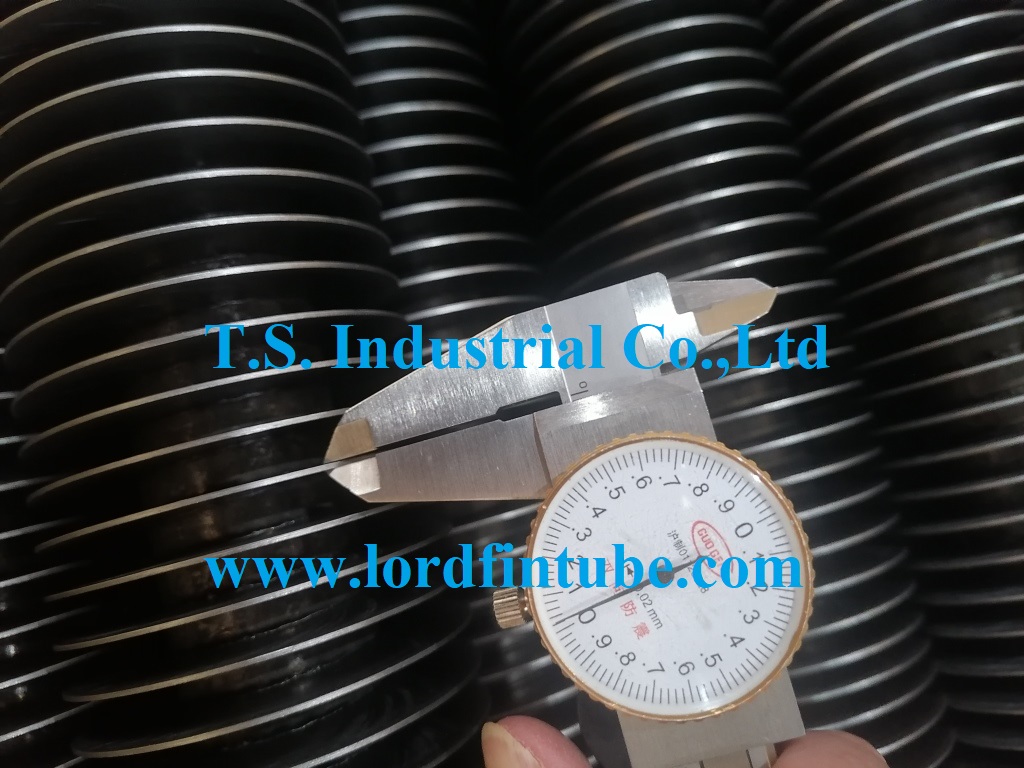
Representing the pinnacle of finned tube technology, Integral Spiral Finned Tubes are manufactured from a single piece of thick-walled tubing. Through a patented process involving medium-frequency heating, the tube is extruded and pierced to form uninterrupted, seamless fins in one continuous operation. This creates a monolithic structure with no separate welds or bonds.
Performance Evaluation Criteria
Selecting the right finned tube requires evaluating key performance metrics that impact longevity, efficiency, and total cost of ownership.
- Welding Rate/Fusion Rate: Critical for welded types. Standards (e.g., JB/T 6512-92) often require a minimum of 80-90% fusion along the fins length and width. Any unfused sections act as thermal barriers.
- Weld Seam Tensile Strength: For welded tubes, this indicates the bonds mechanical integrity, typically required to exceed 196 MPa to prevent fin detachment under stress.
- Thermal Contact Resistance: The quality of the fin-to-tube bond directly affects heat conduction. A perfect, continuous bond (as in integral types) minimizes this resistance.
- Service Life & Durability: Determined by resistance to thermal cycling, corrosion, and mechanical stress. Weld integrity and material homogeneity are key factors.
- Operational Economy: Evaluates initial cost against long-term performance, maintenance needs, and energy savings over the equipments lifespan.
Technical Comparison of Finned Tube Types
The following table provides a clear, comparative overview of the three main spiral finned tube manufacturing technologies, highlighting why integral construction often represents the optimal choice for demanding applications.
| Evaluation Criteria | High-Frequency Welded Tubes | Brazed Tubes | Integral Spiral Finned Tubes |
|---|---|---|---|
| Bonding Method | Resistance welding along fin foot. | Capillary action of brazing alloy. | Monolithic; fins extruded from tube wall. |
| Fin-to-Tube Contact | High (90-95% fusion rate typical). Thermal resistance at unfused points. | Very high. Dependent on brazing quality and filler integrity. | 100% perfect contact. Zero thermal interface resistance. |
| Structural Integrity | Good. Weld seam strength >200 MPa. Heat-affected zone present. | Good, but sensitive to thermal fatigue and corrosion of filler. | Excellent. Homogeneous material, no weak points or HAZ. |
| Typical Service Life | 5-8 years in aggressive environments (e.g., waste heat boilers). | 3-7 years, limited by filler metal degradation. | 10-20+ years due to superior corrosion and fatigue resistance. |
| Material Compatibility | Primarily similar metals (steel/steel). | Excellent for dissimilar metals (Al/Cu, etc.). | Depends on base tube alloy. Excellent for high-strength steels & alloys. |
| Relative Cost Profile | Lowest initial investment. | Moderate initial cost. | Higher initial cost, but lowest lifetime cost. |
| Ideal Application | General industrial boilers, air preheaters where cost is a primary driver. | HVAC coils, refrigeration, low-temperature exchangers. | High-pressure/temperature services, corrosive environments, waste heat recovery, critical process equipment. |
Technological Advantages of Integral Spiral Finned Tubes
The Integral Spiral Finned Tube is engineered for maximum performance and reliability. Its key advantages stem from its one-piece construction:
- Unmatched Thermal Efficiency: The seamless fin base ensures optimal heat flow from the tube to the fin, eliminating the efficiency loss found at weld junctions.
- Superior Mechanical Strength: The fins are part of the tube wall, offering exceptional resistance to vibration, fin lifting, and mechanical damage. This is vital for long-term operation in high-gas-velocity environments.
- Enhanced Corrosion Resistance: With no crevices or dissimilar material interfaces at the fin root, the integral design minimizes sites for galvanic or crevice corrosion, extending service life in harsh flue gas or chemical environments.
- Optimized for High-Pressure Duty: The homogeneous structure can withstand higher internal pressures compared to welded assemblies, making it ideal for boiler elements and high-pressure heat exchangers.
- Sustainable Design: By reducing lifecycle replacements and improving energy efficiency, integral tubes contribute directly to more sustainable industrial operations.
Development and Applications
The application of spiral finned tubes continues to expand. Integral Spiral Finned Tubes, in particular, are becoming the standard for critical heat transfer applications due to their robustness:
- Power Generation: Economizers, air preheaters, and waste heat boilers in coal, gas, biomass, and waste-to-energy plants.
- Chemical & Petrochemical: Feedwater heaters, process gas coolers, and reactor charge heaters where reliability is paramount.
- Industrial Heating & Drying: Thermal oil heaters, combustion air preheaters, and drying oven recuperators.
- Marine & Offshore: Exhaust gas economizers on ships to improve fuel efficiency.
Future Outlook
The future of heat exchanger technology is geared towards higher efficiency, lower emissions, and greater material sustainability. Integral Spiral Finned Tubes are at the forefront of this trend. Ongoing developments include:
- Advanced Alloys: Development of tubes from novel, high-temperature, and corrosion-resistant alloys for even more challenging environments.
- Precision Manufacturing: Further refinement of extrusion and rolling processes for optimized fin geometry, enhancing heat transfer and minimizing pressure drop.
- Digital Integration: Potential for pairing tube performance data with digital twin technology for predictive maintenance and system optimization.
- Circular Economy: Focus on recyclability and using integral tubes as permanent, high-value components in equipment designed for decades of service.
As a dedicated spiral finned tube manufacturer, our commitment is to provide engineered solutions like the Spiral finned tube|Integral Spiral Finned Tubes that deliver uncompromising performance, driving efficiency and sustainability in thermal systems worldwide.