


Lord Fin Tube--What is sterile heat exchanger?
What is a Sterile Heat Exchanger?
A sterile heat exchanger represents a specialized category of thermal transfer equipment engineered for processes where absolute sterility is non-negotiable. These units are fundamental in sectors like pharmaceuticals, biotechnology, and food and beverage production, where preventing microbial contamination is paramount for product safety and regulatory compliance.
What materials are used? Typically, construction relies on high-grade stainless steel or other corrosion-resistant alloys. These materials are selected not only for durability but also for their ability to withstand rigorous, repeated cleaning and sterilization cycles without degradation.
How Do They Maintain Sterility?
Design is critical. Key features that prevent contamination include:
- Smooth, Polished Surfaces: Eliminate microscopic ridges where microbes could reside.
- Crevice-Free Construction and Fully Drainable Geometry: Prevent product or moisture accumulation.
- Integrated CIP (Clean-in-Place) and SIP (Sterilize-in-Place) Systems: Allow thorough cleaning and sterilization without disassembly, reducing handling risks.
- Sealed and Sanitary Joints: Utilize fittings like sanitary clamps or orbital welds to maintain system integrity.
How does operational pressure and temperature affect them? These exchangers are built to endure the high temperatures and pressures required for sterilization (like steam-in-place procedures) while precisely controlling product temperature during heating or cooling phases.
Where Are Sterile Heat Exchangers Applied?
Which industries depend on this technology? The requirement for aseptic processing extends across several high-stakes fields. Sterile heat exchangers are the backbone of these operations.
Pharmaceutical Manufacturing
What role do they play here? They are indispensable in drug and vaccine production. Processes such as fermentation, crystallization, and purification often require precise temperature control in a completely aseptic environment to ensure product efficacy and patient safety.
Biotechnology and Biologics
How are they used in biotech? The production of sensitive biologics like monoclonal antibodies involves cell cultures and protein purification. Sterile heat exchangers maintain exact temperatures without introducing contaminants, which is vital for cell viability and product yield.
Food and Beverage Processing
Which processes require them? Applications include the pasteurization of dairy products and juices, sterilization of sauces, and temperature control during fermentation. They ensure safety and extend shelf life while preserving flavor and nutritional value.
Medical and Laboratory Settings
What are their functions beyond production? They are used for sterilizing medical instruments and equipment. In research labs, they maintain sterility in sample preparation and cell culture work, ensuring reliable experimental results.
In every application, the core function remains: to transfer heat efficiently while acting as an absolute barrier to contamination. The design principles balance thermal performance with uncompromising hygienic standards.
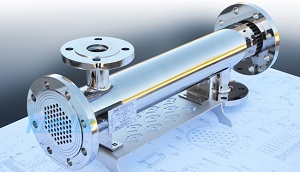
A hygienic plate heat exchanger configured for sterile processing duties.
What Determines Performance and Longevity?
How is ongoing sterility assured? It hinges on a robust regimen of operation, maintenance, and validation.
- Regular Validation & Testing: Systems must be routinely tested to verify they achieve and maintain sterile conditions.
- Preventive Maintenance: Scheduled inspections of gaskets, seals, and surfaces catch potential issues before they compromise the system.
- Proper Cleaning Protocols: Adherence to validated CIP/SIP cycles is mandatory. The choice of cleaning agents and parameters like time, temperature, and flow rate are critical.
- System Monitoring: Continuous monitoring of key parameters (temperature, pressure, flow) provides early warnings of deviations that could affect sterility or efficiency.
Choosing the right heat exchanger design for a sterile application is a critical engineering decision. Factors like the products physical properties, required temperature delta, and the specific sterilization method all influence which configuration—plate, tubular, or scraped-surface—is most appropriate.
A sterile heat exchanger is more than just a piece of equipment; it is a validated component within a quality-assured process. Its reliable operation directly impacts product safety, regulatory approval, and consumer trust. Understanding its principles helps in specifying, operating, and maintaining these vital systems effectively.