


TP347H seamless tube is a niobium-stabilized austenitic stainless steel tube, playing an irreplaceable role in supercritical and ultra-supercritical thermal power generating units. As the core material for high-temperature superheaters and reheaters of boilers, it must withstand the combined loading of pressure and corrosion over long service periods in high-temperature steam environments above 600°C. This article systematically reviews this key material from the perspectives of material characteristics, process control, engineering applications and technical evolution.
1. Material Fundamentals: Design Logic of Niobium-Stabilized Austenite
TP347H is essentially a high-carbon variant developed on the basis of 18‑8 austenitic stainless steel via niobium (Nb) stabilization treatment. Its typical chemical composition includes chromium (17.0%~19.0%), nickel (9.0%~13.0%), with carbon content controlled at a relatively high range of 0.04%~0.10%. The total content of niobium plus tantalum shall be at least 10 times the carbon content and no less than 0.20%, to ensure carbon is fully fixed as niobium carbide (NbC), rather than precipitating as harmful chromium carbides at grain boundaries.
The core objective of this design is to address intergranular corrosion susceptibility of austenitic stainless steels within the sensitization temperature range (approximately 450°C~850°C). Precipitation of chromium carbides at grain boundaries depletes chromium adjacent to grain boundaries and forms chromium-depleted zones, which degrade corrosion resistance. The added niobium preferentially combines with carbon to "lock" carbon inside grains, retaining chromium in the matrix to sustain a stable passive film. Meanwhile, the elevated carbon content together with precipitation strengthening from niobium carbides endows TP347H with superior high-temperature creep strength compared with grades such as 304H and 321H.
In terms of standard specifications, TP347H is covered by ASTM A213, A312, A376 and EN 10216‑5. Its unified numbering system designation is UNS S34709, corresponding to the European grade X7CrNiNb18‑10 (1.4912).
2. Performance Advantages and Inherent Limitations
The core competitiveness of TP347H lies in its balanced high-temperature strength and intergranular corrosion resistance. Within 600°C~750°C, its allowable stress is markedly higher than that of the base TP347 grade, enabling thinner boiler tube walls and weight optimization for ultra-supercritical unit design. Dispersion precipitation of niobium carbides during long-term service generates precipitation strengthening, which constitutes the key microstructural mechanism behind its better creep resistance relative to conventional austenitic steels.
In corrosion performance, niobium stabilization provides TP347H corrosion resistance comparable to 304 in nitric acid, organic acids and most salt solutions, while eliminating the risk of sensitization-induced intergranular corrosion. Nevertheless, it should be noted that stabilization does not remove the intrinsic susceptibility of austenitic stainless steels to stress corrosion cracking. In chloride-containing environments under tensile stress, the risk of chloride-induced stress corrosion cracking rises significantly above 60°C. Condensate formed during shutdown periods also requires close attention. In addition, TP347H exhibits limited resistance to pitting and crevice corrosion; localized corrosion may still occur even in low-chloride solutions. This factor must be incorporated into material selection for service environments with salinity or marine atmospheres.
| Grade | Stabilizing Element | High Temp Creep Strength | Intergranular Corrosion Resistance after Welding | Chloride SCC Resistance |
|---|---|---|---|---|
| TP347H | Niobium | Excellent | Excellent | Moderate |
| TP321H | Titanium | Good | Good | Moderate |
| TP316H | None | Good | Poor if sensitized | Better |
| 304H | None | Moderate | Poor if sensitized | Moderate |
3. Engineering Applications: From Power Boilers to Chemical Plants
The dominant application of TP347H seamless tubes is in high-temperature sections of supercritical and ultra-supercritical utility boilers. Specifically, they are used for superheater tubes, reheater tubes and high-temperature sections of platen superheaters, normally operating above 600°C, with design metal temperatures reaching 650°C in some units.
Beyond power generation, TP347H is also widely adopted in chemical and refining sectors. Thanks to its good resistance to nitrogen absorption, it is frequently applied as cooling tubes in ammonia reformers. Its resistance to hydrogen sulfide and intergranular corrosion also makes it a candidate material for furnace tubes in refinery heaters. For coal liquefaction facilities, heavy-wall large-diameter TP347H seamless tubes are subjected to combined loading of ~12 MPa pressure and hydrogen service. Requirements on sulfur, phosphorus and non-metallic inclusions are stricter than those for conventional boiler tubes, and hardness is generally limited below HRC22 to mitigate hydrogen-induced cracking risks.
4. Process Evolution: Grain Refinement from TP347H to Fine-Grained Grade
Coarse-grained TP347H suffers drawbacks in steam oxidation resistance. Under high-temperature steam, oxide scale forms and thickens on the inner tube surface over operating time. Spalled scale may block flow passages or lead to tube rupture. To resolve this issue, TP347HFG tube (fine-grained variant) has been developed. The process principle involves a high-temperature softening annealing at a temperature higher than the final solution annealing prior to the final solution treatment. This step precipitates NbC particles in advance, which pin austenite grain boundaries during subsequent solution heat treatment and refine grain size to ASTM grain size No.8 or finer.
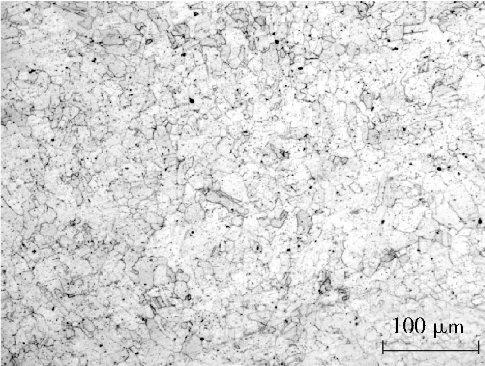
Fine-grained microstructure brings multiple benefits: higher grain boundary density accelerates chromium diffusion and facilitates rapid formation of dense Cr₂O₃ protective layers, substantially improving steam oxidation resistance. Moreover, within 600°C~750°C, TP347HFG delivers over 20% higher allowable stress and better fracture ductility than conventional TP347H. This technical route demonstrates that TP347H is not a static grade; its performance potential can be continuously tapped via process innovation.
5. Material Selection and Fabrication Guidelines
For practical engineering, welding and cold bending of TP347H must comply with dedicated specifications. Matching 347-series filler metals are normally used, and interpass temperature shall be controlled to avoid hot cracking. Post cold bending, re-solution treatment is generally unnecessary. Where heavy cold deformation or severe service conditions apply, medium-temperature stress relieving tempering should be avoided, as it falls within the sensitization temperature range. Solution treatment or stabilization heat treatment may be adopted as appropriate.
As indicated in ASME SA‑213, prolonged holding significantly above 1065°C during solution annealing may re-dissolve Nb(C,N) carbonitrides into the austenite matrix and impair anti-sensitization performance, calling for precise control over the heat treatment window. The conventional solution treatment range for supplied TP347H products is 1050–1100°C.
From a life-cycle cost perspective, TP347H carries a higher initial material cost than carbon steel or low-alloy heat-resistant steels. However, its long-term reliability under high temperature and pressure yields competitive amortized material cost per unit power output. For ultra-supercritical units designed for service life exceeding 30 years, adoption of the well-proven TP347H material system is economically preferable to accepting failure risks on critical high-temperature components.
Key Quality Inspection Items
- Chemical analysis (PMI)
- Tensile test, hardness test
- Metallographic grain size check
- UT / ET nondestructive testing
- Hydrostatic test
Note: Test scope to be confirmed per project ITP.
Packing & Shipping Requirements
- Cap protection for tube ends
- Wooden case or bundled packing
- Marking with heat number, standard, grade
- Moisture-proof packing for marine shipment
Design & Selection Tradeoffs
When selecting TP347H stainless steel seamless pipe, engineers must balance three core factors: operating temperature, medium corrosivity and total lifecycle cost.
- Strength gain: Nb stabilization improves high-temperature creep resistance, but material cost rises compared with low-alloy steel.
- Corrosion limit: Excellent resistance to intergranular corrosion, but not suitable for high chloride environments without extra mitigation.
- Oxidation risk: Standard TP347H coarse grain is vulnerable to steam oxidation scale spalling; choose TP347HFG if long-term service above 620°C is required.
Frequently Asked Questions
TP347H seamless tube is mainly used for superheater, reheater and platen superheater sections of supercritical and ultra-supercritical boilers. It is also selected for ammonia reformer cooling tubes and refinery heater furnace tubes.
TP347HFG is fine-grained TP347H with identical chemical composition. Special annealing before final solution refines grains to No.8 or finer, delivering better steam oxidation resistance and higher allowable stress at 600~750°C.
The typical solution treatment range is 1050–1100°C. Long time holding far above 1065°C may dissolve Nb(C,N) and weaken stabilization effect.
Matching 347 series welding consumables are recommended. Interpass temperature should be controlled properly to avoid hot cracking.
No. Niobium stabilization prevents intergranular corrosion, but it cannot eliminate chloride-induced stress corrosion cracking risk under tensile stress. Condensed chloride water during shutdown is a major hazard.
Contact Lordfintube for technical datasheets, MTC support and custom TP347H seamless tube supply for power and petrochemical projects.
Request a Quote