

Heat Exchanger Components for Biomass Energy System
Biomass energy is one of the most promising renewable energy sources for carbon neutrality. Unlike natural gas and coal-fired operating conditions, biomass flue gas contains abundant alkali metals (potassium, sodium), chlorine, sulfur and fly ash, which easily leads to fouling, slagging, erosion and chlorine-induced high-temperature corrosion on heat transfer surfaces. High-performance biomass heat exchanger components serve as the fundamental guarantee for the long-term stable and efficient operation of biomass boilers, CHP units and flue gas waste heat recovery systems.
1. Core Heat Transfer Components
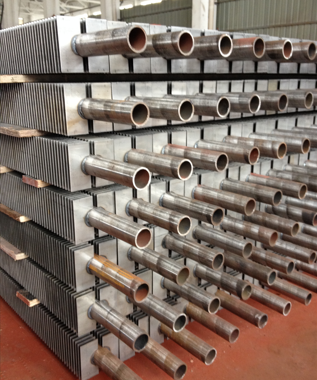
Finned Tubes
Finned tubes are the key heat transfer elements for economizers, air preheaters and tail flue gas heat exchangers. They recover low-grade flue gas waste heat by expanding the heat exchange area. Fin pitch and height shall be optimized for biomass service; widely spaced fins are preferred for high-ash fuels such as straw and rice husk to avoid ash blockage. Main types include laser-welded finned tubes, embedded finned tubes and integrally extruded finned tubes. Available materials: ND steel, SA179, SS304 and SS316L. Cast iron finned tubes can be adopted under severe slagging conditions. This biomass boiler finned tube series is customized for high ash and fouling working conditions.
Plain Seamless Tubes / Membrane Water Wall Tubes
Plain seamless tubes are widely used for superheaters, evaporators and furnace heating surfaces, subject to high-temperature flue gas scouring, fly ash abrasion and molten alkali salt corrosion. Membrane water wall tube panels form the furnace water wall of biomass boilers, which require excellent high-temperature creep resistance and reliable weld performance. Common grades: A106 Gr.B, SA210 A1/C, SA213 T11/T22 and other heat-resistant alloy steel tubes.
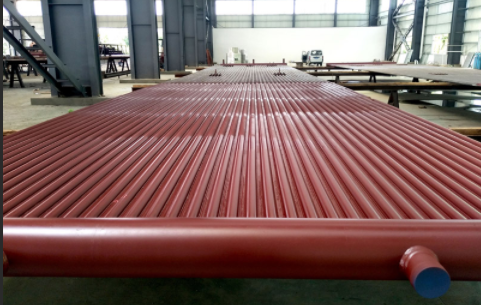
Heat Pipes
Heat pipe economizers are widely used in compact waste heat recovery units. Featuring rapid isothermal heat transfer, heat pipes separate the flue gas side from the working medium side to mitigate low-temperature dew-point corrosion. SS316L is normally specified on the flue gas side for chlorine resistance, while SS304 is applied on the water side with qualified feedwater treatment.
2. Ash-Cleaning & Supporting Auxiliary Components
Tube sheets and baffles fix tube bundles, guide flue gas flow, and withstand pressure difference and cyclic thermal loads. For biomass applications, thickened plates or overlay welding of wear & corrosion resistant layers are commonly adopted to resist fly ash erosion and local condensation corrosion.
Soot blowers, turbulators and cleaning spiral inserts are critical spare parts for on-line ash removal. Installed inside fire tubes, they weaken ash deposition, intensify turbulent heat transfer, greatly reduce the frequency of shutdown cleaning and stabilize thermal efficiency.
Headers, elbows, tees and return bends collect and distribute the working fluid for superheater and economizer circuits. Their materials shall match those of tube bundles to prevent galvanic corrosion and thermal fatigue cracking caused by fluctuating loads of biomass boilers.
3. Casing, Sealing and Insulation Parts
Shell casings, expansion joints, sealing gaskets and access doors constitute the pressure boundary and gas sealing structure. Expansion joints absorb thermal expansion of tube bundles; high-temperature gaskets prevent flue gas leakage; external insulation panels cut down radiative heat loss.
4. Material Selection Guidelines for Biomass Service Conditions
Biomass heat exchangers suffer from two major corrosion mechanisms: high-temperature molten alkali salt / chlorine corrosion in the superheater zone; sulfuric acid dew-point corrosion plus chloride wet corrosion in tail economizers and condensers, together with continuous fly ash erosion throughout the system.
| Service Zone | Recommended Material | Notes |
|---|---|---|
| High-temperature superheater zone (low-chlorine clean wood chips) | T11, T22, T91; TP347H, Super304H, nickel-based overlay / HVOF coating for high K-Cl corrosion | High potassium & chlorine fuel requires special anti-corrosion design |
| Medium-temperature economizer zone | ND steel, SA179, SS304 | Tube wall above acid dew point, low chlorine; evaluation needed for high Cl flue gas |
| Low-temperature condensation zone | SS316L; 2205 duplex stainless steel for harsh wet-dry alternating conditions | Acid + chloride condensation exists |
| High-wear zones | High-chromium cast iron (shields); overlay welding / protective coating (tube body) | For ash scouring positions |
Material selection shall be comprehensively evaluated based on fuel ash composition, chlorine and potassium content, flue gas acid dew point and operating temperature. Mismatched material grade is the primary cause of heating surface tube rupture and unplanned shutdown. One typical economizer tube needs strict material verification before delivery for biomass conditions.
Conclusion
Heat exchanger component designs for gas-fired boilers cannot be directly copied for biomass energy systems. Every heat transfer tube, fin, ash-cleaning spare part and pressure part requires customized design targeting fouling, abrasion and special corrosion. Proper component selection, material upgrading and maintainable structural design can extend service life, improve waste heat recovery efficiency and reduce O&M costs for biomass heating, power generation and cogeneration projects.