


What Is a Bagasse Fired Boiler?
1. Introduction
A bagasse fired boiler is a special biomass thermal equipment that takes bagasse, the fibrous industrial residue produced after sugarcane juicing, as the main fuel. As a core energy-saving and environmental protection equipment in the sugar industry and biomass boiler power generation field, it realizes the resource utilization of industrial and agricultural wastes.
Compared with traditional coal-fired boilers, bagasse fired boilers have remarkable advantages such as renewable fuel, low pollutant emissions and low operating costs. The equipment fundamentally solves the problem of waste residue disposal for sugar enterprises, provides stable thermal and electric support for industrial production, and is widely applied in sugar manufacturing, biomass power plants, chemical processing and other industrial scenarios.
2. Basic Working Principle
The operation of a bagasse fired boiler follows the basic principle of thermal energy conversion, realizing the whole process of converting the chemical energy of bagasse into thermal energy and finally into steam thermal energy. The operation can be divided into three core stages: fuel combustion, heat transfer and flue gas treatment.
Firstly, pretreated dry bagasse is sent into the boiler furnace through the feeding system and fully combusts under sufficient air supply, releasing a large amount of radiant heat and generating high-temperature flue gas. Secondly, boiler feed water absorbs heat through multi-stage heating surfaces including water walls, evaporators, superheaters and tube bundles, gradually vaporizes into saturated steam, and is further heated by high-temperature flue gas to form high-temperature and high-pressure superheated steam that meets industrial production standards. Finally, the low-temperature flue gas after heat release completes waste heat recovery through economizer and air preheater to reduce heat loss, and is discharged up to standard after dust removal and desulfurization treatment.
During actual operation, the boiler dynamically matches the air supply volume and feeding rate according to the moisture content and calorific value of bagasse to ensure full fuel combustion. Modern optimized bagasse fired boilers can achieve a thermal efficiency of over 90%, realizing efficient energy conversion.
3. Core Structural Composition
A complete bagasse fired boiler system consists of multiple functional modules. The core equipment covers combustion system, heat transfer system, waste heat recovery system and auxiliary environmental protection system, ensuring stable and efficient operation of the equipment in all aspects.
3.1 Combustion System
The combustion system is mainly composed of a furnace and a grate. Most industrial bagasse fired boilers adopt reciprocating step grates or chain grates, which adapt to the loose texture and low density of bagasse fuel. The grate can evenly convey bagasse and realize layered combustion, effectively avoiding fuel accumulation and incomplete combustion. The furnace adopts a large-volume structural design to prolong the residence time of fuel and flue gas, ensure full heat release and reduce heat loss caused by unburned carbon.
3.2 Heat Transfer System
As the core unit of boiler energy conversion, the heat transfer system mainly includes water walls, evaporators, superheaters and boiler tube bundles. The water walls on both sides of the furnace form radiant heating surfaces to fully absorb high-temperature radiant heat generated by combustion; the tube bundles between the upper and lower boiler drums form convective heating surfaces to further heat feed water through flue gas convective heat transfer. Among them, the superheater is responsible for increasing the temperature and pressure of steam to meet the technological requirements of power generation and high-end industrial production.
3.3 Waste Heat Recovery System
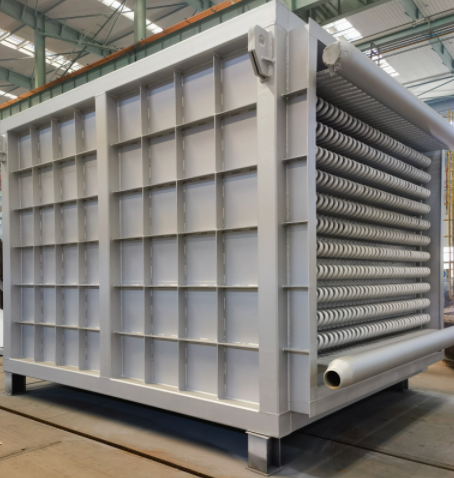
This system is mainly composed of economizers and air preheaters. The economizer uses flue gas waste heat to preheat low-temperature feed water, effectively reducing fuel consumption; the air preheater heats the air required for combustion through flue gas waste heat, greatly improving combustion efficiency. The coordinated operation of the two types of equipment greatly reduces the exhaust heat loss of the boiler and significantly improves the overall thermal efficiency of the equipment.
3.4 Auxiliary and Environmental Protection System
Auxiliary equipment includes fuel feeding devices, water supply systems, pressure regulation instruments, etc., which can realize automatic feeding and stable pressure regulation to ensure automatic operation of the equipment. The environmental protection system is equipped with dust removal, desulfurization and denitrification devices, which can effectively filter particulate matter, sulfur oxides, nitrogen oxides and other pollutants in flue gas.
4. Technical Advantages
4.1 Renewable and Recyclable Fuel
Sugarcane is an annually renewable crop. As a by-product of sugar production, bagasse is a typical clean biomass fuel with carbon-neutral characteristics in the ecological cycle. Replacing fossil fuels such as coal and natural gas with bagasse can effectively reduce enterprises’ dependence on fossil energy, alleviate energy shortage pressure, realize the recycling of industrial waste residues, and highly conform to the development concept of circular economy.
4.2 High Operation Efficiency and Strong Working Condition Stability
Modern mature bagasse fired boiler technology delivers excellent operating performance. Meanwhile, the boiler features a compact structure, convenient operation and maintenance, and strong load adaptability, which can meet the continuous production needs of industrial enterprises.
4.3 Low Operating Cost and Remarkable Economic Benefits
For sugar enterprises, bagasse is a self-produced by-product with almost no additional fuel procurement cost. The steam and power generated by the boiler can meet the self-production demand of the factory, greatly reducing the expenditure on purchased external energy. Surplus power can also be connected to the grid for power supply to create additional economic benefits and significantly improve the overall profit level of sugar enterprises.
4.4 Excellent Environmental Protection Performance
Bagasse has extremely low sulfur and ash content. After full combustion and flue gas purification treatment, its pollutant emissions are far lower than those of traditional coal-fired boilers, which can effectively reduce air pollution and carbon emissions.
5. Main Application Scenarios
| Application Field | Core Application & Features |
|---|---|
| Sugar Industry | The core application scenario of bagasse fired boilers. Realize self-supply of heat energy for sugar making processes such as juice heating, evaporation and crystallization, and build a closed-loop energy system for sugar production. |
| Biomass Combined Heat and Power Plants | Widely used in sugarcane producing areas. Realize combined heat and power generation, supply stable clean power to the grid and meet industrial and residential heat demand. |
| Chemical and Industrial Production | Provide stable high-temperature and high-pressure industrial steam for chemical reaction, distillation, drying and other processes, reducing production costs and promoting green industrial transformation. |
6. Conclusion
As a green and efficient core biomass energy equipment, bagasse fired boilers perfectly combine waste residue resource utilization with industrial energy supply, providing important technical support for the circular economy development of the sugar industry and the promotion of clean energy. With the core advantages of renewable fuel, high efficiency, energy saving and environmental friendliness, it has irreplaceable application value in sugar production, biomass power generation, chemical industry and other fields. Although the equipment still has technical shortcomings in fuel adaptability and corrosion resistance, with the continuous progress of intelligent regulation, large-scale manufacturing and environmental purification technology, bagasse fired boilers will achieve higher energy utilization efficiency and greener operation effects. Under the background of global carbon peaking and carbon neutrality goals and energy structure transformation, bagasse fired boilers will have broader application prospects and become an important force in promoting industrial green upgrading and sustainable energy development.