


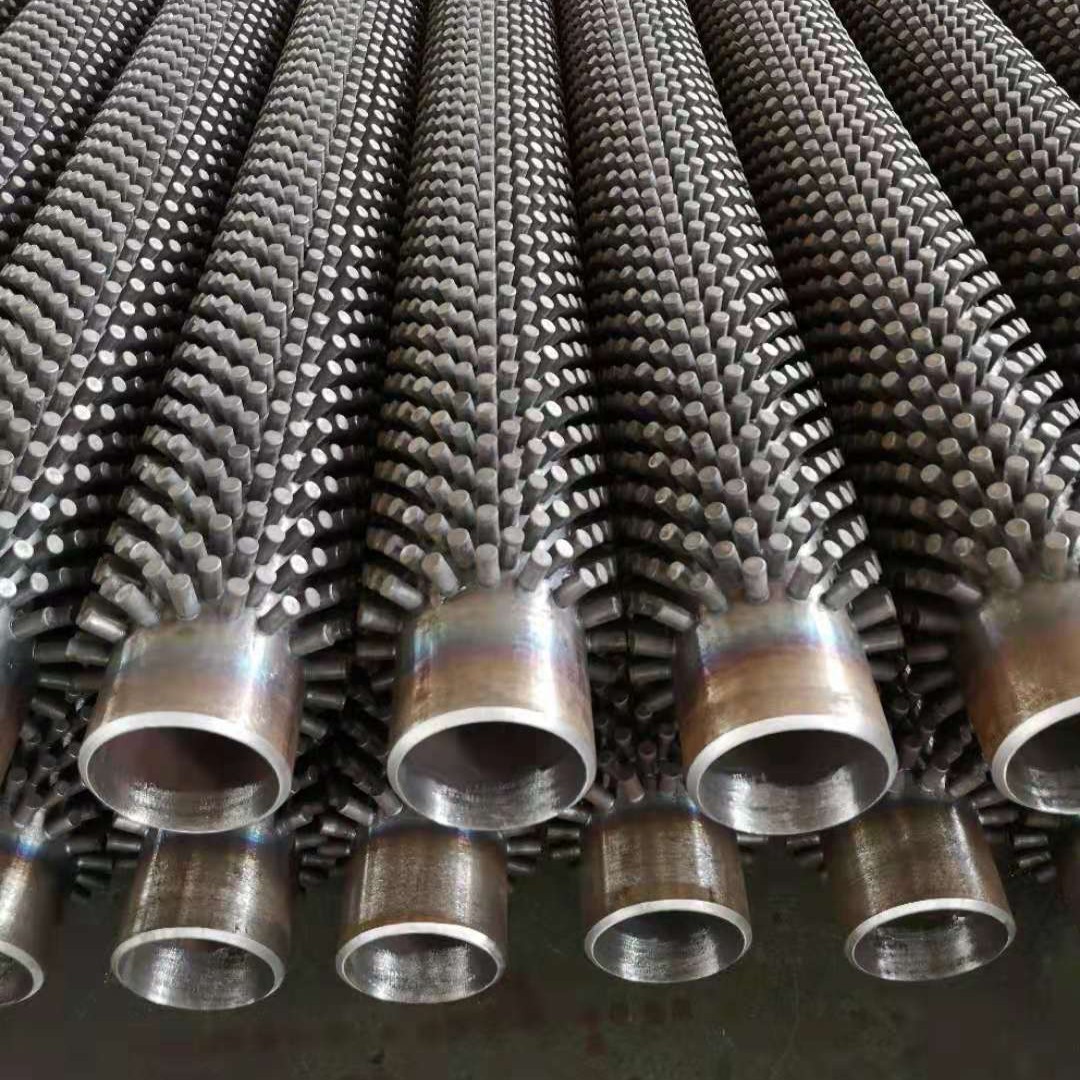
In petrochemical plants, power stations, and waste-heat recovery units, the choice of heat-exchange surface can make or break both efficiency and uptime. Studded pipes — sometimes referred to as nailhead pipes — are plain base tubes fitted with externally welded metal studs. Though mechanically simple, they address key operating challenges where finned tubes perform poorly. This article walks through how they work, where they shine, and what to watch out for when youre specifying them.
Relevant standard: If youre working to Chinese specifications, SH/T 3422-2011 covers everything from stud geometry to weld inspection and documentation. Its a handy reference for purchase orders and factory acceptance.
Why studs, not fins?
Think about what happens when hot flue gas flows over a bare tube: a stagnant boundary layer clings to the metal, acting like a blanket. Weld a bunch of short, chunky studs onto that tube, and two things change. First, the outside surface area jumps to two or three times the original. Second, each stud trips the gas flow, creating turbulence that scrubs away that insulating layer. The net effect is a heat transfer coefficient that can be nearly 90% higher than a plain tube – and in some condensing applications, the improvement can top 120%.
Surface area comparison
- Studded pipe: 2–3× bare tube
- Finned tube: 4–9× bare tube
- Thermal intensity (studded): 2–3× bare
- Thermal intensity (finned): 2–4× bare
What studs really bring
- Consistently breaks down the thermal boundary layer
- Generates strong turbulence at moderate gas-flow velocities
- Performs reliably within dirty, erosive or corrosive gas streams
- Compatible with soot-blowing and mechanical scraper cleaning
Studded vs. finned – the real distinction
Its tempting to pick the one with the bigger surface area, but thats often a trap. Finned tubes are brilliant when the gas is clean – they pack a huge area into a small volume, and the thermal performance is outstanding. But those tight fin gaps are a magnet for ash, catalyst dust, and other solids. Once fouling sets in, the heat transfer drops off a cliff, and cleaning becomes a nightmare. Also, most high-frequency welded fin tubes top out at about six metres; longer sections need field welds, which add leak points.
Studded pipes take the opposite approach. The studs are thick, widely spaced, and welded with a resistance process that forms a true metallurgical bond. They shrug off vibration and thermal cycling far better than mechanically attached fins. When the flue gas carries abrasive particles or sticky deposits, the open spacing allows soot blowers to do their job effectively. In a dirty, high-temperature environment, a studded pipe will often outlast a finned tube by a wide margin – and that means fewer outages.
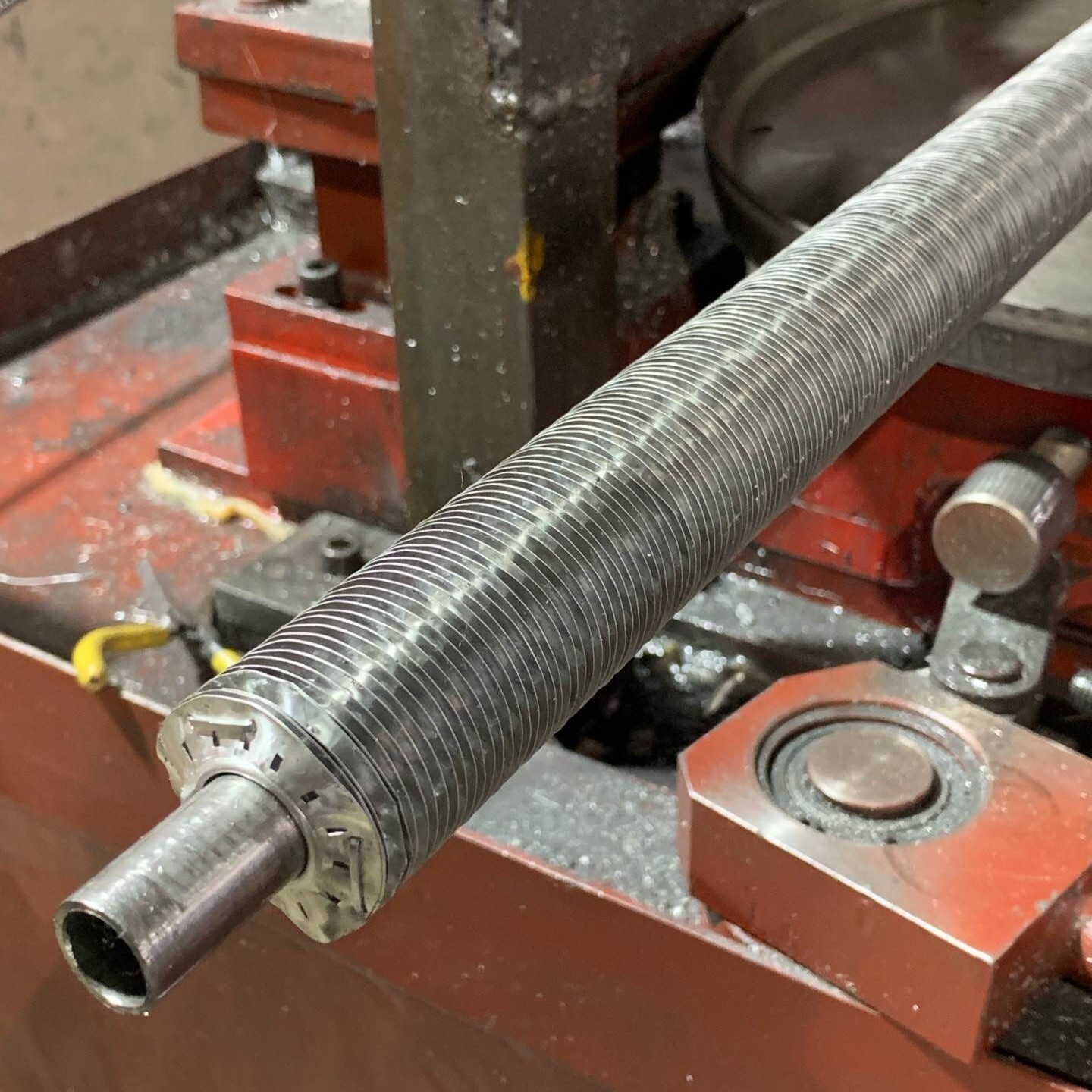
Rule of thumb from the field: If your soot-blowing system runs more than twice a shift, or if the gas contains significant particulate, go with Studded Tubes. If the gas is relatively clean and youre chasing maximum area, finned tubes will give you better bang for the buck.
How theyre made – and what to check
Production starts with cleaning the base tube – oil, rust, and mill scale have to go. Then an automatic resistance welder positions each stud, applies a precise current, and forges it onto the tube. The whole sequence is PLC-controlled; you can dial in the number of studs per row, the helical pitch, and compensation for tube ovality. That ensures consistent quality from one end of a 15‑metre tube to the other.
After welding, the key acceptance criteria are: penetration depth ≥ 1.5 mm, weld reinforcement ≤ 1 mm (to keep pressure drop in check), and stud height within ±0.3 mm of the drawing. The forging pressure minimises the heat-affected zone, so the base material retains its strength. Modern studded-pipe welding machines can operate for extended runs with minimal process drift. For this reason, large-scale projects frequently define minimum weld-quality requirements.
Typical dimensions – whats available
Most suppliers offer a wide range, but heres what youll usually see in the data sheets:
| Parameter | Standard range | Extended / custom |
|---|---|---|
| Base tube O.D. | 38 – 219 mm | 20 – 426 mm |
| Wall thickness | 4.0 – 20 mm | 2.0 – 50 mm |
| Tube length | ≤ 15 m | ≤ 25 m |
| Stud diameter | 6 – 12.5 mm | 3 – 25.4 mm |
| Stud height | 10 – 35 mm | 5 – 50.8 mm |
| Longitudinal pitch | 8 – 30 mm | Custom |
Material pairing
Common base materials are ASTM A106 Gr.B carbon steel, chrome‑moly grades like P5, P9, P11, P22, P91, and stainless 304/316L. Studs are usually matched: carbon steel tubes take Q235B or AISI 410 studs; stainless tubes take 304 or 316 studs. Resistance welding works with almost any combination, so you can also mix high‑nickel alloys if the corrosion duty is severe.
Carbon steel
Tube: A106 Gr.B
Stud: Q235B / AISI 1010
Max service temperature: approx. 600 °C
Chrome‑moly
Tube: P5/P9/P11
Stud: matching alloy
Max service temperature: approx. 650 °C
Stainless
Tube: 304/316L
Stud: 304 / 316 / 410
Good for high temperature plus corrosives
Where youll find them in the field
Studded pipes arent a universal replacement – theyre a specialised tool for tough gas‑side duties. Heres where they routinely show up:
Refinery fired heaters
- Convection sections – the classic use case
- Heavy oil firing produces sulphur‑laden ash
- Studs resist corrosion and allow online cleaning
CFB boilers
- Flue gas carries abrasive bed material
- Erosion is severe on any protruding surface
- Thick studs wear much better than thin fins
Heat‑recovery systems
- Evaporator and superheater sections in HRSGs
- Recovering heat from turbine exhaust or process gas
- Studded Pipe Economizers are a common off‑the‑shelf design
Waste incinerators
- Municipal and hazardous waste gas is acidic and hot
- Studs anchor refractory linings
- Protect the base tube from direct flame and acid attack
What really matters when youre selecting
Dont start with the catalogue – start with the operating conditions. Ask yourself these three questions:
How dirty is the gas?
If youre planning to blow soot every few hours, studs are the safer bet. If the gas is relatively clean, fins will give you more area for the same bundle volume.
Whats the peak metal temperature?
Carbon steel studded tubes are fine up to about 600 °C. Beyond that, move to chrome‑moly or stainless. The stud material should match or exceed the tubes creep‑rupture strength.
How tight is your pressure‑drop budget?
Studs add drag. If your fan or ID blower has limited headroom, you may need to increase the pitch or reduce the stud height – at the cost of some heat transfer.
Things to inspect when the shipment arrives
Even with a good supplier, it pays to verify a few items before installation:
- Material test reports – compare grade and heat numbers against the order
- Weld quality – check penetration depth and reinforcement on a few random studs
- Stud pattern – count rows, check circumferential spacing, measure pitch
- Overall dimensions – O.D., wall thickness, stud height, and end preparation
- Follow the Studded Tubes inspection guidelines for a formal checklist
When you write the purchase order: Be explicit about the tube material and grade, stud material, stud size (diameter × height), arrangement (helical or straight rows), longitudinal pitch, number of starts, and how the ends should be finished (plain or bevelled). Its also wise to request a third‑party inspection – TÜV, Lloyds, or BV – especially for large or critical bundles.
Making the final decision
Studded pipes arent a cure‑all – theyre a response to a specific set of problems. They cost more than bare tubes, and theyre usually more expensive than finned tubes on a per‑area basis. But in the right application, they pay for themselves by staying on line longer and requiring less maintenance. The real question isnt "which one transfers heat better?" – its "which one will still be transferring heat after six months of dirty operation?" The answer often points to studs, especially when the gas is abrasive, sticky, or corrosive. Talk to your operations team, look at your cleaning schedule, and factor in the cost of downtime. Thats where the real economics lie.