

Economizer vs Superheater
In industrial steam boiler systems, the economizer and superheater are the two principal heat exchange components positioned along the flue gas path. Although both extract thermal energy from combustion products, their respective thermodynamic roles, operating environments, and construction philosophies are fundamentally distinct.
An economizer reclaims residual heat from exhaust flue gases to elevate the temperature of incoming feedwater prior to drum entry. A superheater, conversely, receives saturated steam from the drum and applies high-temperature radiant or convective heat to raise its enthalpy well beyond the saturation point, producing dry superheated steam suitable for turbine expansion.
For a deeper dive into their individual designs and working principles, please refer to our dedicated guides:
• What is an Economizer? Functions, Types, and Benefits
• What is a Superheater? Working Principles and Applications
1. Function and Medium Handled
The economizer participates in the liquid-phase heat recovery stage. Its working medium is boiler feedwater, which enters at ambient or deaerator temperature and leaves at a temperature approaching the saturation point. The heat source is the depleted flue gas stream after it has passed through the superheater and reheater sections—energy that would otherwise be discharged to the stack.
The superheater operates on the gas-phase side of the steam-water cycle. Its working medium is saturated steam extracted from the steam drum. Through additional heat input, the superheater increases the steam temperature from the saturation point (typically 250–320°C, depending on pressure) to final outlet temperatures often reaching 450–600°C or higher in utility applications.
2. Position in the Flue Gas Path and Temperature Exposure
The spatial arrangement of these two components reflects a deliberate cascade of energy utilization.
The superheater occupies the upstream high-temperature zone—either suspended in the furnace cavity (radiant type) or positioned directly after the furnace exit in the first convection pass (convection type). It is routinely exposed to flue gas temperatures between 800°C and 1,200°C. This placement allows it to capture the highest-grade thermal energy for steam conditioning.
The economizer resides at the downstream tail end of the gas path, after the superheater and air preheater (if installed). The entering flue gas temperature at this section typically ranges from 300°C to 500°C. This low-temperature environment is deliberately chosen to maximize the temperature differential between gas and water, facilitating effective heat transfer while minimizing irreversible exergy losses.
3. Material Selection and Structural Forms
The starkly different thermal conditions dictate divergent material and structural strategies.
For the economizer
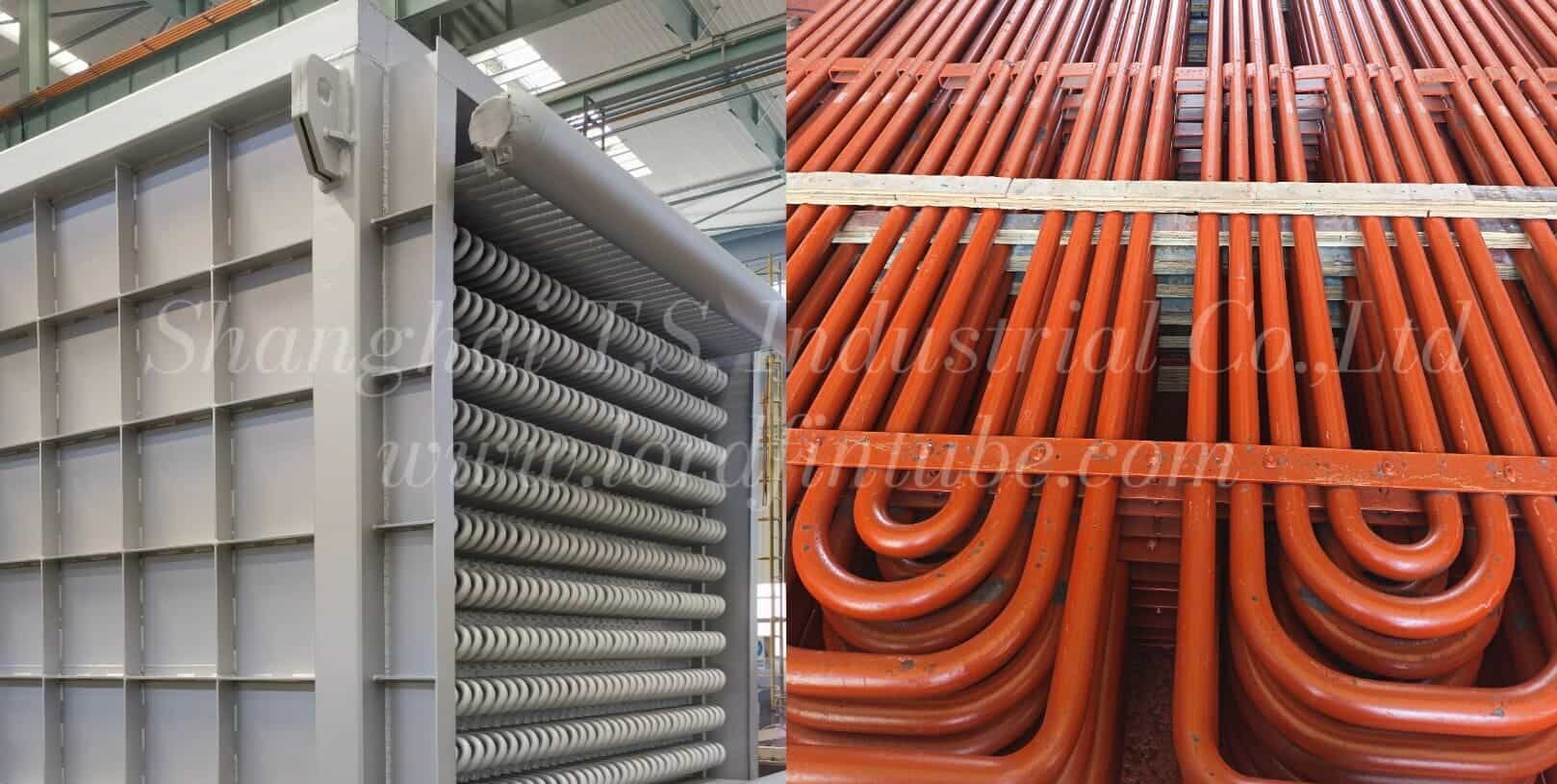
The dominant engineering concern is low-temperature corrosion, particularly dew-point corrosion caused by sulfuric acid condensation when firing sulfur-bearing fuels. Additionally, the gas-side heat transfer coefficient is inherently low because of the gaseous medium. To compensate, economizers are invariably constructed with extended-surface tubing—most commonly spiral-welded or H-type finned tubes. Fins dramatically increase the heat transfer area per unit volume, allowing efficient energy recovery while maintaining a compact envelope and a manageable metal temperature profile that mitigates acid attack.
For the superheater
The primary design driver is high-temperature creep resistance and oxidation tolerance. Because tube metal temperatures approach or exceed 600°C in many designs, plain bare tubes are standard. The most prevalent geometric configuration is the serpentine tube arrangement. This looped design serves three critical functions: it provides sufficient tube length to achieve the required degree of superheat, it accommodates substantial thermal expansion through flexible bends without imposing excessive stress on headers, and it ensures complete drainage during shutdowns to prevent water hammer and internal corrosion.
4. Differential Impact on System Efficiency
The efficiency contribution of each component operates on different thermodynamic levels.
The economizer directly improves boiler thermal efficiency (measured by the heat balance method). A reduction in exhaust gas temperature by 15–20°C typically corresponds to a 1% gain in this efficiency; practical economizer installations achieve overall improvements in the range of 3% to 7%. This translates directly to fuel savings for the boiler operator.
The superheater does not materially affect the boilers combustion efficiency, but it exerts a decisive influence on the overall cycle efficiency of the power plant. By raising the turbine inlet temperature, the superheater increases the average heat rejection temperature of the Rankine cycle, raising the theoretical thermal efficiency by 15% to 20% in practical high-pressure configurations. Equally important, superheated steam eliminates moisture droplets that would otherwise cause erosion and fatigue damage to turbine blades—a reliability consideration as critical as the efficiency gain.
5. Operational Risks and Maintenance Priorities
Each component presents distinct failure mechanisms that demand tailored operational strategies.
- Economizer: The predominant risks are ash fouling on fin surfaces, which degrades heat transfer and raises exhaust temperature, and cold-end corrosion, which may lead to tube wall thinning and eventual leakage. Effective soot-blowing regimes and strict control of the feedwater inlet temperature (to maintain tube metal above the acid dew point) are standard countermeasures.
- Superheater: The main failure modes include creep rupture from long-term exposure to high metal temperatures, thermal fatigue caused by cyclic startup and load changes, and steam-side oxidation. Consequently, superheater tubes are manufactured from high-alloy ferritic or austenitic steels (e.g., T91, T92, TP347H), and frequent monitoring of outlet steam temperature and pressure drop is essential to detect blockage or flow maldistribution.
Our Supply Capabilities
We are an established manufacturer of boiler heat-exchange elements, providing engineered tube solutions tailored to the specific demands of each component.
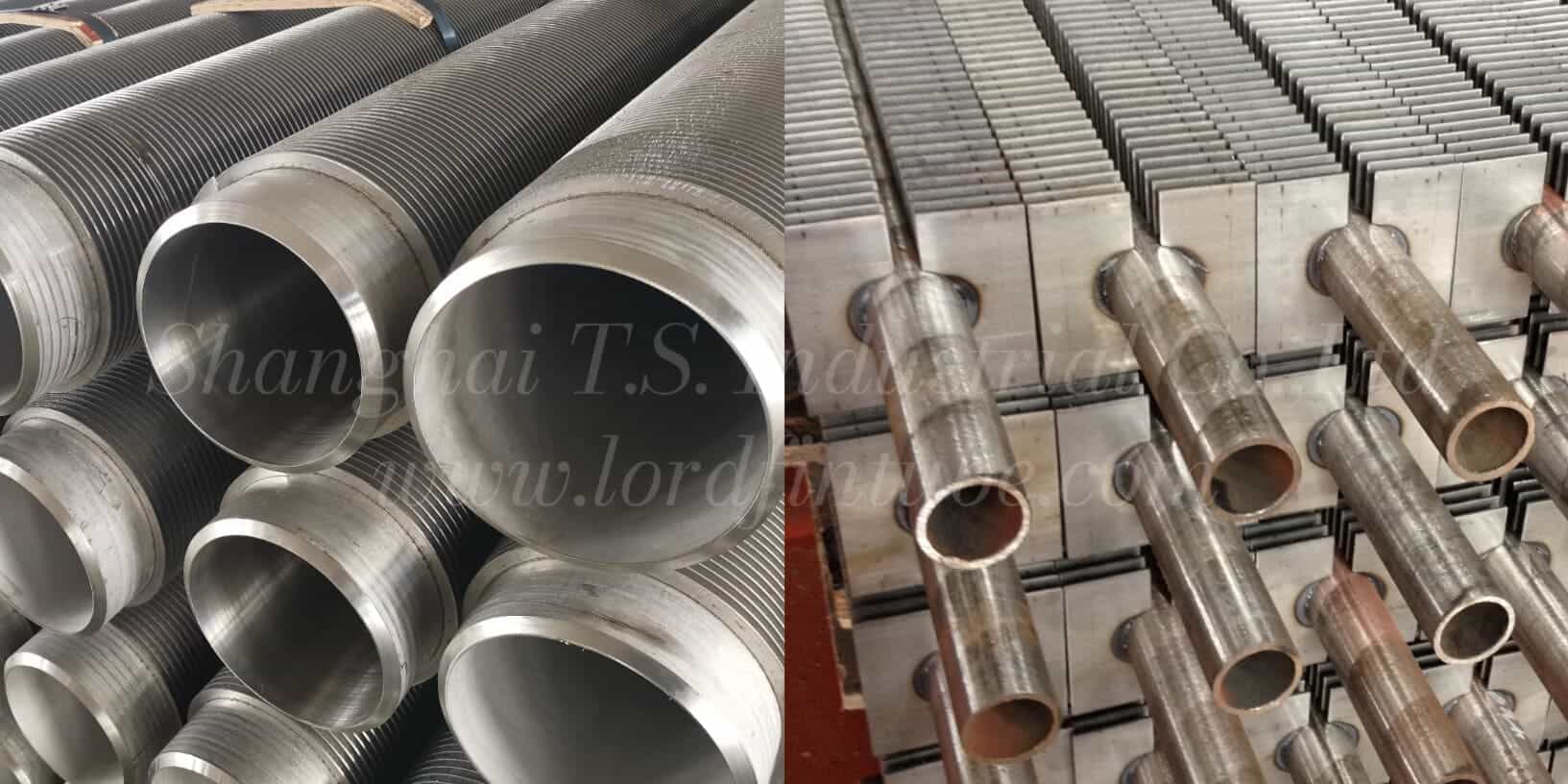
For Economizer Applications – Finned Tubes
We supply spiral-welded and H-type finned tubes manufactured to ISO, ASME, and other international standards. Our product range includes:
- Fin pitches and heights optimized for your specific fuel type and flue gas composition
- Materials resistant to dew-point corrosion, including ND steel, Corten, and stainless steel variants
- Precision fin winding with consistent weld integrity to ensure long-term thermal cycling durability
- Custom dimensions to match existing casing interfaces and tube bank arrangements
For Superheater Applications – Serpentine Tubes
We supply serpentine tube engineered for sustained performance under extreme temperatures. Our offerings feature:
- Alloy grades ranging from T11 and T22 to T91, T92, and austenitic stainless steels (304H, 316H, 347H)
- CNC-controlled bending with solution annealing and stress-relief heat treatment to eliminate residual stresses
- Full material traceability and certified test reports (including tensile, hardness, and grain-size examinations)
- Custom bend radii, tube diameters, and wall thicknesses to accommodate your boiler layout and thermal expansion calculations
Our engineering team is available for material selection consultations and custom design support to ensure that the finned tubes or serpentine tubes we deliver match your operating conditions precisely.
Comparative Overview
| Parameter | Economizer | Superheater |
|---|---|---|
| Primary thermodynamic function | Feedwater preheating via flue gas waste heat | Saturated steam superheating to increase enthalpy |
| Working medium | Liquid feedwater (subcooled or saturated liquid) | Saturated steam (dry gas) |
| Flue gas temperature at inlet | 300 – 500°C | 800 – 1,200°C |
| Location in boiler arrangement | Tail-end convection pass (downstream of superheater) | Furnace outlet or first convection pass (upstream) |
| Efficiency gain mechanism | Reduces exhaust loss; improves boiler efficiency by 3–7% | Increases turbine expansion work; improves cycle efficiency by 15–20% |
| Principal operational threats | Sulfuric acid dew-point corrosion; ash deposition | Creep; thermal fatigue; high-temperature oxidation |
| Preferred tube configuration | spiral-welded / H-type finned tubes (extended surface) | serpentine tube (bare, flexible loops) |
| Material selection priority | Low-temperature corrosion resistance and weldability | High-temperature creep strength and oxidation resistance |
The economizer and superheater function as complementary stages in a cascaded energy extraction train—the former harvesting the lower-grade residual heat, the latter capturing the highest-temperature potential to maximize steam quality. Recognizing their respective design constraints and failure mechanisms is essential for plant engineers involved in retrofitting, capacity expansion, or routine tube replacement programs.
For inquiries regarding custom-manufactured finned tubes for economizers or serpentine tubes for superheaters, please contact our technical sales team with your operating parameters and site requirements.