

Products Description
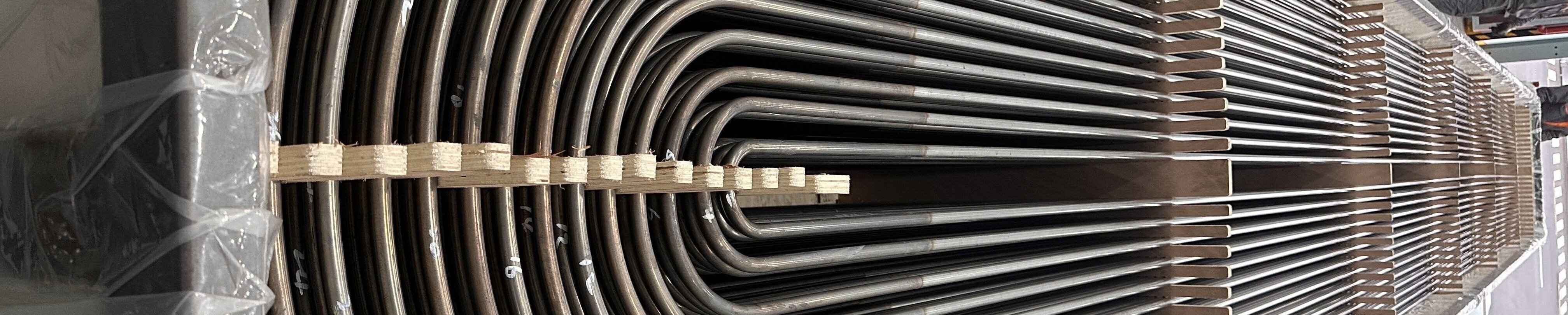
Seamless U‑bend ASME SA789 UNS S32750 tube refers to a type of tube made from Alloy 2507 super duplex stainless steel, featuring outstanding chloride corrosion resistance and high mechanical strength for heat exchanger and high‑corrosion process environments.
A seamless U‑bend ASME SA789 UNS S32750 tube is high‑performance super duplex ferritic‑austenitic seamless tubing (Alloy 2507, 1.4410). Balanced 50/50 ferrite‑austenite microstructure delivers superior resistance to chloride pitting, crevice corrosion and stress corrosion cracking.
The U‑bend configuration enables compact assembly and efficient heat transfer inside shell‑and‑tube heat exchangers for flow direction change. Adopting seamless tube raw material eliminates welded seams which are potential failure risks under pressure and thermal cycling. Precision‑formed U‑bend geometry controls thermal expansion, keeps low pressure drop and fits limited exchanger shell space. This material‑and‑shape combination is widely specified by engineers for critical corrosive‑media service.
Production follows strict multi‑step procedures for super duplex material:
- Melting & Alloying – Raw materials of chromium, nickel, molybdenum and nitrogen are precisely melted. VIM or AOD melting technology strictly restricts carbon, sulfur and impurity elements to obtain qualified S32750 super duplex molten steel.
- Seamless Tube Formation – Billet is hot pierced / hot extruded into hollow tube shell, then multi‑pass cold drawn to achieve target outer diameter and wall thickness. Cold drawing improves dimensional accuracy and surface finish for heat exchanger tubing.
- U‑Bending – Mandrel‑assisted precision bending machine forms U shape. Mandrel inner support prevents excessive wall‑thinning and ovality. Bend radius is strictly controlled per heat‑exchanger design requirements.
- Heat Treatment – The bend region plus a minimum of 150 mm adjacent straight sections on both sides is subjected to local solution annealing, to restore balanced ferrite‑austenite phase ratio, eliminate bending residual stress, and recover full corrosion resistance and ductility. Slow cooling through 600–1000℃ must be avoided to prevent sigma‑phase precipitation. Long‑term temperature holding within 280–480℃ shall be strictly avoided to prevent 475°C embrittlement.
- Final Processing & Inspection – Pickling & passivation for surface descaling; non‑destructive testing including eddy current test, ultrasonic test; full dimensional verification to comply with ASME SA789/A789M requirements.
| Element | Composition (%) |
|---|---|
| Carbon (C) | ≤0.030 |
| Manganese (Mn) | ≤1.20 |
| Silicon (Si) | ≤0.80 |
| Phosphorus (P) | ≤0.035 |
| Sulfur (S) | ≤0.020 |
| Chromium (Cr) | 24.0‑26.0 |
| Nickel (Ni) | 6.0‑8.0 |
| Molybdenum (Mo) | 3.0‑5.0 |
| Nitrogen (N) | 0.24‑0.32 |
| Copper (Cu) | ≤0.50 |
High chromium‑molybdenum‑nitrogen formula contributes high PREN ≥42.5 for excellent chloride local‑corrosion performance. Low carbon improves weldability and resists intergranular corrosion. Nitrogen stabilizes austenite phase and strengthens matrix simultaneously.
Physical Properties
- Density: 7.80 g/cm³
- Thermal Conductivity: ~14.5 W/(m·K) at 100°C
- Thermal Expansion: 13.0 μm/m·°C (20‑100°C)
- Elastic Modulus: 200 GPa
- Melting Range: 1350‑1400℃
Typical Room‑Temperature Mechanical Properties (Solution Annealed Condition):
- Tensile Strength: ≥ 800 MPa (116 ksi)
- Yield Strength (0.2% Offset): ≥ 550 MPa (80 ksi)
- Elongation: ≥ 15% (50 mm gauge length)
- Hardness: ≤ 310 HB
- ‑46℃ Charpy V‑Notch Impact: ≥35 J
Note: S32750 super duplex shall not be used for long‑term continuous service above 300℃, to prevent brittle intermetallic phases.
- Outstanding Chloride Corrosion Resistance: High PREN value offers strong resistance against seawater, brine, chloride‑containing process media; excellent performance on anti‑pitting, crevice corrosion and chloride stress‑corrosion cracking.
- High Mechanical Strength & Light‑Weight Design: Yield strength nearly doubles common 316L austenitic stainless steel, allowing thinner‑wall tube design for heat exchangers to reduce equipment weight and material cost.
- Good Thermal Performance: Higher thermal conductivity and lower thermal expansion versus austenitic stainless steels, improving heat‑transfer efficiency and reducing thermal‑cycle stress risk for U‑tube bundles.
- Good Fabricability & Weldability: Can be bent, cut and welded with matched super duplex welding consumables. Requires controlled heat input during welding to guarantee dual‑phase balance.
- Corrosion‑Fatigue & Erosion Resistance: Homogeneous seamless structure performs well under alternating temperature, flow erosion and vibration service; extends service life for heat‑exchanger bundles.
- Shell & Tube Heat Exchangers & Condensers: Primary application: U‑tube bundles for seawater desalination, offshore platform heat exchangers, chemical plant coolers under high‑chloride media.
- Offshore & Marine Industry: Seawater injection systems, offshore process equipment, marine cooling units.
- Oil & Gas Sour Service: NACE MR0175 compliant for sour‑gas process exchangers under brine and H₂S‑containing environments.
- Chemical, Pulp & Paper Industry: Brine evaporation equipment, bleach plant heat exchangers, corrosive‑medium process heat‑transfer units.
- Process Instrument Tubing Bundle: Compact U‑bend assemblies for high‑corrosion instrument cooling circuits.
Seamless U‑bend ASME SA789 UNS S32750 (Alloy 2507) tubes are premium super‑duplex U‑tube solution for severe chloride corrosion service. Seamless base tube, mandrel precision bending, local solution annealing and full ASME SA789 compliance guarantee reliability for critical heat‑transfer equipment.
Standard U‑bend radius ranges from 1.5D ~ 3D of tube outer diameter. Main influencing factors:
- Thermal Expansion: Larger bend radius lowers thermal‑cycling stress concentration for U‑tube bundle.
- Flow Characteristics: Too tight bend raises pressure drop and fluid turbulence.
- Mechanical Space: Internal dimension of heat‑exchanger shell restricts maximum bend size.
- Manufacturing Limits: Bend radius below 1.5D requires special mandrel bending process to control wall thinning and ovality.
Super duplex S32750 generally does not require post‑weld stress relief in general corrosion service. However, notes below shall be followed:
- Welding heat input and inter‑pass temperature must be strictly controlled to obtain balanced ferrite‑austenite phase ratio.
- For components under heavy cyclic load or high‑risk SCC service, solution annealing or stress‑relief heat treatment may be specified.
- The final solution annealing for bent U‑tubes is completed at tube manufacturer side, not field post‑weld heat treatment.
- Follow ASME Section IX qualified welding procedure specification.
Qualified supplier shall provide complete MTC material test reports traceable to original heat number, covering chemical composition, mechanical properties, phase evaluation and compliance with ASME SA789. Additional documents include NDT reports (eddy current, ultrasonic test), dimensional inspection records, EN 10204 3.1 / 3.2 certificates upon request.