

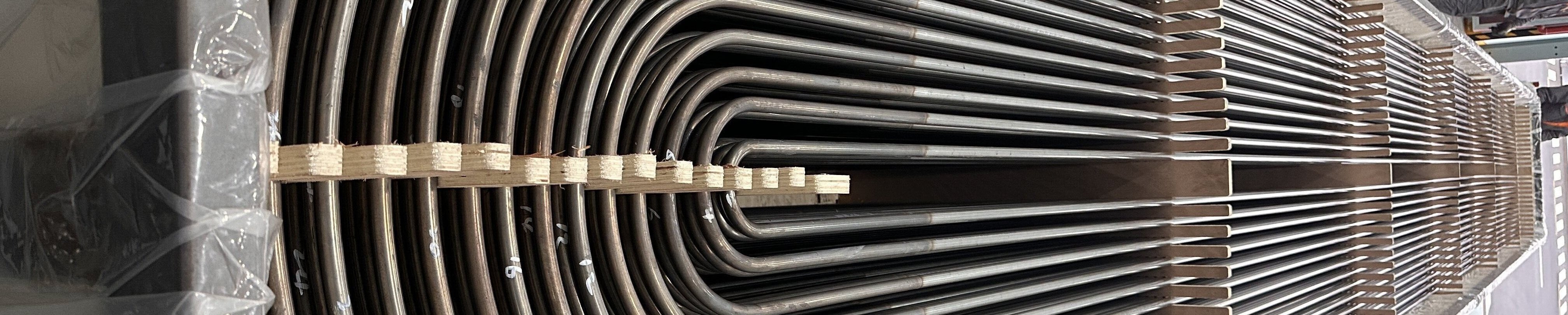
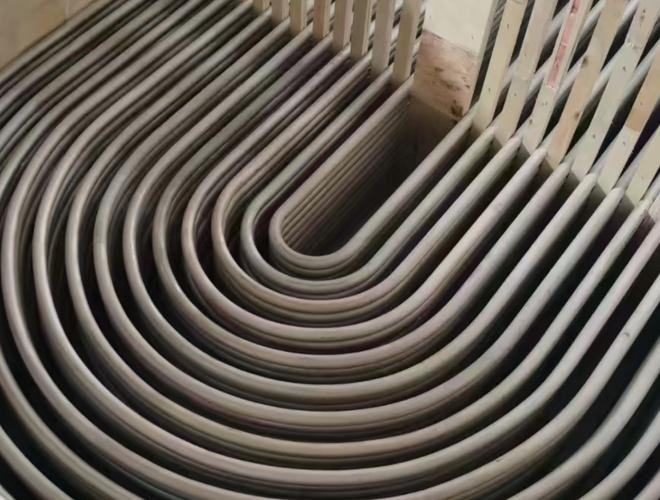
Products Description
What is seamless U-bend ASME SB444 N06625 tube?
A seamless U-bend ASME SB444 N06625 tube is a high-performance nickel-based alloy tubing made from Inconel 625 (N06625). This material offers exceptional corrosion resistance, high-temperature strength, and durability in extreme environments. The U-bend design allows for efficient heat transfer and compact installation in systems requiring directional flow changes, such as heat exchangers and boilers.
What makes this tubing distinct is its seamless construction, which eliminates welded seams that can become potential weak points under thermal cycling and high pressure. The U-bend shape is not just a simple curve; it is a precisely engineered form that manages thermal expansion, minimizes pressure drop, and fits into confined spaces within shell and tube heat exchangers. This combination of material and geometry is what engineers specify for critical service where failure is not an option.
How is Seamless U-bend ASME SB444 N06625 tube Manufactured?
The production of these tubes involves several critical steps:
1. Melting & Alloying – Nickel, chromium, molybdenum, and niobium are melted in a controlled furnace to achieve the desired Inconel 625 composition. Advanced vacuum induction melting (VIM) or argon oxygen decarburization (AOD) processes ensure precise control over impurities like carbon and sulfur.
2. Seamless Tube Formation – The alloy is processed via hot extrusion or rotary piercing to create a hollow shell, which is then cold-drawn through a series of dies to achieve the exact outer diameter and wall thickness. This cold working enhances the tensile strength of the material.
3. U-Bending – A precision bending machine, often using a mandrel to support the inner wall, forms the tube into a U-shape without compromising structural integrity or causing excessive wall thinning. The bend radius is carefully controlled to meet specific design requirements.
4. Heat Treatment – The tube undergoes solution annealing at temperatures between 1095°C and 1205°C to dissolve precipitated carbides, relieve stresses from bending and cold working, and restore optimal corrosion resistance and ductility.
5. Final Processing & Inspection – This includes pickling to remove scale, non-destructive testing (like eddy current or ultrasonic testing), and dimensional verification to ensure compliance with ASME SB444 and other relevant standards.
What is the Chemical Composition of ASME SB444 N06625?
The chemical composition of ASME SB444 N06625 is as follows:
| Element | Composition (%) |
|---|---|
| Nickel (Ni) | 58.0 min |
| Chromium (Cr) | 20.0 - 23.0 |
| Molybdenum (Mo) | 8.0 - 10.0 |
| Niobium (Nb) | 3.15 - 4.15 |
| Iron (Fe) | ≤5.0 |
| Carbon (C) | ≤0.010 |
| Manganese (Mn) | ≤0.50 |
| Silicon (Si) | ≤0.50 |
| Phosphorus (P) | ≤0.015 |
| Sulfur (S) | ≤0.015 |
| Aluminum (Al) | ≤0.40 |
| Titanium (Ti) | ≤0.40 |
| Cobalt (Co) | ≤1.0 |
These elements work together synergistically. Chromium provides oxidation resistance, molybdenum resists pitting and crevice corrosion, and niobium (along with the low carbon content) stabilizes the alloy against sensitization and intergranular attack during welding or high-temperature service. This specific balance is what grants Inconel 625 its famous resistance to a wide range of corrosive media, from seawater to acidic chlorides.
What are the Key Physical and Mechanical Properties?
The physical properties of this tubing include high tensile strength, excellent ductility, and good weldability.
- Density: 8.44 g/cm³
- Melting Point: 1290-1350 °C (2350-2460 °F)
- Thermal Conductivity: 9.8 W/(m·K) at 100°C
- Electrical Resistivity: 1.28 μΩ·m at 20°C
- Specific Heat Capacity: 440 J/(kg·K) at 20°C
- Elastic Modulus: 207 GPa (30 x 10⁶ psi)
- Poissons Ratio: 0.31
- Thermal Expansion: 13.1 μm/m·°C (20-100°C)
Typical Room Temperature Mechanical Properties (Annealed Condition):
- Tensile Strength: ≥ 830 MPa (120 ksi)
- Yield Strength (0.2% Offset): ≥ 415 MPa (60 ksi)
- Elongation: ≥ 30%
- Hardness: ≤ 100 HRB
These properties are not static. How do they change with temperature? Inconel 625 retains a significant portion of its strength at elevated temperatures, with a yield strength of approximately 550 MPa (80 ksi) at 540°C (1000°F). This retention of strength under heat is a primary reason for its selection in high-temperature exchangers and furnace components.
Which Advantages Make This Tube a Preferred Choice?
One of the main advantages of seamless U-bend ASME SB444 N06625 tube is its ability to withstand extreme temperatures and pressures. This makes it ideal for use in high-stress applications where other materials may fail. Additionally, the tubings excellent resistance to corrosion makes it well-suited for use in harsh environments where exposure to corrosive substances is a concern.
Some of the specific advantages of using seamless U-bend ASME SB444 N06625 tube include:
1. Superior Corrosion Resistance: It resists a vast array of corrosive agents, including seawater, brine solutions, chlorides, acids (like hydrochloric and nitric), and caustic alkalis. This is due to its passive oxide film, rich in chromium and molybdenum.
2. High-Temperature Strength and Stability: The alloy maintains its mechanical properties and resists oxidation and scaling at temperatures up to 980°C (1800°F) in intermittent service.
3. Excellent Fabricability: Despite its high strength, it offers good weldability (using matching filler metals like ERNiCrMo-3) and machinability, allowing for fabrication into complex assemblies.
4. Fatigue and Crack Resistance: The seamless, homogeneous structure, combined with the ductility of the alloy, provides high resistance to thermal fatigue, vibration fatigue, and stress-corrosion cracking.
5. Long Service Life & Reduced Maintenance: The combination of these properties leads to exceptional longevity in aggressive environments, reducing downtime and total cost of ownership despite a higher initial material cost.
Where are These Tubes Commonly Used?
Seamless U-bend ASME SB444 N06625 tube is commonly used in the following applications:
1. Heat Exchangers & Condensers: This is the most classic application. The U-bend tubes are used in the tube bundles of shell and tube heat exchangers for offshore platforms, chemical plants, and refineries, handling corrosive cooling media like seawater or process streams containing chlorides.
2. Power Generation: Used in boiler tubes, superheaters, and feedwater heaters in fossil fuel and nuclear power plants where high-temperature strength and corrosion resistance are paramount.
3. Chemical & Petrochemical Processing: Employed in reactors, catalytic reformer charge heater tubes, acid production units, and pipelines carrying aggressive chemicals.
4. Oil & Gas Production: Ideal for downhole tubing, wellhead components, and gas treatment equipment exposed to sour gas (H2S), CO2, and high-pressure/high-temperature (HPHT) conditions.
5. Marine & Aerospace: Used in seawater cooling systems, hydraulic lines, and engine exhaust components due to exceptional saltwater corrosion resistance.
6. Pollution Control: Components in flue gas desulfurization (FGD) systems and waste incineration plants.
Seamless U-bend ASME SB444 N06625 (Inconel 625) tubes are a top choice for industries requiring corrosion resistance, thermal stability, and mechanical strength. Their seamless construction, precise U-bend geometry, and compliance with ASME standards make them ideal for critical high-pressure and high-temperature applications.
Common Questions About Seamless U-Bend ASME SB444 N06625 Tubes
How do you select the proper U-bend radius for ASME SB444 N06625 tubes?
The standard U-bend radius typically ranges from 1.5 times the tube outer diameter (1.5D) to 3D. What factors influence this choice?
- Thermal Expansion: A larger radius reduces stress concentration during thermal cycling. Engineers calculate expansion using the alloys coefficient (13.1 μm/m·°C).
- Flow Characteristics: A tighter bend increases pressure drop and turbulence, which might be undesirable for some processes.
- Mechanical Constraints: The available space in the heat exchanger shell dictates the maximum bend radius.
- Manufacturing Limits: Bending radius less than 1.5D may require special mandrel techniques to prevent excessive wall thinning or ovality.
Inconel 625 vs. 825 – Which alloy is better for my application?
The choice depends entirely on the specific corrosive environment and temperature. Here is a comparison:
| Factor | Inconel 625 (N06625) | Inconel 825 (N08825) |
|---|---|---|
| Best For | Chlorides, seawater, oxidizing acids, high temperatures | Sulfuric & phosphoric acids, reducing environments |
| Max Continuous Service Temp | Up to 980°C (1800°F) for oxidizing service | Up to 540°C (1000°F) |
| Key Metallurgical Advantage | Niobium stabilization prevents sensitization | Titanium stabilization; high nickel content for acid resistance |
| Typical Application Focus | Marine, aerospace, flue gas, high-temperature heat exchangers | Chemical pickling, acid production, sulfuric acid handling |
Does ASME SB444 N06625 require post-weld heat treatment (PWHT)?
Typically, Inconel 625 does not require PWHT for corrosion resistance because its very low carbon content prevents harmful carbide precipitation in the weld heat-affected zone. However, there are exceptions:
- For components subject to severe cyclic loading or stress corrosion cracking service, a stress relief heat treatment might be specified.
- The ASME SB444 specification itself mandates a final solution annealing heat treatment for all cold-worked tubes, which is performed by the manufacturer, not as a field PWHT.
- Always follow the specific procedure qualified for the welding application, as defined by ASME Section IX.
How can you verify the quality and authenticity of these tubes?
Reputable suppliers provide certified material test reports (CMTRs or MTRs) that trace the heat number of the alloy back to the mill. These reports should confirm compliance with ASME SB444, including chemical composition and mechanical properties. Additional inspection reports for non-destructive testing (UT, ET) and dimensional checks are also standard for critical applications.
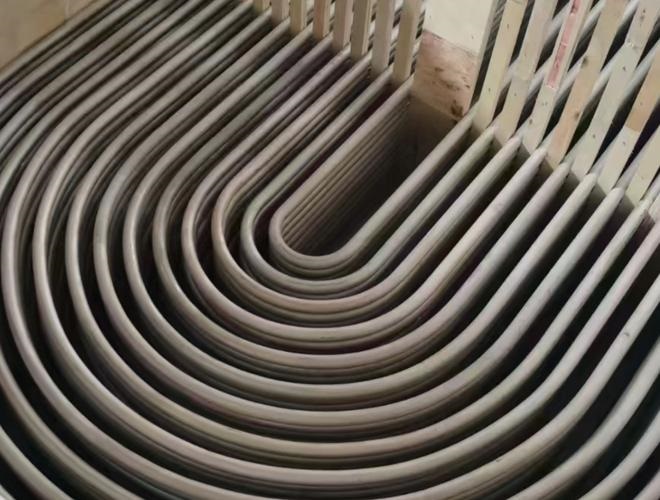
U-Bend ASME SB444 N06625 Tube|B444 N06625 Tube