


What is the difference between air coolers and STHEs?
Air Coolers VS Shell and Tube Heat Exchanger
air-cooled heat exchangers and shell-and-tube water-cooled heat exchangers are the two most widely used heat exchange equipment in industrial projects such as chemical, petrochemical, power, oil & gas, and new energy. Many process engineers and equipment engineers often find themselves torn when selecting for process design or technical retrofit: when it comes to cooling, which one should I choose – air-cooled or shell-and-tube water-cooled? Some believe water cooling is always more efficient, while others think air cooling is cheaper and maintenance-free. But in real engineering practice, there is no absolutely superior equipment; only the most suitable solution for the specific operating conditions.
Across global industrial sectors, the choice between Air Coolers and Shell and Tube Heat Exchangers has become a defining decision in plant engineering. From refineries in the Middle East to power stations in Southeast Asia, engineers are constantly weighing trade-offs between thermal performance, water availability, capital expenditure, and long-term reliability. What works for a gas compression station in a desert may fail miserably in a coastal refinery with abundant cooling water. Understanding the why behind each technology is what separates a robust design from a costly mistake.
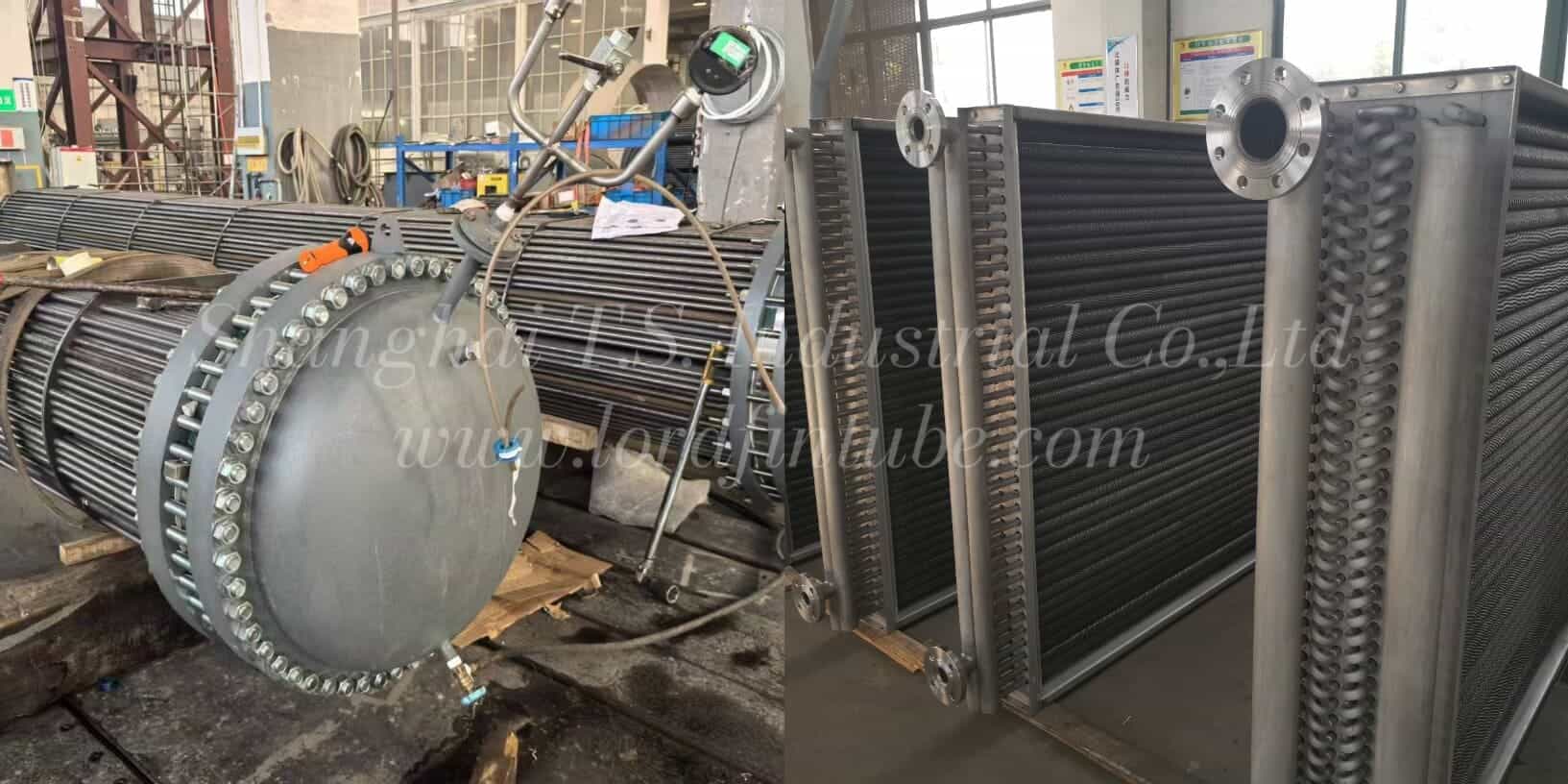
1. Air Coolers VS Shell and Tube Heat Exchanger: Water vs Air as Cooling Media
Let’s get straight to the point – the fundamental difference isn’t really about the shape of the equipment, but the medium they rely on. One uses water, the other uses ambient air, and that single choice ripples through every aspect of performance, cost, and long-term reliability.
Thermal efficiency – where water runs away with it. Water is roughly 10 times more effective at carrying heat away than air. In practice, a typical shell-and-tube exchanger delivers heat transfer coefficients in the range of 800–1,200 W/m²K, while an air-cooled unit struggles to hit 80–200 W/m²K under the same conditions. That’s a massive gap. So does that mean water cooling always wins? Not so fast. In low-pressure gas cooling or condensing duties, the extended fin surfaces on an air cooler can sometimes narrow that gap considerably, making it far more competitive than the raw numbers suggest.
Temperature limits – the achilles heel of air cooling. Here’s the reality check: if it’s 40°C outside, your air cooler simply cannot push your process outlet below 40°C. Period. A water-cooled shell-and-tube unit fed with 30°C cooling tower water can easily get you down to 35°C or even lower. On the flip side, if you’re dealing with severely hot fluids (over 500°C) or pushing pressures beyond 1,500 psi, the rugged shell construction of an STHE is essentially your only safe option. Air coolers just aren’t built for that kind of extreme duty.
Water consumption – the elephant in the room. Shell-and-tube exchangers guzzle water. They need a continuous, treated supply, plus chemical additives, blowdown management, and disposal or recycling systems. If your plant is located in a desert, a water-scarce region, or somewhere with strict "zero-liquid-discharge" policies, the air cooler suddenly becomes the obvious front-runner, because it uses exactly zero water for cooling. That environmental advantage is often a deal-breaker in modern project approvals.
Footprint and layout – one takes up real estate, the other doesn’t. Walk into any plant, and you’ll spot air coolers immediately – they’re massive, sprawling horizontal structures with giant fan decks. They need significant open space, preferably at grade or on a platform with good airflow. Shell-and-tube exchangers, by contrast, are much more compact and can be tucked vertically or horizontally into tight pipe racks. If your plot space is limited, that compactness often tips the scale in favor of water cooling.
Maintenance – a classic trade-off. This one surprises a lot of junior engineers. Shell-and-tube units require frequent internal cleaning – chemical washes, hydro-jetting, or even pulling tube bundles – especially when handling dirty or fouling streams. It’s messy and time-consuming. Air coolers dont have that internal fouling problem, but they are not maintenance-free. Their finned surfaces act like giant dust filters; in dusty industrial environments, those fins clog up fast. Add in fan bearing failures, belt replacements, and sticking louvers, and youve got a very different maintenance headache – one thats more about "keeping the airflow up" than "keeping the tubes clear."
Material selection – how does each handle corrosion and erosion? Which material stands up better? For shell-and-tube exchangers, tube materials range from carbon steel and stainless steels to titanium and high-nickel alloys, depending on the corrosivity of the process and cooling water. The tube bundle is exposed to both sides, so pitting, stress corrosion cracking, and erosion from high-velocity fluids are real threats. Air coolers, on the other hand, typically use carbon steel tubes with aluminum or copper fins. The external fin surface is exposed to atmospheric conditions – rain, humidity, salt spray, or industrial pollutants – so galvanic corrosion between the fin and the tube is a design consideration. Which one requires more careful material engineering? The answer depends entirely on your specific environment and process chemistry.
2. Air Coolers VS Shell and Tube Heat Exchanger: Application Scenarios
Based on decades of industry practice, the application split is fairly predictable:
Reach for a shell‑and‑tube exchanger when:
- Your process runs at high pressure (above 500 psi) or high temperature (above 300°C)
- You need liquid-to-liquid or liquid-to-condensing-vapor heat exchange
- The fluid is viscous, fouling, or contains particulates – STHE designs can accommodate larger clearances and easier mechanical cleaning
- Youre in a refinery, chemical reactor loop, or power plant steam cycle where reliability under extreme conditions is non-negotiable
Specify an air‑cooled exchanger when:
- Cooling water is expensive, unavailable, or environmentally restricted
- Your plant is in a remote area with no cooling water infrastructure
- Youre cooling lube oil, jacket water, compressor inter/aftercoolers, or gas streams in oil & gas gathering stations
- The required outlet temperature is well above ambient (typically 8–12°C margin or more)
- You want to avoid the complexity of a cooling tower, chemical treatment, and wastewater permits
Beyond these general guidelines, specific industries have developed clear preferences. In the oil and gas upstream sector, air coolers dominate gas compression and dehydration trains because water is scarce and logistics are challenging. In refineries, shell-and-tube exchangers are everywhere – crude preheat trains, overhead condensers, reboilers, and product coolers – because the temperatures and pressures are high, and cooling water is typically available from a central utility system. In power generation, both technologies coexist: shell-and-tube units handle the main steam cycle and cooling water systems, while air coolers are often used for lube oil cooling and generator hydrogen coolers.
What about hybrid applications? In recent years, many projects have adopted a mixed approach. For example, a shell-and-tube exchanger may be used for the primary hot-side duty, with an air cooler serving as a secondary trim cooler to reduce the load on the cooling water system. This configuration allows operators to optimize both thermal performance and water consumption, which is particularly attractive in regions with seasonal water availability constraints.
Which one is more common in new energy projects? In green hydrogen production, CO2 capture, and battery material processing, the choice is heavily influenced by site-specific conditions. Plants located near coastal areas with abundant seawater often lean toward shell-and-tube designs with titanium tubes. Inland plants with limited water resources typically adopt air-cooled solutions, sometimes supplemented with adiabatic pre-cooling to boost performance during summer peaks.
3. Air Coolers VS Shell and Tube Heat Exchanger: Selection Criteria
Forget fancy theoretical models for a moment. In my experience, the decision usually boils down to answering these five questions in order:
- Whats my minimum required outlet temperature? If its below 45°C in a hot climate, stop – air cooling wont work reliably. Go water-cooled.
- Do I already have a circulating water system? If yes, the incremental cost of adding another STHE is often much lower than buying a standalone air cooler. If no, the air cooler saves you the multi-million-dollar investment in a cooling tower and piping network.
- How dirty is the process stream? Heavy fouling favors the STHE because you can open it up and clean it. Light, clean streams favor the air cooler because you only deal with external fin cleaning.
- How much space do I have? Tight plot? STHE. Wide-open pad? ACHE becomes viable.
- Whats the ambient temperature profile across the year? If your summer peaks are brutal, oversizing an air cooler is expensive; you might be better off with a hybrid solution that uses both.
But there are additional factors that savvy engineers consider. What about the cost of electricity? Air coolers run large fans that consume significant power – typically 3–8% of the total heat rejection duty in electrical terms. If your site has high electricity tariffs, that operating cost can erode the capital savings over time. Shell-and-tube exchangers, by contrast, rely on cooling tower pumps and fans, which also consume energy, but the overall power consumption per unit of heat rejected is generally lower for water-cooled systems.
How does water quality affect the decision? If your cooling water source is brackish or contains high levels of silica, chlorides, or sulfates, you may face severe scaling and corrosion issues. In such cases, you might need expensive tube materials (titanium, 6Mo stainless) or elaborate water treatment systems. An air cooler sidesteps these issues entirely – but then you have to deal with atmospheric corrosion and fin fouling. Which headache is cheaper to manage? That depends on your local water chemistry and air quality.
What about noise constraints? Air coolers are notoriously noisy – the combination of fan blades, motors, and airflow can generate 85–95 dBA at close range. If your plant is located near residential areas or has strict noise ordinances, you may need to invest in silencers, low-noise fans, or acoustic barriers. Shell-and-tube exchangers are significantly quieter, with only pump and valve noise to consider. This is a factor that many engineers overlook until it becomes a permitting issue.
A quick reference guide – if youre in a hurry:
4. Air Coolers VS Shell and Tube Heat Exchanger: Performance Data
| Feature | Shell‑and‑Tube | Air‑Cooled |
|---|---|---|
| Cooling medium | Water / fluid | Ambient air |
| Heat transfer coefficient | 800–1,200 W/m²K | 80–200 W/m²K |
| Max pressure capability | >1,500 psi | Moderate |
| Max temperature capability | >500°C | Limited by ambient |
| Water consumption | High | Zero |
| Footprint | Compact | Large |
| Maintenance burden | High (internal) | Moderate (external) |
| Typical capital cost | Moderate to high | Moderate |
| Operating cost | Water + energy | Fan energy only |
How do they compare on lifecycle cost? A detailed total-cost-of-ownership analysis typically shows that shell-and-tube exchangers have lower operating costs when water is cheap, but higher maintenance costs due to tube cleaning and bundle replacement. Air coolers have higher fan energy costs and periodic fin cleaning expenses, but they avoid water treatment and disposal costs. Over a 20-year plant life, the difference can be substantial. For a medium-sized unit (50 MW heat duty), the lifecycle cost gap can range from 5% to 25% depending on local utility rates, water prices, and labor costs.
What about reliability and uptime? Which technology offers better availability? Shell-and-tube exchangers are generally more robust and can handle transient conditions without major issues. However, when a tube leaks, the entire unit may need to be shut down for repairs. Air coolers, with their multiple fans and modular fin-tube bundles, offer better redundancy – a single fan failure reduces capacity but doesn’t stop the process. In critical applications where uptime is paramount, air coolers often have an edge because they can be designed with N+1 fan redundancy.
For a more granular view, here is a detailed comparison matrix covering additional operational parameters:
| Parameter | Shell-and-Tube | Air-Cooled |
|---|---|---|
| Approach temperature achievable | 3–5°C above cooling water inlet | 8–12°C above ambient dry-bulb |
| Seasonal performance variation | Low (cooling water temp varies modestly) | High (ambient air temp swings widely) |
| Noise level (typical) | 70–80 dBA | 85–95 dBA |
| Fouling mechanisms | Scale, biological growth, particulate deposits | Dust, pollen, insect debris, atmospheric corrosion |
| Cleaning method | Chemical cleaning, hydro-jetting, bundle pull | High-pressure water wash, compressed air, chemical soak |
| Cleaning frequency | 6–24 months (depending on fouling) | 3–12 months (depending on site conditions) |
| Spare parts inventory | Tube bundles, gaskets, channel covers | Fan blades, belts, bearings, motors |
| Environmental permits required | Water withdrawal, discharge, chemical treatment | Air emissions (fugitive dust), noise |
| Typical design life | 20–30 years (with tube bundle replacement) | 15–25 years (with fan and fin maintenance) |
5. Air Coolers VS Shell and Tube Heat Exchanger: Misconceptions
A lot of project missteps come from rigid, outdated rules of thumb passed down over the years. Here are the three most dangerous myths we run into during technical reviews: