


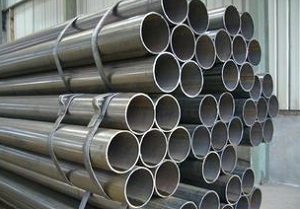
CORTEN-A (09CuPCrNi-A) Corten Steel Tube
Corten Steel Tubes for Industrial and Architectural Applications
Weathering steel, often known by the trade name Corten Steel Tube, represents a significant advancement in material science for outdoor and structural use. These tubes develop a stable, adherent rust patina when exposed to weather, which halts further corrosion. This characteristic eliminates the need for painting in many applications, offering long-term cost savings and a distinctive aesthetic.
Corten Steel Tube Types
Two primary grades are specified for tubular products, each with distinct properties for different load and environmental conditions.
| Grade | Key Characteristic | Typical Use Case | Notable Element |
|---|---|---|---|
| Corten A (ASTM A242) | Superior atmospheric corrosion resistance, forms patina quickly. | Architectural facades, artistic structures, gas flues, non-load bearing aesthetic elements. | Contains Phosphorus for enhanced weathering. |
| Corten B / S355J2W (ASTM A588) | Higher yield strength, suitable for load-bearing structures. | Bridges, heavy structural supports, transmission poles, railway stock. | Optimized balance of strength and weathering resistance. |
Material Selection Advice: For procurement specialists, the choice between Corten A and B is critical. Corten A is ideal for cladding, decorative features, and environments where the aesthetic "rust" finish is desired without structural stress. Corten B should be specified for any primary structural component, such as in bridge construction or support columns, where mechanical strength is as important as corrosion resistance.
Corten Steel Tube Composition
The protective rust layer is a result of a specific alloy chemistry. The composition promotes the formation of a dense, protective oxide rather than the flaky, corrosive rust found on carbon steel.
| Element | Percentage Range (Corten A Typical) | Role in Weathering Resistance |
|---|---|---|
| Copper (Cu) | 0.25% - 0.55% | Primary driver for forming the adherent patina. |
| Chromium (Cr) | 0.50% - 1.25% | Increases corrosion resistance and strengthens the oxide layer. |
| Nickel (Ni) | 0.12% - 0.65% | Improves toughness and low-temperature performance. |
| Phosphorus (P) | 0.07% - 0.15% | Accelerates the protective patina formation (prominent in Corten A). |
| Silicon (Si), Manganese (Mn) | 0.25%-0.75%, 0.2%-0.5% | Deoxidizers and strength enhancers. |
Corten Steel Tube Properties
The mechanical properties ensure reliability in demanding applications. Corten B generally offers higher strength values suitable for structural calculations.
| Property | Corten A (Typical) | Corten B / S355J2W (Typical) |
|---|---|---|
| Yield Strength (Min) | 345 MPa | 355 MPa |
| Tensile Strength | 480 MPa | 470 - 630 MPa |
| Elongation | 22% | 22% |
Corten Steel Tube Specifications
Procurement across global markets requires awareness of equivalent material standards. The table below assists in cross-referencing specifications.
| Region/Country | Standard / Grade Equivalent |
|---|---|
| International (ISO) | ISO 4952: WEATHER RESISTANT STEEL |
| United States | ASTM A242 (Corten A), ASTM A588 (Corten B) |
| European Union | EN 10025-5: S355J0WP, S355J2WP |
| Japan | JIS G3125: SPA-H |
| China | GB/T 4171: 09CuPCrNi-A (Corten A) |
Corten Steel Tube in Construction
The use of Corten Steel Tube extends beyond corrosion resistance. Its application leverages both durability and visual impact.
- Structural Framework: Used in bridge arches, utility poles, and warehouse supports where maintenance access is difficult.
- Architectural Cladding: Provides a dynamic, evolving facade for buildings, reducing long-term upkeep costs.
- Landscape and Urban Design: Employed for retaining walls, sculptural elements, and bollards, blending industrial material with natural environments.
- Industrial Ducting and Stacks: Handles hot, corrosive flue gases in applications like air preheaters, where the patina adds a layer of protection.
Fabrication and Welding Process
Successful fabrication maintains the materials inherent corrosion resistance. Standard practices for low-alloy steels apply, with specific considerations for filler material.
Welding Procedure
Using electrodes that match or exceed the weathering characteristics is essential to ensure the weld zone develops a patina similar to the parent metal. Electrodes such as AWS E7018-W or E8018-W are commonly specified. Pre-heating is generally not required for thin sections but should be evaluated for thick-walled tubes to prevent hydrogen-induced cracking.
Handling and Storage
Before the patina fully forms, the steel surface is susceptible to staining from water run-off or contact with dissimilar metals. During storage, tubes should be kept clear of the ground and stacked with adequate spacing to allow air circulation, preventing moisture traps that can cause uneven staining.
Common Questions from Buyers
How long does it take for the protective patina to form?
The initial stabilization process typically takes 6 to 18 months of cyclic wet/dry weather exposure. The pace and final color vary based on local climate, pollution levels, and orientation.
Is run-off from Corten steel tubes an environmental concern?
During the initial weathering phase, run-off water may contain trace iron oxides and can stain adjacent materials like concrete or light-colored stone. Proper detailing, such as gutters or ground gravel beds, is recommended to manage this temporary run-off.
Can Corten steel tube be used in marine environments?
While excellent for atmospheric corrosion, it is not generally recommended for direct, continuous saltwater immersion or frequent salt spray zones, as chlorides can disrupt the stable patina formation.
How does lifecycle cost compare to painted carbon steel?
Although the initial material cost is higher, the elimination of recurring painting cycles for the life of the structure often results in a lower total cost of ownership, especially for large-scale or inaccessible installations.