


ASTM A213 TP304L Extruded fin tube 3350Pcs
What is ASTM A213 TP304L Extruded fin tube?
ASTM A213 TP304L Extruded fin tube include two parts, one is ASTM A213 TP304L tube and extruded aluminum fins on the tubes. ASTM A213 TP304L Extruded fin tube refers to a finned tube where the base tube material is ASTM A213 TP304L. The finning process involves extruding fins onto the surface of the base tube.
The use of ASTM A213 TP304L as the base tube material in extruded fin tubes offers several advantages:
- Corrosion resistance: TP304L stainless steel has excellent corrosion resistance, making it suitable for applications in various environments, including those involving exposure to corrosive fluids or gases.
- High-temperature strength: ASTM A213 TP304L exhibits good strength and excellent resistance to high temperatures, making it suitable for applications involving elevated temperatures or thermal cycling.
- Durability: The use of TP304L stainless steel as the base tube material ensures the finned tubes are durable and can withstand the rigors of operation in demanding environments.
- Compatibility: TP304L stainless steel is compatible with a wide range of fluids and gases, making it suitable for various industries, including petrochemical, power generation, HVAC, and process industries.
ASTM A213 TP304L Extruded fin tube in heat exchanger systems
When specifying heat exchanger tubing, the choice of base material directly influences the service life and thermal performance of the entire system. ASTM A213 TP304L extruded fin tubes are frequently selected for air-cooled heat exchangers, shell-and-tube units, and fin-fan coolers where the combination of corrosion resistance and thermal conductivity is required. The extruded aluminum fin provides a continuous helical path that increases the heat transfer surface area by a factor of up to 12 compared to a bare tube of the same diameter.
Which factors determine the effectiveness of ASTM A213 TP304L extruded fin tubes in a given heat exchanger design? The primary variables include the fin height, fin density (pitch), tube wall thickness, and the thermal conductivity of the fin material. In practice, engineers balance these parameters against the allowable pressure drop and the desired heat duty. The extruded fin design eliminates the contact resistance that can occur with wrapped or embedded fins, because the fin material is formed directly from the tube wall or from a sleeve that is integrally bonded to the base tube.
| Element | C | Mn | P | S | Si | Cr | Ni |
|---|---|---|---|---|---|---|---|
| Composition (%) | ≤0.030 | ≤2.00 | ≤0.045 | ≤0.030 | ≤0.75 | 18.0–20.0 | 8.0–11.0 |
| Property | Tensile Strength (MPa) | Yield Strength (MPa) | Elongation (%) | Hardness (HRB) |
|---|---|---|---|---|
| Typical Value | ≥485 | ≥170 | ≥35 | ≤90 |
How ASTM A213 TP304L Extruded fin tube resists corrosion and heat
Why does ASTM A213 TP304L perform so well in aggressive environments? The low carbon content (0.030% maximum) of the TP304L grade reduces the risk of carbide precipitation during welding or high-temperature exposure, which in turn maintains the alloys corrosion resistance in the heat-affected zone. This characteristic is particularly valuable when the extruded fin tubes are used in services that involve repeated thermal cycling or where the tubes are subjected to frequent start-up and shutdown conditions.
What happens when ASTM A213 TP304L extruded fin tubes are exposed to oxidizing atmospheres at elevated temperatures? The chromium content of 18.0–20.0% forms a stable, self-healing oxide layer on the surface of the base tube. This passive film protects the underlying metal from further attack, even when the tubes are operated at temperatures approaching 800°C in air. The extruded aluminum fins, while offering excellent thermal conductivity, have a lower maximum service temperature; therefore, the overall operating limit of the composite finned tube is typically determined by the fin materials creep resistance and the differential thermal expansion between the steel tube and the aluminum fins.
| Fin Type | Fin Height (mm) | Fin Thickness (mm) | Fin Pitch (mm) | Surface Area Ratio |
|---|---|---|---|---|
| Standard Low-Fin | 8.0–10.0 | 0.35–0.45 | 2.5–3.5 | 4:1 to 6:1 |
| High-Fin | 12.0–16.0 | 0.40–0.55 | 3.0–4.0 | 8:1 to 12:1 |
| Integral Fin | 6.0–8.0 | 0.30–0.40 | 2.0–2.8 | 3:1 to 5:1 |
What ASTM A213 TP304L Extruded fin tube offers for process industries
Process industries such as petrochemical refining, natural gas processing, power generation, and pharmaceutical manufacturing rely on ASTM A213 TP304L extruded fin tubes for critical heat transfer duties. Which specific applications benefit most from this tubing? Air cooler bundles, condenser coils, boiler economizers, and refrigeration evaporators all use extruded fin tubes to improve thermal efficiency while maintaining a compact footprint. The ability to withstand aggressive cleaning agents and occasional chemical spills makes TP304L a preferred choice over carbon steel or lower-alloy materials.
How does the extrusion process affect the long-term performance of the finned tube? Unlike mechanically bonded fins that can loosen over time due to thermal cycling, extruded fins maintain a consistent interfacial pressure because the fin material is formed from a sleeve that is metallurgically bonded to the base tube. This bond ensures that the thermal contact resistance remains low throughout the service life of the tube, which translates to stable heat transfer performance and reduced maintenance requirements for the end user.
ASTM A213 TP304L Extruded fin tubes application
ASTM A213 TP304L Extruded fin tubes application in heat exchangers, air coolers, condensers, boilers, and refrigeration systems, where they facilitate efficient heat transfer and enhance overall system performance.
ASTM A213 TP304L Extruded fin tube in practical operation
ASTM A213 TP304L Extruded fin tube refers to a finned tube where the base tube material is ASTM A213 TP304L stainless steel. The combination of TP304L stainless steels corrosion resistance, high-temperature strength, and compatibility make it a suitable choice for applications requiring efficient heat transfer and durability. When selecting extruded fin tubes for a new project, engineers consider the operating temperature, the corrosivity of the process fluids, and the required heat duty to determine the optimal fin geometry and tube wall thickness.
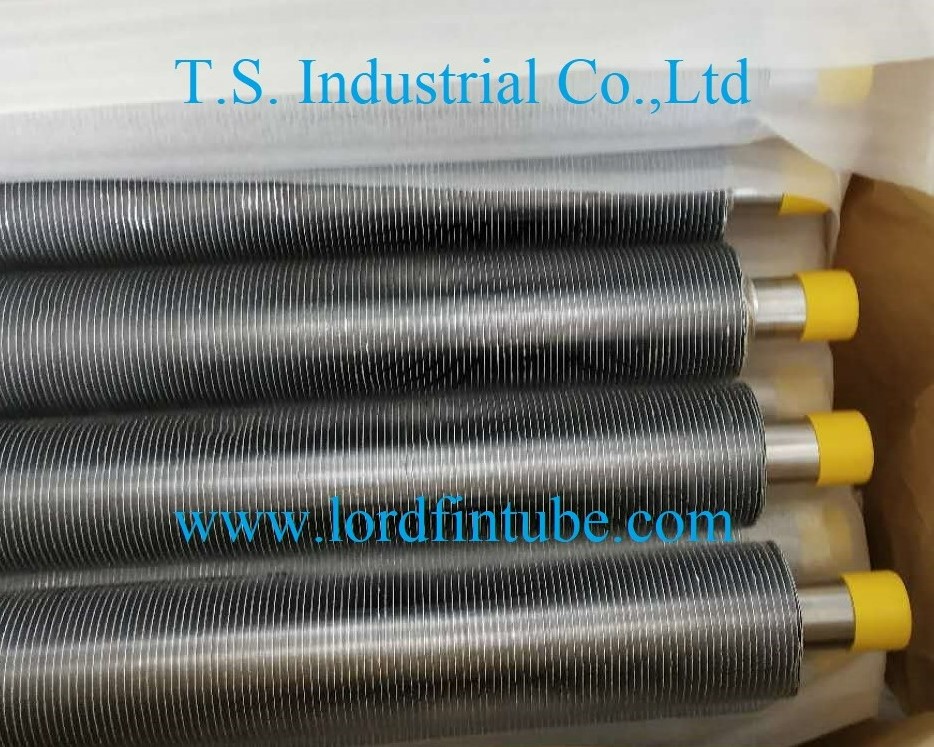
ASTM A213 TP304L Extruded fin tube — typical extruded fin profile
Base tube material specifications for ASTM A213 TP304L
The base tube for ASTM A213 TP304L extruded fin tubes must conform to the dimensional tolerances and testing requirements of ASTM A213/A213M. The seamless tube is produced by hot finishing or cold drawing, followed by solution annealing and pickling to restore the corrosion-resistant passive film. The tube ends are typically prepared for welding or mechanical joining, depending on the heat exchanger design. Quality control includes hydrostatic testing, eddy current testing, or ultrasonic examination to ensure the tube wall is free from defects that could compromise the integrity of the extruded fin assembly.
Extruded fin geometry and thermal performance
The extrusion process produces fins with a consistent profile along the entire length of the tube. The fin height, thickness, and pitch are controlled within tight tolerances to ensure uniform heat transfer performance across each tube and between tubes in a bundle. Which fin geometry delivers the best performance for a given application? The answer depends on the relative heat transfer coefficients on the tube-side and air-side of the exchanger. For air-cooled applications where the air-side coefficient is the controlling resistance, taller fins with closer pitch provide the greatest benefit. For applications with a high tube-side coefficient, a lower fin density may be more cost-effective.
Quality assurance for ASTM A213 TP304L extruded fin tubes
Manufacturers of ASTM A213 TP304L extruded fin tubes typically perform a series of quality checks, including dimensional inspection, fin integrity testing, and bond strength verification. The bond between the fin and the base tube is assessed using torque testing or by examining the fin profile at the root interface. Additionally, the tubes are subjected to visual and non-destructive examination to detect any surface defects that could affect corrosion resistance or mechanical strength. These quality measures ensure that the extruded fin tubes meet the stringent requirements of international codes such as ASME Section VIII and TEMA standards.
ASTM A213 TP304L Extruded fin tube typical inquiry
| ASTM A213 TP304L Extruded fin tube | ||||
| Base Tube Material | Fin Material | Tube Length (mm) | Fin length (mm) | Fin Tube Quantity (Pc) |
| ASTM A213 TP304L | Aluminum | 14500 | 14400 | 3550 |
| Base Tube O.D (mm) | Base Tube Thickness (mm) | Fin Height (mm) | Fin Thickness (mm) | Fin Pitch (mm) |
| 25.4 | 1.65 | 15.88 | 0.4 | 2.54 |
| ASTM A213 TP304L Extruded fin tube application for Air Heating or Air Cooling up to 200℃ to 300℃, using Steam / Thermic Fluid / Hot Water as Heating Media or Water as Cooling Media | ||||
FAQ about ASTM A213 TP304L Extruded fin tube
ASTM A213 TP304L Extruded fin tube — at a glance
ASTM A213 TP304L extruded fin tubes combine the corrosion resistance and high-temperature strength of TP304L stainless steel with the enhanced surface area of extruded aluminum fins. These tubes are widely used in air coolers, heat exchangers, condensers, and process heaters where efficient heat transfer and long service life are essential. The extruded fin design ensures a durable bond that maintains thermal performance over the life of the equipment. For inquiries, technical support, or to request a quotation, please contact the sales team with your project specifications.