


Lord Fin Tube-What is F316L Forged Disc?
What is F316L Forged Disc?
The F316L Forged Disc is a premium-grade component manufactured through advanced forging techniques. It is crafted from F316L stainless steel, a low-carbon variant of 316 stainless steel, which enhances corrosion resistance and durability in harsh environments. Forged discs are integral to high-pressure systems, offering superior structural integrity compared to cast alternatives.
Procurement specialists value F316L Forged Discs for their reliability in demanding sectors like oil and gas, chemical processing, and power generation. The forging process aligns the grain structure, resulting in improved mechanical properties and resistance to fatigue and impact. This makes the disc ideal for valves, pumps, turbines, and pressure vessels where failure is not an option.
F316L Forged Disc Properties
The table below outlines key material properties that procurement teams should consider when evaluating F316L Forged Discs:
| Property | Value / Description | Significance for Buyers |
|---|---|---|
| Material Grade | ASTM A182 F316L | Ensures compliance with international standards for forged components. |
| Carbon Content | Max 0.03% | Reduces risk of carbide precipitation, enhancing weldability and corrosion resistance. |
| Tensile Strength | 485 MPa (min) | Guarantees high strength under load, suitable for pressure applications. |
| Yield Strength | 170 MPa (min) | Indicates resistance to deformation, critical for structural parts. |
| Corrosion Resistance | Excellent in acidic and chloride environments | Extends service life in chemical and marine settings, reducing maintenance costs. |
| Forging Process | Hot forging followed by heat treatment | Improves density and homogeneity, minimizing defects like porosity. |
F316L Forged Disc Material Comparison
How does F316L forged disc compare to other common stainless steel grades? The following comparison highlights differences that directly affect material selection for specific operating environments.
| Characteristic | F316L | F304 | F316 |
|---|---|---|---|
| Carbon Content (max) | 0.03% | 0.08% | 0.08% |
| Molybdenum Content | 2.0 – 3.0% | — | 2.0 – 3.0% |
| Tensile Strength (min) | 485 MPa | 515 MPa | 515 MPa |
| Yield Strength (min) | 170 MPa | 205 MPa | 205 MPa |
| Corrosion Resistance | Excellent in chlorides & acids | Good in mild environments | Excellent in chlorides & acids |
| Weldability | Excellent | Good | Good |
| Typical Applications | High-corrosion, high-pressure systems | General-purpose equipment | Moderate-corrosion environments |
Which grade delivers the best value for your project? For critical services where chloride stress corrosion cracking is a concern, F316L Forged Disc offers the lowest carbon content and superior resistance, making it the preferred choice for offshore, chemical, and pharmaceutical applications.
F316L Forged Disc Applications
F316L Forged Discs are specified in industries where safety and performance are paramount. Common uses include:
- Oil and Gas: Flanges, valve bodies, and wellhead components exposed to sour service (H2S) and high pressure.
- Chemical Processing: Reactors, heat exchangers, and piping systems handling corrosive acids and alkalis.
- Power Generation: Turbine parts, boiler components, and nuclear fittings due to high-temperature stability.
- Pharmaceutical: Sanitary fittings and vessels where purity and corrosion resistance are essential.
- Marine Engineering: Offshore platforms and shipbuilding components resistant to saltwater corrosion.
When selecting a forged disc, buyers should verify application-specific certifications like NACE MR0175 for sulfide stress cracking resistance. Additionally, what makes F316L particularly attractive for cryogenic services is its retained impact toughness at temperatures as low as -196°C, which is critical for LNG and industrial gas handling systems.
Which industries benefit most from the low-carbon variant? The reduced carbon content in F316L minimizes the risk of intergranular corrosion after welding, which is why it is heavily specified in chemical plant piping and heat exchanger tube sheets where multiple weld passes are common.
F316L Forged Disc Manufacturing
The production of F316L Forged Discs involves precision steps to ensure consistency. Raw billets are heated to forging temperature (approximately 2100°F) and shaped under high pressure using closed-die forging. This method enhances grain flow, reducing directional weaknesses. Post-forging, discs undergo solution annealing and quenching to optimize corrosion resistance and mechanical properties.
Quality control is rigorous, including ultrasonic testing (UT) for internal flaws, liquid penetrant testing (PT) for surface cracks, and chemical analysis via spectrometry. Manufacturers often provide Mill Test Certificates (MTCs) that trace each disc to its heat number, confirming compliance with ASTM A182 and ASME standards. For insights into related manufacturing processes, see how F316L Forged Disc techniques align with tube sheet production.
Why is hot forging preferred over casting for these components? The forging process refines the grain structure, eliminates internal porosity, and produces a continuous grain flow that follows the shape of the part. This results in higher fatigue resistance and impact strength — properties that cast discs simply cannot match under cyclic loading conditions.
F316L Forged Disc Heat Treatment Process
Heat treatment plays a decisive role in achieving the desired mechanical properties and corrosion resistance of F316L Forged Discs. The standard sequence includes:
- Solution Annealing: Discs are heated to 1040–1120°C and held for a sufficient time to dissolve carbides and achieve a homogeneous austenitic structure.
- Quenching: Rapid cooling in water or by forced air prevents carbide precipitation at grain boundaries, preserving the corrosion-resistant properties of the alloy.
- Stress Relieving (optional): For complex geometries or tight dimensional tolerances, a low-temperature stress-relief cycle may be applied to reduce residual stresses from forging and machining.
How does the cooling rate affect performance? Rapid quenching is essential to maintain the molybdenum and chromium in solid solution. Slow cooling can lead to the formation of sigma phase or chromium carbides, which dramatically reduce toughness and corrosion resistance — a critical factor that buyers should verify in the suppliers heat treatment records.
F316L Forged Disc Specifications
Procurement teams can request custom sizes and tolerances. Standard dimensions include:
| Diameter Range (mm) | Thickness Range (mm) | Standard Tolerances | Common Standards |
|---|---|---|---|
| 50 – 2000 | 10 – 300 | ±1% on diameter, ±0.5 mm on thickness | ASTM A182, ASME SA182, EN 10222 |
| 2000 – 5000 (custom) | 300 – 500 (custom) | Negotiable based on application | Customer drawings, API 6A for oilfield use |
Surface finishes can be specified as machined, ground, or polished per ASTM A480. For critical applications, additional testing like Charpy impact or hardness tests (HB/HRC) is available. Which surface finish is right for your process? Machined finishes are suitable for general service, while ground or polished surfaces reduce friction and improve sealing in valve and pump applications.
For custom orders, buyers should provide detailed drawings indicating bore diameters, chamfer angles, and any special threading or grooving requirements. Many suppliers offer CAD modeling services to validate designs before production begins.
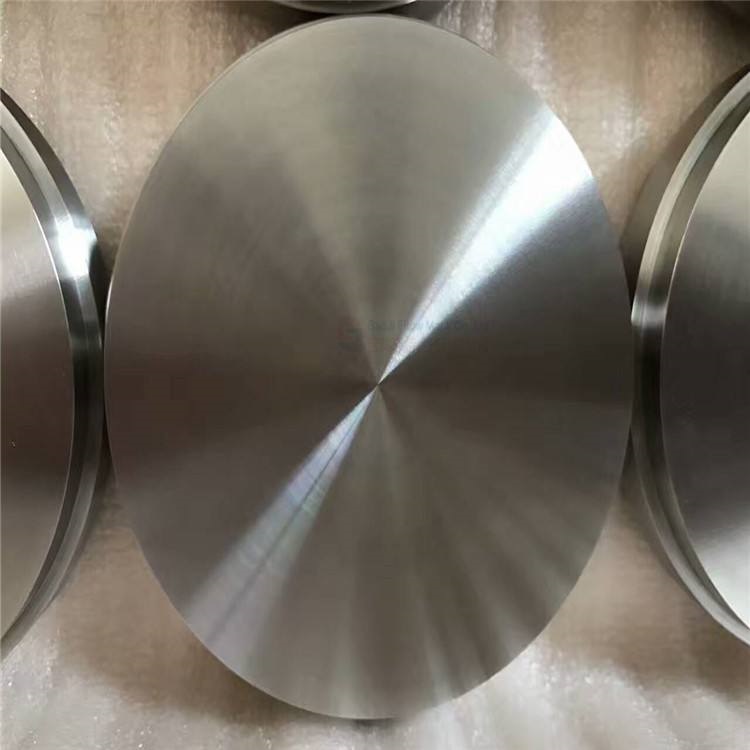
Figure: F316L Forged Disc used in high-pressure valve assembly.
F316L Forged Disc Procurement Tips
When sourcing F316L Forged Discs, buyers should focus on:
- Material Traceability: Ensure suppliers provide full MTCs with heat number tracking.
- Testing Protocols: Verify non-destructive testing (NDT) reports for defect detection.
- Cost vs. Lifespan: While initial cost may be higher than cast discs, forged discs offer longer service life, reducing total cost of ownership.
- Supplier Expertise: Choose manufacturers with experience in F316L Forged Disc production for similar industries.
- Lead Time: Forged components require longer production cycles; plan orders accordingly.
Why is supplier auditing an essential step? Not all forging houses maintain the same level of process control. Buyers should request evidence of ISO 9001 and PED 2014/68/EU certifications, and where possible, conduct on-site audits to evaluate forging press capabilities, heat treatment furnaces, and NDT equipment.
Which documentation package should you expect from a reliable supplier? A complete package typically includes the MTC, NDT reports (UT, PT, MT as applicable), dimensional inspection records, and a certificate of compliance with the purchase order. For projects requiring third-party inspection, arrange for an independent surveyor to witness critical tests.
The F316L Forged Disc is a robust solution for critical industrial applications. Its forged construction ensures high strength and corrosion resistance, backed by stringent quality controls. Procurement professionals should prioritize technical specifications and supplier credentials to secure reliable components. For further details on related forged products, consult industry standards or contact certified manufacturers.